Last updated: August 21, 2026
Nobody plans for the cappings. You plan for the extractor, you plan for the knife, and then a hundred square inches of wet wax comes off the first frame and has to go somewhere that is not the floor, the counter or a bucket that you will later have to dig out with a spoon. Harvest day gets its reputation from this exact moment.
An uncapping tank solves it properly: the frame rests on a bar over the tank, cappings drop into a basket or onto a screen, the honey clinging to them drains through into the bottom, and a gate lets you pour that honey off. This guide covers the formats worth considering for a backyard apiary, what makes a good frame rest, and the cheap bucket setup that does most of the same job.
This article contains affiliate links. If you buy through them, we may earn a commission at no extra cost to you. Learn more.
Quick Answer
Do you need an uncapping tank?
- You need something under the frame. A tank is the tidy version, a bucket with a strainer is the cheap version, and a cookie sheet is the version you regret.
- The features that matter are a solid frame rest bar, a screen or basket that separates wax from honey, and a gate low enough to drain the tank dry.
- Food grade plastic bins are fine and lighter to handle; stainless costs more and cleans up more easily year after year.
- Size it to your bench, not your ambition. A tank you cannot lift full is a tank you will resent.
Bottom line: any setup that holds the frame steady and lets the cappings drain will save you more mess than the tank itself costs in space.
What an Uncapping Tank Does
An uncapping tank is a container with a crossbar to rest the frame on and a screen or perforated basket sitting above the base. You uncap over it, wax falls onto the screen, honey drains through into the reservoir underneath, and a gate near the bottom lets you draw that honey off into a bucket once it has settled.
The value is not the container. It is the separation. Cappings straight off the knife hold a genuinely surprising amount of honey, and left in a solid bucket that honey stays trapped in the wax. Given a screen and a few hours, most of it drains out on its own.
The Formats Worth Considering
Three setups cover almost every backyard apiary: a purpose built stainless tank, a food grade plastic uncapping bin with a stainless tray, and a five gallon bucket fitted with a strainer and a gate. All three separate wax from honey; they differ in capacity, in how they sit on a bench, and in how they clean up.
Stainless is the long term answer if you extract every year and have somewhere to store it. Plastic bins are lighter, stack better and are easier to carry to a sink. The bucket setup is the one most people actually start with, and there is nothing wrong with staying there.
The Frame Rest Is the Real Feature
Whatever format you buy, the crossbar the frame sits on determines how the day goes. It needs to hold the frame steady at a slight angle without sliding, and it needs to sit low enough that your knife hand has clearance above the rim.
Bars that are just a loose length of metal balanced across the top move at the worst moment. Look for a rest that locates into notches or clips into the tank wall, and check that it comes out for cleaning rather than being welded into a place that traps wax.
Draining, Gates and Settling
Honey that drains out of cappings is exactly as good as honey out of the extractor, it just takes longer to arrive. A gate near the base of the tank lets you draw it off without tipping anything, and the gate should sit low enough that the reservoir empties close to dry rather than leaving an inch behind.
Give the cappings time. Left overnight somewhere warm and closed, a batch releases far more honey than an hour of impatient poking will. Cover the tank while it drains so nothing finds its way in, and keep it indoors, because an open container of honey in the yard starts a robbing frenzy you will not enjoy.
Straining Before Bottling
Honey drained from cappings carries more fine wax than honey off the extractor, so run it through a sieve on its way into a bottling bucket. A double sieve with a coarse and a fine layer handles it in one pass, and letting the bucket stand afterward lets remaining bubbles and wax specks rise to the top where you can skim them.
What is left after draining is clean wax worth keeping. Rinse it, let it dry, and it renders into blocks for candles, wraps or salve bases. Our guide to rendering beeswax from your own cappings covers the process.
Uncapping Setups by Situation
The Long Term Bench Setup
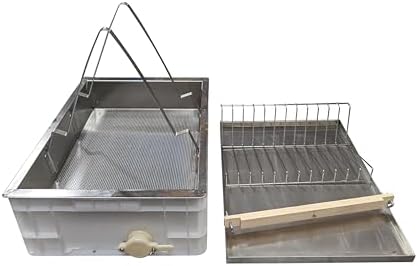
A stainless uncapping tank with an internal screen and a honey gate is the version you buy once. It rests a frame securely, drains cappings without supervision, and washes out with warm water. Check the internal length against your frame width before ordering, since tanks are sized for specific frame formats.

Lighter and Easier to Store
A food grade plastic uncapping bin with a stainless tray gives you the same separation at a fraction of the weight, and it stacks in a corner of the garage between seasons. Plastic scratches over time and holds residue in the scratches, so plan on replacing it eventually rather than treating it as permanent.
The Bucket Version That Actually Works
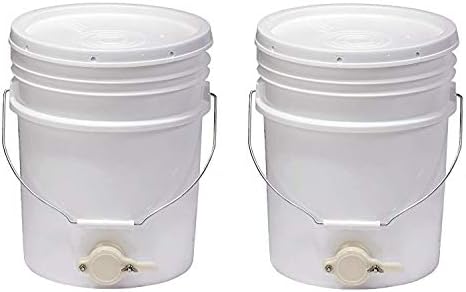
A food grade bucket with a honey gate fitted near the base, a strainer sitting in the top and a bar across it for the frame does nearly everything a tank does. It is the standard first harvest setup and it scales to a couple of hives without complaint.
What Separates the Wax From the Honey
A double sieve dropped into the bucket catches the wax while honey runs through, which is the whole trick in one part. Coarse over fine is the useful combination; a single fine mesh clogs with cappings and needs constant clearing.

Comparing the Three Setups
| Setup | Wax and honey separation | Cleanup | Suits |
|---|---|---|---|
| Stainless tank | Internal screen, gate at base | Rinses clean, no scratches | Annual harvests, permanent bench |
| Plastic bin with tray | Stainless tray over the reservoir | Easy to carry to a sink | Small spaces, occasional use |
| Bucket with strainer | Sieve in the top, gate fitted low | Simplest of the three | First harvest, one or two hives |
| Open tray or sheet | None, honey stays in the wax | Deceptively messy | Nobody, after the first attempt |
Setting Up the Bench
Put the uncapping tank at a height where you are not bending, with the extractor within arm’s reach on the same side as your knife hand, and a bucket under the extractor gate before you start rather than after. Every step you can do without carrying a dripping frame across the room is a step that stays off the floor.
Keep a wet cloth, a dry cloth and a bowl of warm water on the bench. Wax builds up on the blade, on your hands and on the frame rest, and clearing it every few frames keeps the cut clean and the tank draining. The full sequence, including what happens before and after the bench, is laid out in our honey harvesting equipment guide.
Frequently Asked Questions
Can I just uncap over a bucket? Yes, with a strainer in the top and a bar for the frame. Without those two things the cappings sit in a puddle and the honey never drains out of the wax, which is the whole reason a tank exists.
How long should cappings drain? Overnight in a warm room gets most of it. Draining cold takes far longer, since honey thickens as the temperature drops, so leave the tank somewhere warm rather than in an unheated garage.
Is plastic safe for honey? Food grade plastic is, and it is what most bottling buckets are made from. Avoid containers that are not sold as food grade, and replace plastic once it is visibly scratched, since scratches hold residue.
What do I do with the drained cappings? Rinse and render them into clean beeswax. It is the free by-product of harvest day and it is worth keeping, even if you only ever make a few candles from it.
Can I let the bees clean up the wet cappings? Many keepers do, but only well away from the hives and never in an open container in the apiary. Feeding wet cappings back next to the hives is a reliable way to start robbing.
The Bottom Line
The tank matters less than the three things it provides: a steady frame rest, a screen that separates wax from honey, and a gate low enough to drain it dry. A stainless tank does that for a decade, a plastic bin does it lighter, and a bucket with a sieve and a gate does it for a first harvest without complaint. Pair whichever you choose with the right blade from our uncapping knife guide, and check the running order in the full harvest kit guide before the supers come off.