Last updated: August 21, 2026
The cappings from one good harvest make a surprising number of candles, and they are the single most persuasive thing you can hand a skeptical neighbor. A jar of honey says you keep bees. A pale gold candle that smells faintly of the hive says it more slowly, and it is the reason a lot of backyard beekeepers end up rendering wax they were originally going to throw out.
Beeswax does not behave like soy or paraffin, though, and most first attempts fail for the same two reasons: the wick is too small for the diameter, and the wax was poured too hot or too cold. This guide covers those two variables plus the mold choices, working from cappings you rendered yourself rather than from a craft store block.
This article contains affiliate links. If you buy through them, we may earn a commission at no extra cost to you. Learn more.
Quick Answer
How do you make beeswax candles from your own cappings?
- Render and filter the cappings at least twice, because debris in the wax clogs a wick.
- Size the wick to the candle diameter, going larger than you would for soy or paraffin.
- Melt with indirect heat only, pour into a warmed mold, and let it cool slowly.
- Top up the sink hole that forms as the candle sets, then cure it before the first burn.
Bottom line: wick size and pour temperature decide whether the candle burns evenly. Everything else is mold choice.
Start With Clean Wax
Candle wax has to be cleaner than utility wax, because every speck of debris either blocks the wick or shows up as a dark fleck in a translucent candle. Cappings wax is the best raw material you have, since it has never held brood and it renders pale and fragrant compared to old comb.
Plan on filtering twice at minimum, cheesecloth first and a finer weave second, while the wax is properly liquid. The full process, including which melting methods are safe and why, is in our guide to rendering beeswax with a solar melter or double boiler. Do not skip it and work from unfiltered cappings; it costs you the whole batch.
Wick Size Is the Decision That Matters
Beeswax has a higher melting point and is denser than soy or paraffin, so a wick that works fine in a soy container candle will drown in beeswax and tunnel straight down the middle. The standard correction is to go up in wick size relative to what a chart recommends for softer waxes at the same diameter.
Square braid cotton is the traditional choice for pure beeswax and the one most suppliers point at. Wick sizing is stated by candle diameter, so measure the mold across before ordering rather than buying a mixed pack and hoping. The honest way to get it right is to make two or three test candles at one diameter with adjacent wick sizes and burn them side by side.

Reading a Test Burn
Light the test candles and give them a couple of hours. A wick that is too small leaves a rim of unmelted wax standing and digs a tunnel; a wick that is too large burns hot, smokes and drips down the outside. What you want is a melt pool that reaches the edge without the flame guttering or sooting.
Write the result down against the mold and the wick size, because you will forget by next harvest and you will be back to guessing. That one page of notes is what turns candle-making from a craft experiment into a repeatable batch.
Molds: Silicone, Metal or Rolled Sheets
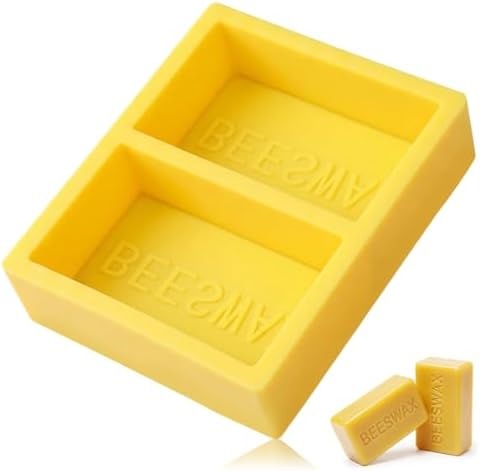
Silicone molds are the easiest starting point because the candle flexes out without release agent and the detail comes through well. Metal molds give a crisper finish and last indefinitely, but they need the wax poured at the right temperature or the candle sticks and the surface pits.
The third route skips melting altogether: rolled candles from sheets of foundation-style beeswax, with a wick laid along one edge and the sheet rolled around it. That is the version to hand a child at a school table, and it consumes bought sheets rather than your own cappings, which is the reason most beekeepers move on from it.
Pouring Without Sink Holes
Pouring is where the visible defects come from. Wax poured into a cold mold cools too fast at the walls and pulls away, leaving a rough surface and a crater around the wick; wax poured too hot shrinks harder as it sets and leaves a deeper sink hole. Warming the mold gently and pouring a controlled stream fixes most of it.
Expect to top up regardless. Beeswax contracts as it solidifies, so a cavity forms around the wick, and the standard practice is to hold back a little wax and refill that hollow once the candle has set enough to hold its shape. A pitcher with a proper spout makes both the pour and the top up far less messy than tipping a saucepan.

Common Faults and What Caused Them
Almost every beeswax candle problem traces back to wick size, pour temperature or wax cleanliness.
| Fault | Likely cause | Fix | Check before or after pouring |
|---|---|---|---|
| Tunneling down the middle | Wick too small for diameter | Go up a wick size | Before |
| Sooting and dripping | Wick too large or drafty spot | Go down a size, move the candle | Before |
| Crater around the wick | Normal contraction | Top up with reserved wax | After |
| Pitted, frosted surface | Cold mold or fast cooling | Warm the mold, cool slowly | Before |
| Wick clogging out | Debris left in the wax | Filter again through finer cloth | Before |
Burning and Giving Them Away
Let the candle cure for a few days before the first burn, then trim the wick short each time and burn it long enough for the melt pool to reach the edge. That first burn sets the memory ring for every burn afterward, which is why a candle lit for ten minutes and blown out tends to tunnel for the rest of its life.
If you are handing these out or selling them at a market, keep the claims to what they are: candles made from your own cappings. Beeswax candles are sometimes marketed with health and air quality claims, and those are not claims we make or repeat here. Labeling rules for anything you sell vary by state, and the same caution applies as with jarred honey; our guide to jars, lids and what the law wants covers where to ask.
Frequently Asked Questions
What wick do I need for beeswax? Square braid cotton sized to the candle diameter, generally a size larger than the same diameter would take in soy or paraffin, because beeswax is denser and melts at a higher temperature.
Why is my beeswax candle tunneling? Almost always a wick too small for the diameter, sometimes made worse by short first burns. Size up and let the first burn run until the melt pool reaches the edge.
Do I need to filter the wax twice? For candles, yes. Fine debris that is invisible in a block will clog a wick and show as flecks in the finished candle. Filter while the wax is fully liquid.
Can I melt the wax in the microwave? Standard guidance for beeswax is indirect, controlled heat, which means a double boiler, a water bath or a slow cooker. Beeswax is flammable and uneven heating is the risk you are avoiding.
How much wax do cappings actually yield? Far less than the volume of the bucket suggests, since most of what you collect is honey and moisture. It varies with how thoroughly you drained and rinsed, so weigh the finished blocks rather than estimating from the bucket.
Can I use old brood comb for candles? You can render it, but it yields darker wax with far more residue and is better kept for utility uses. Cappings are the cleanest wax the hive gives you.
The Bottom Line
Candles from your own cappings come down to three things: wax filtered twice, a wick sized up for beeswax, and a warm mold with a top up after it sets. Test two wick sizes at your chosen diameter once and you can repeat the batch every year without thinking. Start upstream with rendering beeswax, and see the uncapping tank guide for how to collect cappings cleanly in the first place.