Last updated: August 21, 2026
The extractor is the piece of gear backyard beekeepers agonize over the longest and use the least. It sits in the garage for eleven months, then earns its keep across one sweaty Saturday in August. That imbalance is exactly why the buying decision goes sideways: people either buy far more drum than two hives will ever fill, or they buy the smallest thing on the shelf and spend the whole harvest day cranking.
This guide walks through the four decisions that determine whether an extractor fits your setup: how the frames sit in the drum, how many go in per load, whether a motor is worth it at your colony count, and which small parts turn cleanup from an hour into fifteen minutes. Frame size compatibility gets its own section, because that is the single most common reason a new extractor goes back in the box.
This article contains affiliate links. If you buy through them, we may earn a commission at no extra cost to you. Learn more.
Quick Answer
What should you look for in a honey extractor?
- Confirm the drum takes your frame depth. A tangential drum sized for mediums will not swallow a deep frame, and that mismatch is the number one return reason.
- Match frame count to colonies, not to ambition. One to three hives rarely justifies more than a two or four frame drum.
- Food grade stainless steel, a working honey gate near the bottom, and legs that raise the gate above a bucket rim are the three specs that matter after capacity.
- A motor buys you your arms back, not extra honey. Below roughly a handful of colonies, hand cranking stays realistic.
Bottom line: buy for your frame depth and your colony count, and treat the gate, legs and lid as part of the purchase rather than accessories.
What a Honey Extractor Actually Does
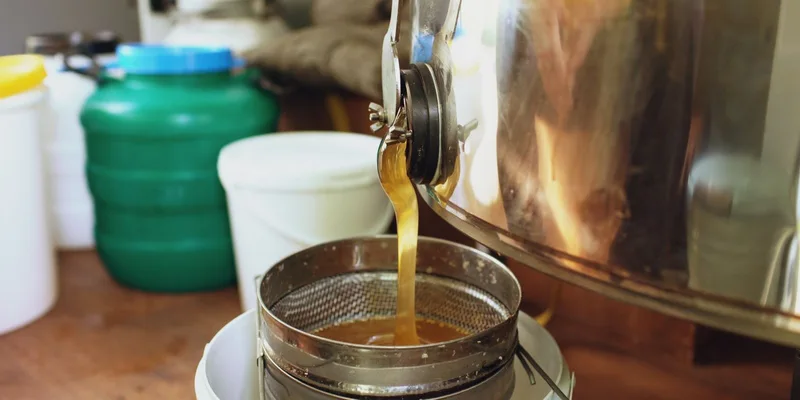
An extractor is a centrifuge. Uncapped frames go into a stainless drum, the drum spins, and honey is thrown out of the cells against the wall, where it runs down to a gate at the base. The comb survives the process, which is the whole point: drawn comb goes straight back to the bees instead of being rebuilt from scratch.
That last part is why extractors exist at all for a backyard apiary. Crushing and straining works and costs almost nothing, but it destroys the comb, and comb represents real work for the colony. Keeping frames intact means next season starts further ahead, and it is the strongest argument for the machine sitting in your garage.
Tangential or Radial: How the Frames Sit
Tangential extractors hold frames flat against the drum wall, so only the outward facing side empties per spin. You stop, flip every frame, and spin again. Radial extractors hold frames like spokes on a wheel, pointing outward from the center, which empties both sides at once because cells in a comb angle slightly upward toward the outer edge.
Almost every small extractor sold to backyard keepers is tangential, and that is fine. Flipping four frames takes under a minute, and tangential spinning is gentler on new, soft comb because you can go slower on the first side without leaving the far side full.
When Radial Starts to Pay Off
Radial makes sense once the flip step is the bottleneck, which usually means several colonies and multiple supers coming off in one weekend. The tradeoff is drum size: a radial extractor needs a wider basket to fan the frames out, so the machine takes up more floor space and needs more room to spin cleanly.
Frame Count Is Not the Same as Capacity
A four frame extractor holds four frames per load, not four frames of work. What determines your afternoon is how many supers came off the hives and how fast you can uncap, load, spin, unload and repeat. For most backyard apiaries the uncapping bench, not the drum, is the slow part of the day.
Listings often quote frame counts as a range, such as two deep frames or four medium frames in the same drum. Read that carefully, because it usually means the basket accepts four shallow or medium frames but only two deeps, and that changes the machine you are actually buying if you run all deeps.
Matching Drum Size to Colony Count
One or two colonies fits comfortably in a two frame drum, and the extra cycles cost minutes rather than hours. Three to five colonies is where a four frame drum starts saving noticeable time. Beyond that the honest advice is to look sideways rather than up: buying an eight frame machine for four colonies mostly buys a larger thing to wash.
Hand Crank or Motor
A hand crank extractor is simpler, quieter, cheaper to keep running, and gives you direct control over speed, which matters with fragile comb. A motorized extractor removes the physical work and lets you uncap the next frames while the drum runs. Neither extracts more honey; they differ in what they ask of your arms and your attention.
The practical dividing line most backyard keepers land on is whether you are doing more than a couple of loads. Cranking two loads is a workout. Cranking eight is a chore you start resenting halfway through, and that is the point where a motor stops being a luxury.
What to Check on a Motorized Unit
Look for variable speed rather than a single on and off switch. Fresh comb needs a slow start, and a motor that only runs at full speed will tear it. A brake or a controller that lets the drum coast down is worth having too, because a heavy basket stopping abruptly puts stress on the frames and the bearings.
Check where the motor sits too. Top mounted motors keep the drive away from honey, which simplifies cleanup. Our full breakdown of the tradeoff lives in electric or manual honey extractor.
Honey Extractors by Situation
One or Two Hives, First Harvest
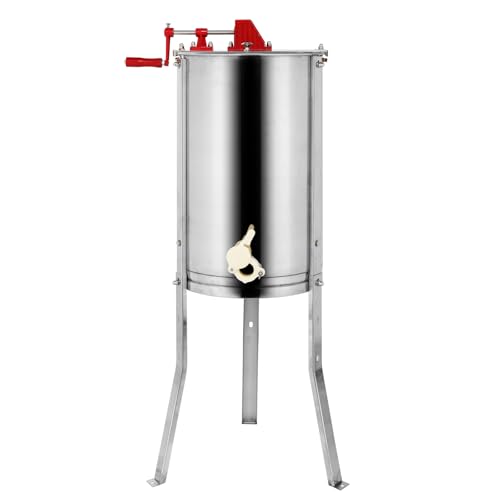
A two frame manual drum in food grade stainless is the standard starting point for a backyard apiary. It fits in a corner of the garage, it washes out in a laundry tub, and the hand crank gives you the slow start that new comb needs. Confirm the basket accepts the frame depth you actually run before ordering.
Three to Five Hives, Cutting the Afternoon Down
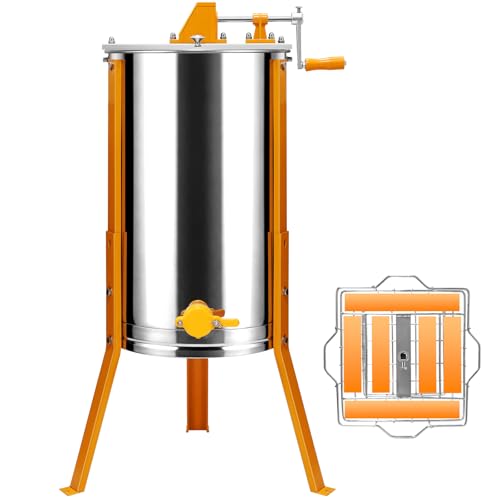
A four frame electric drum with variable speed is where most backyard keepers stop upgrading. You load four, start slow, and uncap the next set while it runs. Height adjustable legs matter here, because you want the gate clearing the rim of a bucket with a strainer sitting in it.

Keepers Who Want to Stop Flipping Frames
A radial basket empties both faces in one spin, which removes the flip step entirely. It needs more floor space and a wider drum, so measure the corner of the garage where it will live before committing. This is the format that pays off when several supers come off in a single weekend.
Watching the Spin Without Opening the Lid
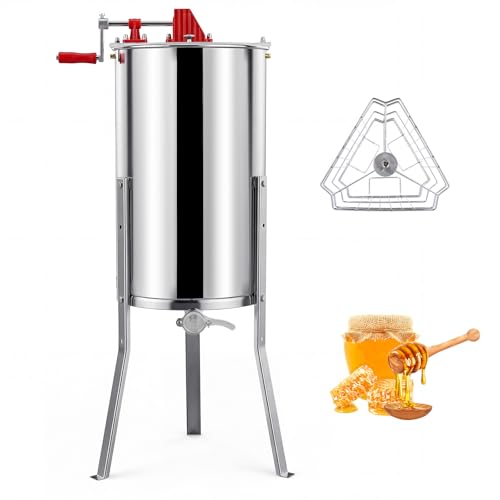
Clear lids sound like a gimmick until the first time you need to know whether the far side of a frame is empty. Being able to see the basket without stopping the drum saves cycles and stops you overspinning comb you have already emptied.
What Catches the Honey Coming Out
The gate on the drum needs somewhere to drain into, and honey straight off the frames carries wax flakes, the odd bee part and bits of cappings. A double sieve sitting in a food grade bucket handles the filtering in one step, and it is the piece people most often forget until harvest morning.

Comparing the Main Formats
| Format | Frames per load | How frames sit | Suits |
|---|---|---|---|
| Two frame manual | Two, flipped once | Flat to the wall, tangential | One or two colonies, first harvests |
| Four frame manual | Four mediums or two deeps | Flat to the wall, tangential | Two or three colonies, a helper on the bench |
| Four frame electric | Four mediums or two deeps | Flat to the wall, tangential | Three to five colonies, uncapping while it spins |
| Six frame radial | Six, no flipping | Spoked outward from center | Several supers in one weekend, garage space to spare |
The Parts People Wish They Had Checked
Four small details separate a smooth harvest day from a sticky one: the honey gate, the leg height, the lid, and the seam quality inside the drum. None of them appear in a headline spec, and all four show up within the first ten minutes of using the machine.
The gate should sit low enough that the drum drains close to empty, and it should open and close without a fight when honey has cooled slightly. Legs need to raise the gate above a bucket with a strainer set in the top, which is taller than people expect. Cheap extractors are often sold with legs that clear a bucket but not a bucket plus a sieve.
Seams, Welds and Cleanup
Inside the drum, look for smooth welds rather than a lapped seam with a lip, since a lip catches wax and turns rinsing into scrubbing. Cleanup itself is easier than the internet suggests: warm water and no detergent in the first rinse does most of the work. Never leave a wet extractor closed up, because trapped moisture in the seams is how a cheap drum starts to look tired after two seasons.
Frequently Asked Questions
Do I need an extractor for one or two hives? No. Crush and strain works, costs almost nothing, and gets the honey out. The reason to buy an extractor is to keep the drawn comb intact so the colony does not have to rebuild it next spring.
Will a four frame extractor take deep frames? Sometimes, and usually fewer of them. Many drums listed as four frame hold four mediums or two deeps. Check the basket dimensions against the frame depth you actually run before ordering.
Can I borrow instead of buying? Often, yes. Many local beekeeping associations own a club extractor members can reserve for a weekend, which is a good way to find out what size you actually want.
How do I stop new comb from blowing out? Start the drum slowly and build speed gradually, especially on comb that has never been extracted. Fresh comb has no reinforcement from previous cycles and is the most likely to tear loose from the frame.
Is stainless steel worth it over plastic? For anything you plan to keep, yes. Food grade stainless cleans up more easily, does not scratch into rough patches that hold residue, and holds up to the twisting load of a full basket better than a molded plastic drum.
What do I do with the honey straight out of the gate? Run it through a double sieve into a food grade bucket, then let it settle so air bubbles and fine wax rise before bottling. Our honey harvesting equipment guide covers the order of that process.
The Bottom Line
Pick the drum that matches your frame depth first, your colony count second, and everything else after that. For most backyard apiaries the honest answer is a two or four frame tangential extractor with a working gate and legs tall enough to clear a bucket and strainer, and a motor only once cranking has stopped being a novelty. Before harvest day arrives, read how to choose an uncapping knife, because the bench is the part of the day that actually takes the time, and our look at the VEVOR extractors if a budget stainless drum is on your shortlist.