Last updated: August 21, 2026
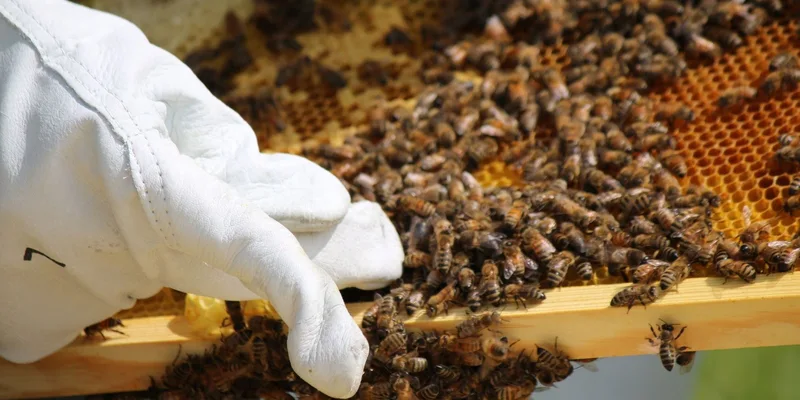
The gloves that come bundled with a starter kit are usually the first thing a new beekeeper replaces. They are thick, they are stiff, and they turn a frame of bees into something you handle with oven mitts. You cannot feel where the comb ends, you grip harder than you need to, and you crush bees you never saw, which makes the colony noisier, which makes you grip harder still.
Glove choice is the clearest trade in beekeeping: every millimeter of protection costs you dexterity, and clumsy hands cause the stings that the thickness was supposed to prevent. This guide covers the leather types, the cuff designs, the thin disposable route, and how to pick a size that does not bunch at the fingertips.
This article contains affiliate links. If you buy through them, we may earn a commission at no extra cost to you. Learn more.
Quick Answer
What are the best gloves for beekeeping?
- Goatskin is the standard for a reason: it is the softest of the common leathers, so you keep the most feel for the frame.
- Cowhide is tougher and thicker, which suits removals and rough work but costs you dexterity.
- Ventilated cuffs stop the sweaty forearm problem that makes long canvas sleeves miserable in summer.
- Nitrile disposables give the best feel of all, with the least protection. Plenty of keepers use them once they are confident.
Bottom line: start with goatskin gloves that fit snugly, and move thinner as your handling gets calmer.
Why Thinner Gloves Often Mean Fewer Stings
It sounds backwards, and it holds up in practice. Thick gloves remove the feedback that tells you a frame is sticking, that a bee is between the frame and the box wall, or that you are about to roll a cluster against the woodenware. Crushed bees release alarm pheromone, the colony responds, and the whole inspection gets harder.
Thinner gloves let you lift a frame with the lighter grip it actually needs, set it down without a bump, and notice the queen before you move the frame she is on. The stings you do take through thin leather are real, but the total number tends to fall once handling gets calmer.
Where That Logic Stops
It stops with a defensive colony, a cutout, or a swarm removal from an awkward space. When bees are actively targeting your hands rather than incidentally crawling on them, thickness wins. That is the argument for owning two pairs rather than one perfect pair.
Goatskin, Cowhide and Synthetic Compared
Goatskin is thin, supple, and the most common leather in dedicated beekeeping gloves. It molds to your hand and stays flexible after repeated wetting and drying. Cowhide is thicker and stiffer, more abrasion resistant, and slower to break in. Pigskin sits between them and breathes well, though it is less common in bee specific listings.
The leather comparison covers where each one earns its place. Synthetic gloves, usually a coated fabric, are the cheapest and the most variable. Some are perfectly serviceable for lifting boxes; others have seams that split within a season. The tell is whether the palm is a single piece or a patchwork, and whether the stitching runs inside a rolled seam or sits exposed on the outside where hive tools scrape it.
Cuff Length and Ventilation
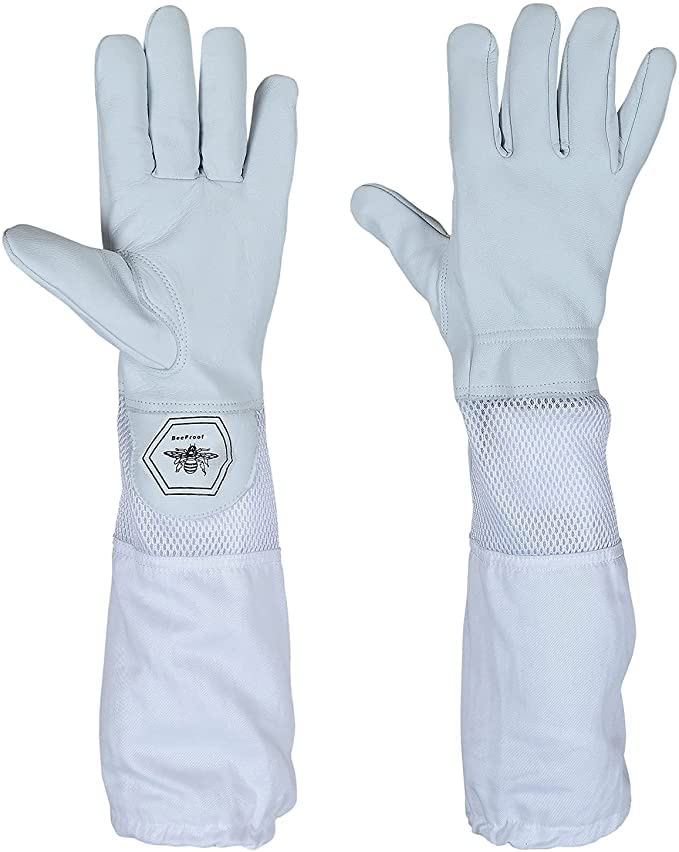
The cuff is the half of the glove that nobody compares and everybody notices. Beekeeping gloves come with a canvas sleeve running anywhere from the wrist to above the elbow, ending in an elastic band. The sleeve exists so bees cannot walk in at the gap where your suit sleeve ends, and it should overlap that sleeve rather than butt against it.
Long canvas sleeves get hot, which is why ventilated cuffs exist. A mesh panel in the forearm section lets air move while the elastic at the top still seals. Humble Bee, for example, sells goatskin gloves in ventilated cuff and reinforced ventilated cuff versions alongside plain canvas ones, which is the clearest illustration of the choice you are making.
Beekeeping Gloves by Situation
Best All Round Pair for Regular Inspections
Goatskin hands with a mid length canvas sleeve and an elastic cuff is the format most backyard keepers settle on. Enough feel to read a frame, enough sleeve to close the gap at the suit, and soft enough to work in from day one.

Best for Summer Inspections That Run Long
Ventilated cuffs replace part of the canvas forearm with mesh, which is the single change that makes an hour in the apiary in August bearable. The palm and fingers stay leather, so nothing is given up where the stings happen.
Best for Removals and Rough Handling
Cowhide with reinforced cuffs is the choice when you are pulling comb out of a wall cavity or moving equipment that has been sitting outside. Heavier, slower to break in, and the right call when abrasion matters more than feel.

Best for Maximum Feel Once You Are Confident
Thick nitrile disposables give you almost bare hand dexterity with a barrier against propolis, honey, and casual contact. They are the standard second stage for keepers who have stopped fumbling frames. Our nitrile glove guide covers the thickness question.

Best for a Helper Who Visits Once
A basic pair in a generic large, kept in the same bucket as the spare veil, saves you lending out the gloves you actually broke in. Anything with a long sleeve and a working elastic does the job for someone standing back and watching.

Comparing Glove Materials
| Material | Feel for the frame | Durability | Best suited to |
|---|---|---|---|
| Goatskin | Good, supple from new | Several seasons with care | Routine inspections |
| Cowhide | Limited until broken in | High, abrasion resistant | Removals, rough equipment |
| Coated synthetic | Variable, often stiff | Lowest, seams give first | Occasional use, spare pair |
| Nitrile disposable | Highest, close to bare hand | One to a few inspections | Confident handling, sticky work |
Getting the Size Right
Beekeeping gloves are sized to hand length, not to the small, medium, large scale you know from work gloves, and brands publish a measurement range in inches from wrist crease to fingertip. Measure before ordering. A glove that is too long leaves empty leather at the fingertips, and empty leather is exactly where you lose the feel you paid for.
Snug is the target, not tight. Leather gives a little as it breaks in, so a pair that is comfortably close on the first day settles in properly, while a pair you had to force on will stay uncomfortable and will split at the seams sooner. If you are between sizes and plan to wear a thin liner underneath, go up; otherwise stay down.
Care, Propolis and When to Replace
Leather gloves absorb propolis, honey, and venom, and venom on the outside of a glove is a signal to other bees. Wiping gloves down after an inspection and letting them dry away from direct heat keeps them supple and keeps the colony calmer next time. Some keepers wash goatskin gloves gently and accept a slightly stiffer result.
Replace them when the fingertips wear through, when a seam opens along the palm, or when the elastic at the cuff has stretched out enough that the sleeve slides down your forearm. A sliding cuff is the failure that actually causes stings, and it happens long before the leather itself gives up.
Frequently Asked Questions
Do experienced beekeepers wear gloves? Many wear thin nitrile rather than leather, and some work bare handed with calm colonies. That is a preference built on years of reading bee behavior, not a standard to aim for in your first season.
Can bees sting through leather beekeeping gloves? Through thin goatskin, occasionally, particularly at the seams and where the leather stretches over a knuckle. Gloves are sting-resistant rather than absolute, and goatskin trades a little of that resistance for the dexterity that keeps you from crushing bees.
Are the gloves included with a bee suit any good? Usually serviceable and usually stiff. They work for a first inspection, and most keepers upgrade within a season because the bundled pair is generic in both size and thickness.
What size beekeeping gloves should I order? Measure from the wrist crease to the tip of your middle finger and match that to the brand’s chart, since bee glove sizing runs on hand length rather than a generic small to large scale. Aim for snug, not tight.
Should the glove go over or under the suit sleeve? The glove cuff goes over the suit sleeve so there is an overlap rather than a butt joint. Many suits have thumb loops precisely so the sleeve stays put underneath while you pull the glove on.
How do I get propolis off my gloves? Let it harden and pick or scrape it off rather than trying to dissolve it. Rubbing at fresh propolis pushes it into the grain of the leather, where it stays sticky and collects dirt.
The Bottom Line
Good beekeeping gloves are the ones that let you handle frames calmly, and for most backyard keepers that means goatskin in a snug size with a cuff that overlaps the suit sleeve. Add ventilated cuffs if your summers are hot, keep a cowhide pair for removals if you do them, and move to nitrile once your hands have learned what a frame full of bees feels like. Read our nitrile glove guide next, or the bee suit buying guide if the rest of your kit is still open.