Last updated: August 21, 2026
The bee suit is the piece of equipment that decides whether your first inspection is calm or frantic. A suit that fits badly, fogs up, or lets a bee crawl in at the wrist turns a ten minute look into a scramble, and a beekeeper who is scrambling drops frames, crushes bees, and gets stung more than one who is standing still. That is the real argument for buying a decent suit before your bees arrive, not after.
This guide walks through what actually separates one bee suit from another: the fabric weight and how many layers sit between you and the sting, the veil style, the closures that keep bees out at ankles and wrists, and the fit decisions that most first-time buyers get wrong. No suit is sting-resistant everywhere at once, so the useful question is where a given suit gives ground and whether that matters for how you keep bees.
This article contains affiliate links. If you buy through them, we may earn a commission at no extra cost to you. Learn more.
Quick Answer
What should you look for in a bee suit?
- Standoff distance beats fabric thickness. A stinger reaches through fabric that is pressed against skin, so a suit that holds its shape protects better than one that is merely heavy.
- Ventilated three layer mesh for anyone keeping bees through a hot summer; a cotton or poly cotton suit for cooler climates and light use.
- Elastic or velcro at wrists and ankles, a zipper that runs to the veil without a gap, and thumb loops so the sleeve does not ride up when you lift a box.
- Order for the layers you wear underneath, not for your street size.
Bottom line: buy the airflow you need for your climate, then check the closures and the veil attachment before you look at anything else.
What a Bee Suit Actually Protects Against
A bee suit is a physical barrier plus a distance. Honey bee stingers are short, so most of the protection comes from keeping fabric off your skin rather than from any single tough layer. That is why a loose cotton suit and a three layer mesh suit can feel similar in a calm hive and behave very differently when a colony is defensive.
The second job of a suit is psychological, and it is not a small one. Beekeepers who trust their gear move slowly, and slow movement is the single biggest factor in how many stings you take. A suit that you are constantly checking for gaps does the opposite, which is why fit and closures matter as much as the fabric itself.
Fabric: Cotton, Poly Cotton or Ventilated Mesh
Three fabric families cover almost everything sold. Cotton and poly cotton suits are the classic white coveralls, usually a single woven layer around 240 grams per square meter. Ventilated suits use three bonded layers of mesh, with a springy middle layer that holds the outer mesh away from your skin. The third family is the lightweight nylon or polyester suit sold for occasional use.
Cotton breathes better than polyester but holds sweat, and a soaked cotton suit clings, which is exactly the condition you do not want. Poly cotton blends dry faster and wrinkle less, and they are what most budget suits use. Ventilated mesh is the coolest option by a wide margin in real heat, and it is also the bulkiest and the most expensive family, which is the trade every buyer in a hot state ends up making.
Why Layer Count Beats Thread Count
Marketing copy leans on fabric weight, but the number that changes how a suit feels in a defensive hive is standoff. Three layer construction creates a gap of a few millimeters that a stinger has to cross before it reaches skin, and it does that while letting air through. A single heavy layer gives you neither the gap nor the airflow, which is why so many keepers who start in cotton end up in mesh by their second summer. Our ventilated bee suit guide goes deeper into that trade.
Veil Styles You Will Be Choosing Between
Most suits ship with either a fencing veil, a round veil on a brim hat, or a square hood, and many of the better ones include two so you can swap. The fencing veil zips flat against the shoulders and stores easily. The round veil rides on a stiff brim and keeps mesh further from your face, which matters if bees are landing on the veil in front of your eyes.
Vision differs more than protection does. A round veil gives a wide, uninterrupted view because the brim holds mesh away in every direction; a fencing veil has a rigid insert at the top only, so it can drift closer at the sides when you look down at a frame. If you wear glasses, try the round veil first. The full comparison lives in our bee veil types guide.
Bee Suits by Situation
Best All Round Starting Point for a Backyard Keeper
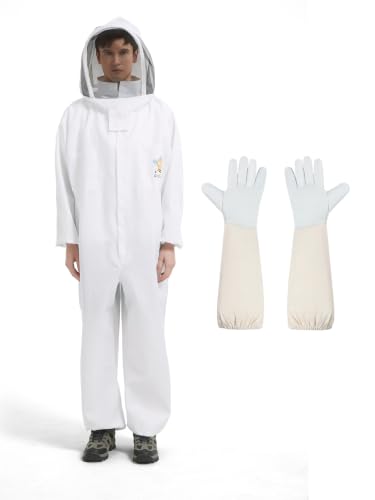
A full body poly cotton suit with a detachable fencing veil, elastic cuffs, and pockets that actually hold a hive tool covers the first year for most people in a temperate climate. It is the format nearly every starter kit includes, and it is easy to launder after a syrup spill.

Best for Summer Inspections in Real Heat
Three layer ventilated mesh is the answer for anyone opening hives in July in a warm state. The air passes through, the standoff distance goes up, and the suit stays wearable for a full afternoon of pulling supers instead of twenty minutes.

Best When You Want Both Veil Styles Included
Suits that ship with a fencing veil and a round brim veil let you decide after a few inspections instead of before your first one. That is worth more than it sounds, because veil preference is personal and nobody knows theirs in advance.

Best for a Quick Look Without Full Coverage
A jacket with an attached veil covers the half of your body that bees actually target during a short inspection, and it goes on over work clothes in seconds. Plenty of experienced keepers own both and reach for the jacket most weeks. Our suit versus jacket comparison covers when that backfires.
Best for a Second Person Helping Out
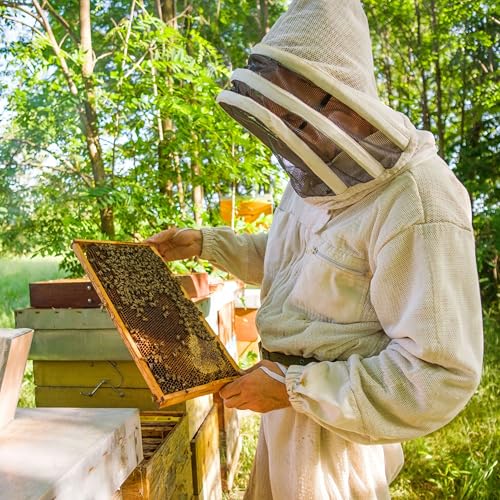
A spare suit in a middle size gets more use than new beekeepers expect, because neighbors, partners, and curious relatives all want to look once. A basic full body suit with a hood is enough for someone who will stand back and watch.
Comparing the Main Suit Types
| Suit type | Airflow | Standoff from skin | Best suited to |
|---|---|---|---|
| Cotton coverall | Moderate, holds sweat | Only where it hangs loose | Cool climates, occasional use |
| Poly cotton coverall | Moderate, dries faster | Only where it hangs loose | First suit, starter kits |
| Three layer ventilated | High, air passes through | Built in across the whole suit | Hot summers, frequent inspections |
| Jacket plus veil | Depends on fabric | Upper body only | Short looks, adding a super |
The Closures That Decide Whether Bees Get In
Bees find gaps, and the gaps are always in the same four places: the wrists, the ankles, the veil zipper, and wherever a pocket flap leaves an opening. Look for elastic plus an adjustable strap at the wrist, elastic at the ankle with enough length to tuck into a boot, and a two way zipper that runs all the way around the veil without a corner that has to be pinched shut.
Thumb loops and foot stirrups sound like a gimmick until the first time you reach up to lift a heavy box and your sleeve rides halfway to your elbow. Brass or heavy duty nylon zippers also outlast the cheap ones, and a stuck zipper on a suit you are already inside is a genuinely bad moment.
Fit, Sizing and the Layers Underneath
Bee suit sizing is not street sizing. Manufacturers cut suits to go over clothes, but they cut them differently from each other, and some brands size to height while others size to chest measurement. Read the specific brand chart, measure your chest and your inseam, and pay attention to whether the listed height range matches yours.
The practical rule is to allow room for a long sleeve layer underneath without ending up with fabric so loose it catches on hive corners. Too tight presses fabric to skin and removes your standoff; too loose snags and makes you clumsy. Our bee suit sizing guide works through the order up or order true debate, including what to do when you fall between two sizes.
What Owners Complain About Most
Read enough owner feedback and the same four complaints repeat: the veil zipper snags at the corners, the suit runs short in the torso for taller keepers, the white fabric shows every propolis smear after two seasons, and the included gloves are stiff enough that most people replace them immediately. None of those are dealbreakers, but they are worth knowing before you order.
The gloves point is the most common and the least worrying, since glove choice is a separate decision covered in our beekeeping gloves guide.
Frequently Asked Questions
Do I really need a full bee suit, or is a jacket enough? A jacket covers the upper body, which is where most inspection stings happen, and many experienced keepers use one for routine looks. A full suit earns its place during harvest, when handling a defensive colony, and any time you are kneeling or working low.
What color should a bee suit be? White or a very light shade. Bees respond more strongly to dark, fuzzy shapes, which is why beekeeping clothing has been light colored for generations. Camouflage and dark suits exist, but they work against you.
Can bees sting through a bee suit? Yes, wherever the fabric is pressed against skin. That is why suits are described as sting-resistant rather than anything absolute, and why standoff distance and a loose fit matter more than fabric weight.
How do I wash a bee suit? Most cotton and poly cotton suits are machine washable on a cool cycle with the veil removed; veils are usually hand wash so the mesh keeps its shape. Check the label for your specific suit, and wash off alarm pheromone after a bad day rather than letting it sit.
Is a ventilated suit worth the extra cost for one or two hives? If your summers are hot, yes, because the suit you are willing to put on is the suit you actually wear. In a mild climate with a handful of inspections a year, a poly cotton suit is enough.
The Bottom Line
Choose a bee suit by climate first, then by closures, then by veil style. A ventilated three layer suit is the right call for hot summers and frequent inspections, a poly cotton coverall covers a mild climate and a first season, and a jacket is the piece you will reach for on quick looks once you own both. Whatever you pick, order to a measured chest and height rather than a street size, and check that the wrists, ankles, and veil zipper close without a gap. Next, read our ventilated bee suit guide and our glove guide before you finish the kit.