Last updated: August 21, 2026
There is a specific moment that sells ventilated bee suits. It is the second week of August, the sun is directly overhead, you are on your third box of a hive that needs a full inspection, and the inside of a cotton coverall has turned into a sauna with a zipper. Sweat runs into your eyes behind the veil, you speed up to get it over with, you move too fast, and the colony notices.
A ventilated suit fixes that by replacing the woven layer with three bonded layers of mesh that air moves straight through. It also costs more, it is bulkier to store, and it is not the right buy for everyone. This guide covers how three layer construction actually works, what changes about protection and about laundering, and which situations justify the upgrade over a standard bee suit.
This article contains affiliate links. If you buy through them, we may earn a commission at no extra cost to you. Learn more.
Quick Answer
Is a ventilated bee suit worth it?
- Yes if you inspect through hot summers. Air passes through the mesh, so the suit stays wearable for a whole afternoon rather than twenty minutes.
- The three layer build also increases standoff, the gap between fabric and skin, which is where sting protection actually comes from.
- It costs more, packs bulkier, and the mesh catches on rough woodenware, so it is not an automatic upgrade in a cool climate.
- Look for two included veils, thumb loops, and a full length two way zipper before comparing anything else.
Bottom line: if the heat is the reason you skip inspections, a ventilated suit is the single upgrade that changes your season.
How Three Layer Mesh Actually Works
A ventilated suit is built from three bonded layers: a finely woven outer mesh, a springy open middle layer, and a second mesh on the inside. The middle layer does the real work by holding the outer and inner surfaces apart, so air passes horizontally through the sandwich while the outer mesh sits a few millimeters off your skin.
That gap is the point. A honey bee stinger is short, and most stings that get through a suit happen where fabric is pressed flat against you. A single woven layer only gives you that gap where the suit happens to hang loose; a three layer build gives it to you at the shoulders, the knees, and the seat, which is exactly where a cotton suit fails.
Why It Feels Cooler Than a Fan Would Suggest
The cooling is not just airflow, it is evaporation. Sweat leaving the inner mesh has somewhere to go instead of soaking into a woven layer that then clings. Beekeepers moving from cotton to mesh usually describe the difference less as a breeze and more as simply not being wet, which is what makes an hour in the apiary tolerable.
What You Give Up Compared With Cotton
Ventilated suits are bulkier. They do not fold small, they take up real space in a truck or a shed, and the mesh snags on splintered box corners and on wire in a way that smooth cotton does not. A snag on the outer mesh is cosmetic, but a tear that opens into the middle layer needs patching before it becomes a doorway.
Laundering is different too. Most mesh suits are machine washable on a gentle cool cycle, but they should be air dried rather than tumbled, because heat can distort the bonded middle layer. Check the label on the suit you buy. Propolis stains also sit on mesh more visibly than on woven cotton, so a two season old ventilated suit rarely looks new.
Ventilated Suits by Situation
Best for a Full Afternoon of Summer Inspections
A full body three layer suit with two detachable veils is the standard answer for anyone working hives in genuine heat. The pockets matter more than the marketing does: eight of them means the hive tool, the queen cage, and your phone all have a home while your hands are busy.

Best When You Only Want the Upper Half Ventilated
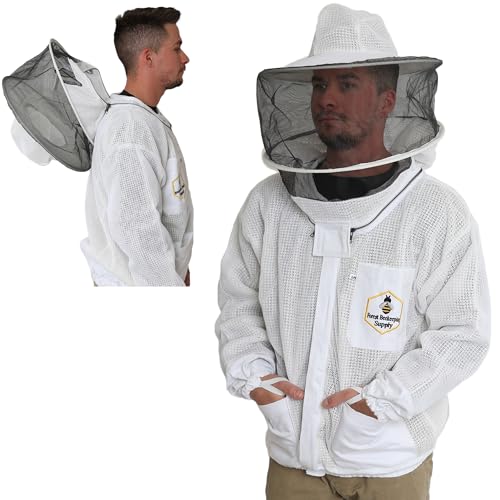
A ventilated jacket gives you the mesh where the heat and the stings concentrate, without the cost and bulk of full length legs. It goes on over work pants in seconds, which is why it ends up being the piece many keepers grab for a routine ten minute look.
Best for a Taller or Broader Build
Ventilated suits are cut long, and several brands run a stout or extended size range specifically for keepers who need torso length rather than just width. Buying into that range solves the ride up problem at the wrists and the ankles rather than working around it.

Best Round Veil for Keepers Who Wear Glasses
The round brim veil holds mesh further from your face in every direction, which is the difference between reading a frame comfortably and squinting through mesh that has drifted against your lenses. Some suits include it, and some sell it separately as a replacement hood.

Comparing Ventilated Formats
| Format | Coverage | Storage bulk | Who it suits |
|---|---|---|---|
| Full body ventilated suit | Head to ankle | High, does not fold small | Hot climates, harvest, defensive colonies |
| Ventilated jacket | Upper body plus veil | Moderate | Routine inspections, adding supers |
| Ventilated smock | Upper body, pull over | Low | Quick looks, hot days, over work clothes |
| Woven suit for comparison | Head to ankle | Low, folds flat | Cool climates, occasional use, tight budget |
Which Brands Beekeepers Compare
Two names come up constantly in ventilated suit discussions. Ultra Breeze builds three layer suits and jackets in the United States with two way brass zippers and a detachable hood, and Oz Armour sells three layer mesh suits and jackets in a very wide size range with both a fencing veil and a round brim hat included. Both have been on the market long enough to have a real owner track record.
Beyond those two, ventilated suits from general equipment brands cover the same construction at a lower price with less consistent stitching and thinner zippers. Dedicated bee supply houses such as Mann Lake, Dadant, and Betterbee also stock their own ventilated lines if you prefer buying from a bee supplier. Our Ultra Breeze review and our Oz Armour guide go model by model.
Sizing a Ventilated Suit
Mesh suits size differently from cotton ones because the bonded layers do not stretch or drape. Where a cotton coverall can be a size large and simply hang, a mesh suit that is too big stands off in stiff folds that catch on hive corners, and one that is too small loses its standoff exactly where you need it.
Measure your chest over the layer you plan to wear underneath, check the brand’s height range as well as the chest number, and treat the two as equally binding. Most ventilated suits are already generous, so the reflex to order up one size that works for cotton often lands you in a suit that is too roomy. Our sizing guide covers what to do when your chest and height point at different sizes.
Frequently Asked Questions
Can bees sting through a ventilated bee suit? They can wherever the layers get compressed, for example under a backpack strap or where you kneel hard on a hive stand. The three layer build reduces that considerably compared with a single woven layer, which is why these suits are called sting-resistant rather than anything absolute.
Is a ventilated suit warmer or cooler in cold weather? Cooler, which is the downside nobody mentions. Air passes through in April the same way it does in August, so keepers in cold climates often keep a woven suit or a jacket for early spring work.
Can I put a ventilated suit in the dryer? Generally no. Heat can distort the bonded middle layer that creates the standoff. Wash cool and air dry unless the label on your specific suit says otherwise.
Does mesh let in small hive beetles or wax moths? No. The outer mesh is woven finely enough to keep insects out; the openness is at the scale of air, not of a beetle. What mesh does let through is light, so bees see your movement more clearly than through a solid suit.
Fencing veil or round veil with a ventilated suit? Most three layer suits include both, and that is the reason to buy one that does. The round brim gives more distance from your face, the fencing veil packs flatter and zips out of the way faster.
How long does a ventilated suit last? That depends on how much rough woodenware it rubs against. Owners commonly report several seasons of regular use before the outer mesh needs patching at the knees or the cuffs, and a patched suit stays serviceable well beyond that.
The Bottom Line
A ventilated bee suit buys you two things: airflow through three bonded mesh layers, and a built in gap between fabric and skin that a woven suit only gives you where it happens to hang loose. In a hot climate that combination is the difference between inspecting on schedule and putting it off, which is the real cost of a suit you do not want to wear. In a cool climate the case is weaker and a woven suit is enough. Read our bee suit buying guide for the fabric comparison in full, and our Oz Armour model guide if you already know you want mesh.