
Last updated: August 21, 2026
The first time you skim a layer of drowned bees off the top of a feeder, you stop thinking of it as a container and start thinking of it as a piece of equipment with a design. A hive top feeder holds more syrup than anything else you can put on a colony and refills without opening the brood nest, which is exactly why it is worth getting the right one.
Top feeders differ mainly in how bees reach the syrup and how they get back out. That single detail separates a feeder you will still be using in five years from one that quietly costs you bees every week. This guide covers the common designs, what causes drowning, how capacity actually plays out in a backyard, and how to make sure the thing fits your boxes.
This article contains affiliate links. If you buy through them, we may earn a commission at no extra cost to you. Learn more.
Quick Answer
What should you look for in a hive top feeder?
- Access design first. Screened cages, ladders or floats are what keep bees out of the open syrup.
- Capacity second. A large tray means fewer refills and less disturbance while a colony draws comb.
- Fit third. Eight frame and ten frame footprints are not interchangeable, and neither are the depths.
- Material and sealing decide how long it lasts, since a warped or leaking tray drips syrup into the hive.
Bottom line: buy the access design, not the volume. A feeder that drowns bees is expensive no matter how much it holds.
Where a Top Feeder Sits in the Stack
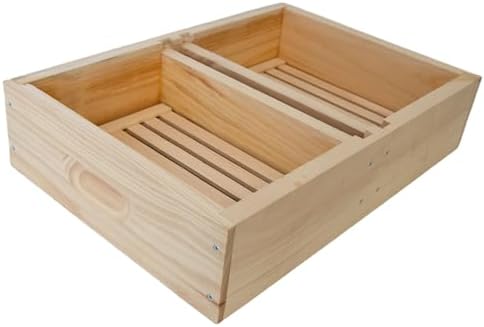
A hive top feeder is a shallow tray with the same footprint as your hive body. It goes directly on top of the uppermost brood box, usually with the inner cover removed, and the outer cover sits over it. Bees walk up from the frames below into an access point in the tray, take syrup, and return without ever leaving the hive.
Because the syrup never sees daylight, robbers have nothing to find, and because refilling means lifting only the outer cover, the colony barely notices you. Those two advantages are why top feeders dominate the spring feeding season for keepers with drawn-out comb to build.
The Three Common Designs
Almost every top feeder on the market is a variation on three ideas: a central access slot with screened cages, a pair of side reservoirs with a middle walkway, or a small round rapid feeder that sits over the inner cover hole. They differ in capacity, in how easy they are to clean, and in how well they protect the bees.
Miller Style With a Central Slot
The classic design has a full width tray split by a raised central walkway. Bees come up through the slot, climb into a screened cage on each side, and reach the syrup from behind a barrier that stops them landing on the open surface. It is the format most keepers picture when they say hive top feeder.
Tray With a Float or Ladder
Cheaper trays skip the screened cages and give the bees a plastic float or a textured ramp instead. These work when the float is properly sized and stay dangerous when it is not, because a bee that gets under a float has no way back. Check reviews for drowning complaints on the specific model before buying.
Rapid Round Feeders
A rapid feeder is a round or square reservoir that sits over the inner cover hole with a central chimney and a cap. Bees walk up the chimney, feed under the cap, and never reach open liquid. Capacity is lower than a full tray, but the drowning risk is close to zero and they are easy to clean.
Why Bees Drown, and What Prevents It
Bees drown in feeders because syrup has surface tension and wet wings do not fly. A bee that steps onto an open surface of liquid, or falls in while jostling at a crowded access point, needs a textured surface to climb out on. Without one, she stays there, and so do the next hundred.
Every anti-drowning feature is a version of the same fix: keep bees off the open surface, or give them grip when they land on it. Screened cages do the first, floats and rough ladders do the second, and the rapid feeder design sidesteps the problem entirely by feeding under a cap.
What You Can Do With a Feeder You Already Own
If your tray drowns bees, most keepers add a floating raft of some kind: a strip of window screen bent into a ramp, a piece of untreated wood, or a mesh insert cut to the tray. It is a common enough workaround that many people buy the cheap tray and plan on it from the start.
Capacity: What It Actually Buys You
The real value of a big tray is fewer visits. A newly installed package drawing foundation gets through syrup quickly, and every refill on a small feeder is another lift of the cover, another puff of smoke and another interruption. A full footprint feeder can carry a colony through a stretch without you touching it.
The counterweight is waste. Syrup left in a warm hive ferments, and a giant tray of syrup that a small colony cannot get through in time becomes a sour mess you have to dump and wash out. Match the fill to the colony rather than filling to the brim by habit.
Best for a Standard Ten Frame Hive
A full footprint tray with screened access covers spring buildup and fall feeding on the most common box size in the country.

Best for Eight Frame Equipment
Eight frame boxes need their own footprint, and a ten frame tray sitting on an eight frame stack leaves an open gap on both sides.
Fit, Depth and the Outer Cover
Two fit questions catch people out. The first is footprint: eight frame and ten frame equipment are different widths, and a mismatch means bees in places they should not be. The second is depth, because a deep tray plus an outer cover may not clear if you are also running a shim or a moisture board above.
Check as well whether the design expects the inner cover to stay in place or come off. Most trays replace the inner cover entirely; rapid round feeders usually sit on top of it and need an empty box or shim around them so the outer cover can close.
Best for Keepers Who Want Zero Drowning Risk
A rapid round feeder over the inner cover hole feeds under a cap, cleans out in a moment and suits smaller colonies and nucs.

Comparing the Designs
Pick by how much handling you want to do and how much syrup a colony will realistically use before it turns.
| Design | Access method | Drowning risk | Best suited to |
|---|---|---|---|
| Miller style with screened cages | Central slot into caged reservoirs | Low when the screen is intact | Package installs and fall feeding |
| Open tray with float | Bees land on a float or ramp | Moderate, depends entirely on the float | Budget buys, often improved with a homemade raft |
| Rapid round feeder | Chimney under a cap | Very low | Nucs, small colonies, quick top-ups |
| Divided side trays | Central walkway between two reservoirs | Low to moderate by model | Keepers who want to watch levels without opening |
Where a Top Feeder Stops Working
Cold weather ends the usefulness of any syrup feeder. Bees cannot break cluster to walk up into a tray, and syrup they cannot evaporate simply adds humidity to a hive already fighting condensation. Once nights are cold, feeding moves to solid sugar placed directly on the top bars.
A top feeder also takes up the space a moisture board or insulation would occupy, so it comes off as part of fall prep rather than staying on through winter. Our winter feeding guide covers what goes in its place.
Cleaning, Storage and Longevity
Wash a feeder between uses rather than topping up over old syrup, because residue ferments and fermented syrup gets refused. Warm water and a brush handle most of it; strong detergents linger in plastic and are worth avoiding on anything that will hold bee feed.
Store trays out of direct sun. Thin plastic warps in a hot shed and a warped tray leaks, which puts syrup down the inside wall of the hive and straight into a robbing problem. Wooden feeders need their sealing checked each season for the same reason.
Frequently Asked Questions
Do hive top feeders drown bees? Some designs do. Screened cage access and rapid round feeders keep bees off the open syrup, while a plain tray with a poor float lets them fall in with no way out. Access design matters more than any other feature.
Where does a hive top feeder go? Directly on top of the upper brood box, usually replacing the inner cover, with the outer cover over it. Rapid round feeders are the exception and sit above the inner cover inside an empty box or shim.
Can I leave a top feeder on all season? Better not to. Syrup ferments in warm weather, and in cold weather bees cannot use it at all. Feed for a specific reason, then take the feeder off, wash it and store it dry.
Will a top feeder cause robbing? Far less than an entrance feeder, since the syrup stays inside the stack. Leaks and spills are the exception, so check that the tray is not warped and clean up anything you spill around the hive.
Does a ten frame feeder fit an eight frame hive? No. The footprints are different widths, and the mismatch leaves open gaps that let bees into the wrong places and let robbers in from outside. Buy the feeder that matches your equipment.
Top feeder or frame feeder? A top feeder holds more and refills without opening the brood box; a frame feeder is completely invisible from outside and is the quieter choice in a yard with robbing pressure. Many keepers own both.
The Bottom Line
A hive top feeder gives you the most syrup with the least disturbance, and the model you should buy is the one with the best access design for your footprint, not the biggest tray on the shelf. Screened cages and rapid round feeders keep bees out of the liquid; plain floats often need a homemade raft added. Read next: our comparison of all four feeder types, and syrup ratios by season for what to actually put in it.