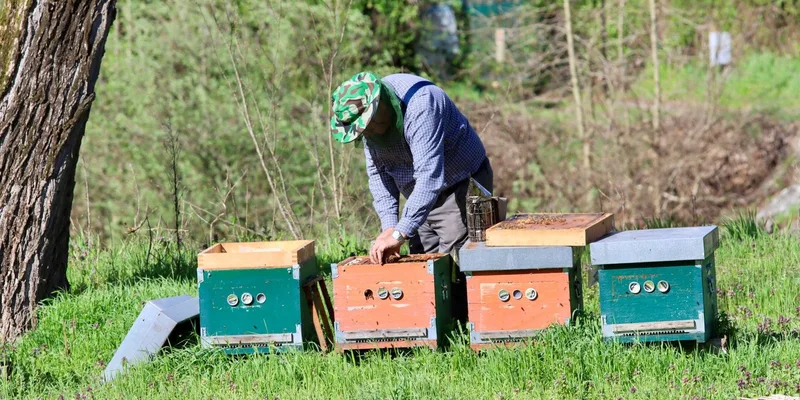
Last updated: August 21, 2026
Nobody buys a hive feeder for fun. You buy one because a package needs syrup to draw foundation, or because a fall inspection turned up a colony too light to make it, or because a nuc installed in June is not building fast enough. The feeder is a tool for a specific problem, and the four common designs solve it in different ways.
The decision comes down to four things: how much syrup the feeder holds, how many bees drown in it, whether it invites robbing, and whether you have to open the hive to refill it. This guide compares top, frame, entrance and pail feeders on those points, so you can pick the one that matches your yard rather than the one in the starter kit.
This article contains affiliate links. If you buy through them, we may earn a commission at no extra cost to you. Learn more.
Quick Answer
Which bee hive feeder should you use?
- Top feeders hold the most syrup and refill without disturbing the bees, but the cheaper designs drown bees if the ladder or float is poor.
- Frame feeders sit inside the brood box, stay hidden from robbers, and cost you a frame of comb space.
- Entrance feeders are the easiest to check and the most likely to trigger robbing in a dearth.
- Pail and bucket feeders are simple, cheap and hard to beat for a quick top-up above the inner cover.
Bottom line: in a backyard with more than one hive, keep the syrup inside the box; entrance feeders are convenient right up until they start a robbing frenzy.
What a Hive Feeder Actually Has to Do
A good feeder gets syrup to the colony without drowning bees, without advertising it to every other colony in the neighborhood, and without forcing you to break the hive apart every two days. Designs weight those three jobs differently, and the right answer changes with the season and with how many hives you keep.
Capacity matters more than beginners expect. A feeder that empties in a day means repeated visits and repeated disturbance, while a large one carries a package through the first weeks of drawing comb on occasional refills.
Top Feeders: Most Capacity, Least Disturbance
A hive top feeder is a shallow box the footprint of your hive that sits above the brood chamber, under the outer cover. Bees come up through a central slot or through screened access, and you refill by lifting only the lid. Capacity is the big draw, because a top feeder can hold enough syrup to keep a colony busy for a week or more.
The weak point is drowning. Designs vary a lot in how well the access is screened and how the bees get back out of the syrup, and the difference between a good one and a poor one shows up as a raft of dead bees floating on the surface. Our top feeder guide goes through what to look for in the access design.
Best for Feeding a Package Through the First Weeks
A full footprint top feeder with screened access carries the volume a new colony needs while drawing comb, and refilling means lifting nothing but the outer cover.

Frame Feeders: Hidden From Robbers
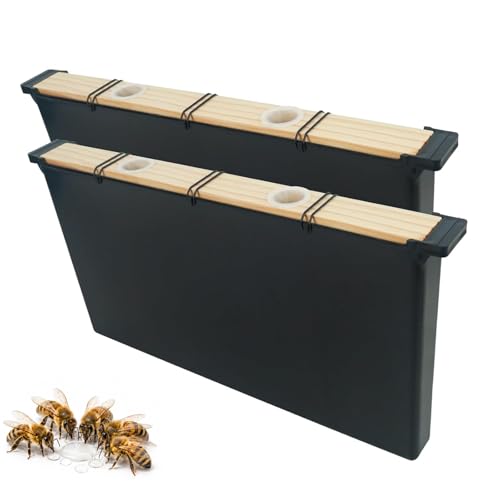
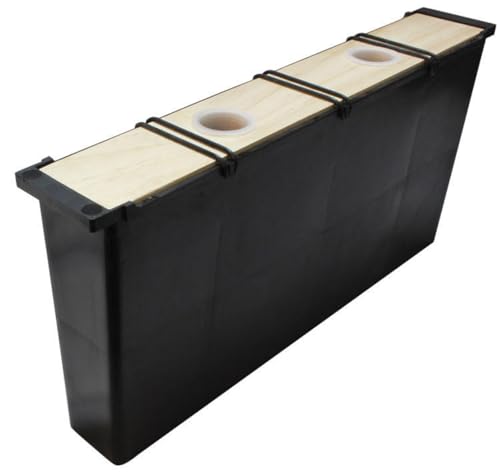
A frame feeder, also called a division board feeder, is a plastic or wooden reservoir shaped like a frame that hangs inside the brood box in place of one. Because the syrup is inside the hive cavity, nothing about it is visible or smellable from outside, which makes it the quietest option in a yard where robbing is a concern.
Two costs come with that. You give up a frame of comb space, which matters in a colony that is trying to build, and you have to open the box to refill. Good ones have a rough inner ladder or a mesh insert so bees can climb out; the ones without that feature drown bees steadily.
Best for a Yard Where Robbing Starts Easily
An in-hive frame feeder with a built-in ladder keeps the syrup out of sight and gives the bees a way back up the wall.
Entrance Feeders: Convenient and Risky
The entrance feeder, often called a Boardman feeder, is an inverted jar on a plastic base that slides into the hive entrance. Little Giant makes the version most people recognize, with a glass jar so you can see the level at a glance. You can check and refill it without touching the hive at all, which is genuinely useful.
The problem is that it puts syrup at the front door, at the exact spot other colonies and wasps come to probe. During a dearth, an entrance feeder can be the thing that starts a robbing event. Many keepers own one, use it in spring when forage is plentiful, and put it away for the rest of the year.
Best for Spring Feeding a Single Backyard Hive
A jar-and-base entrance feeder is the quickest way to see syrup levels without opening anything, in a season and a yard where robbing pressure is low.

Pail and Bucket Feeders: Simple and Scalable
A pail feeder is a bucket or jar with tiny perforations in the lid, inverted over the hole in the inner cover so vacuum holds the syrup and the bees feed from below. It is about as simple as beekeeping equipment gets, it comes in sizes from a quart jar upward, and almost nothing drowns.
You need an empty box or shim around the pail so the outer cover fits, and you need to invert it over a sink the first few times. The pail versus entrance feeder comparison covers which suits a yard with robbing pressure.
Best for Refilling Several Hives Quickly
A large perforated-lid bucket feeder sits over the inner cover hole, holds a serious volume and swaps out in seconds.
Comparing the Four Designs
Read this by picking the column that matters most in your situation. In a one hive backyard, convenience wins; in a yard with four colonies in a fall dearth, robbing risk wins outright.
| Feeder type | Capacity | Robbing risk | Refill disturbance |
|---|---|---|---|
| Hive top feeder | Highest of the four | Low, syrup stays inside the stack | Lift the outer cover only |
| Frame feeder | Moderate, set by frame volume | Lowest, invisible from outside | Open the brood box |
| Entrance feeder | Small, a jar at a time | Highest, syrup sits at the door | None, swap the jar from outside |
| Pail or bucket feeder | Wide range by container size | Low if fitted under a shim or empty box | Lift the outer cover, swap the pail |
Robbing Is the Deciding Factor in Most Backyards
Robbing happens when a strong colony finds an easier source of sugar than foraging, usually in a late summer dearth. It escalates fast, it can kill a weak colony in an afternoon, and the smell of syrup outside a hive is a reliable trigger. Feeder choice is one of the few things fully under your control.
Keeping syrup inside the hive body removes most of the invitation. Reducing the entrance helps too, and a robbing screen handles the rest in a yard that has already had trouble. Cleaning up spilled syrup matters more than most people think.
When to Feed, and When to Leave It Alone
The standard reasons to feed are a newly installed package or nuc drawing comb, a colony that is light going into fall, and spring buildup in a year where forage arrives late. Outside those situations, feeding a colony that is bringing in nectar mostly fills brood comb with syrup and crowds the queen.
Never feed with honey supers on if you intend to harvest that honey, since the point of a harvest is that it came from nectar. The syrup ratio you use also changes with the season, which our syrup guide explains, and in the depths of winter syrup stops working altogether.
Mistakes That Turn a Feeder Into a Problem
The most common one is leaving an entrance feeder on year round because it is easy to check. The second is a top feeder with poor access that quietly drowns a cup of bees a week without the beekeeper noticing until the syrup is skimmed off.
The third is neglect. Syrup left in a warm hive for weeks ferments or grows mold, and bees will not take it. Mix what the colony will consume in a reasonable window and wash the feeder between fills rather than topping up over old syrup.
Frequently Asked Questions
What is the best type of bee hive feeder for beginners? For a single backyard hive, a top feeder or a pail feeder covers almost everything: good capacity, low robbing risk and refilling without opening the brood box. Entrance feeders are easiest to check but the most likely to attract robbers.
Do hive feeders drown bees? Poorly designed ones do. Look for screened access, a rough ladder or a float that gives bees a way out of the syrup. Pail feeders drown almost nothing because the bees never contact an open surface of liquid.
Can I leave a feeder on the hive all year? Not usefully. Syrup ferments in warm weather and cannot be cured in cold weather, and a feeder left in place invites robbing during a dearth. Feed for a reason and take the feeder off when that reason ends.
How much syrup does a new colony need? It depends on the forage available, the weather and how much comb the colony still has to draw, so there is no single figure. Watch how fast the feeder empties and how quickly foundation is being drawn, and ask a local association what is normal for your area.
Can I feed while honey supers are on? Not if you plan to harvest that honey. Sugar syrup stored in supers ends up in the jar, which is neither honest nor what you set out to make. Feed before supers go on or after they come off.
Which feeder is best in winter? None of them. Bees cannot evaporate syrup in the cold, so winter feeding switches to solid sugar placed directly above the cluster. Our winter feeding guide covers candy boards, fondant and dry sugar.
The Bottom Line
Choose a hive feeder by capacity, drowning risk, robbing risk and how much you have to disturb the colony to refill it. Top feeders and pail feeders suit most backyard setups, frame feeders are the quietest option where robbing is a problem, and entrance feeders are best treated as a spring convenience rather than a default. Read next: the top feeder guide for access designs that keep bees out of the syrup, and winter feeding for the season when syrup stops working.