Last updated: August 21, 2026
Once the hive is ordered, the next question is what goes in it. There are two ordinary ways to buy bees in the United States: a package, which is a screened box of loose bees with a caged queen, or a nuc, which is a small working colony already living on frames. They arrive at different times, behave differently in the first month, and fail in different ways.
Neither is the right answer everywhere. The choice usually gets made for you by what local suppliers actually have available, and the useful thing is knowing what each one asks of a first year beekeeper before you commit to a pickup date.
This article contains affiliate links. If you buy through them, we may earn a commission at no extra cost to you. Learn more.
Quick Answer
Should a first colony be a package or a nuc?
- A nuc is already a functioning colony on drawn comb, so it starts faster and is more forgiving in a first season.
- A package is loose bees with a caged queen, available earlier and more widely, but it starts from nothing.
- Nucs usually cost more and come with local comb, which is a benefit and also something to inspect.
- Availability decides more often than preference, so ask a local club what their suppliers actually deliver.
Bottom line: take the nuc if a good local one is available, and a package if it is not, because both work with the right feeding.
What Each One Actually Is
A package is a screened wooden or plastic box holding a measured weight of bees shaken from several colonies, plus a separately caged queen they have not met, and a can or tin of syrup. There is no comb, no brood and no established social order. It is a crowd, not a colony.
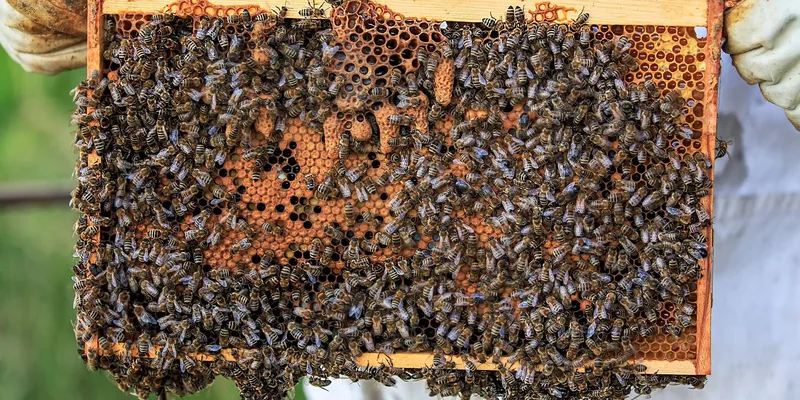
A nuc, short for nucleus colony, is a functioning miniature hive on frames, typically five of them, with a laying queen, brood at several stages, stored pollen and honey, and drawn comb. You transfer the frames into your box and the colony continues where it left off.
How a Package Starts
Installation involves pouring or shaking the bees into the hive and suspending the queen cage between frames so the colony releases her over several days through a candy plug. Until she is out and laying, nothing is settled, and the bees have to draw comb before she has anywhere to lay at all.
The First Three Weeks Are the Risky Part
Two things can go wrong early. The colony can reject the queen, which is why the slow release cage exists, and the colony can abscond, meaning the whole cluster leaves because nothing anchors it to the box. Neither is common, but both are more likely with a package than with a nuc.
Continuous syrup is what carries a package through. Comb building is expensive in energy terms, and a feeder that runs dry in the first weeks visibly slows the colony down. Our feeder comparison covers which style suits an establishing colony without triggering robbing.
How a Nuc Starts
A nuc skips the establishment phase entirely. The queen is already laying, brood is already emerging, comb is already drawn, and the colony has a working population structure from the moment the frames go in. The transfer takes a few minutes and the colony usually carries on foraging the same afternoon.
That head start is the main argument for a nuc in a first year. It also means less feeding pressure, since drawn comb removes the largest energy cost, though a nuc on new foundation in the rest of the box still benefits from syrup. Our nuc box guide covers the boxes themselves, including why keeping an empty one around is useful later.
Package and Nuc Compared
The table sets the two side by side on the factors that actually shape a first season. Availability and timing matter as much as the biology, since the best option is the one you can actually get from a supplier near you.
| Factor | Package | Nuc | Why it matters |
|---|---|---|---|
| Starting point | Loose bees, caged queen, no comb | Laying queen, brood, drawn comb | Decides how fast the colony builds |
| Availability | Wider, ships long distance | Usually local, often sells out | Often the deciding factor |
| Timing | Earlier in spring | Later, once brood is ready | Affects how long the season is |
| Early risk | Queen rejection, absconding | Inherited comb condition | Different failure modes, not more or fewer |
| Feeding demand | High until comb is drawn | Lower at the start | Determines feeder workload |
| Frame fit | Any hive, no frames included | Must match your frame size | A nuc for the wrong hive is unusable |
Which One Suits a First Colony
For most beginners a good local nuc is the easier start, because it removes the queen introduction question and the comb building bottleneck at once. It also gives you brood at every stage to look at during your first inspections, which is exactly what you need to be learning.
Packages remain a completely reasonable choice, especially where nucs are scarce or expensive, and they are how a large share of American beekeepers begin. They just demand more attention in the first month and more consistent feeding. Our backyard start guide covers the installation of each and the schedule around it.
What to Check Before You Buy Either
Ask three questions of any supplier. Where do the bees come from, since locally raised stock is usually better adapted to your winters. What frame size does the nuc come on, because a deep nuc is useless in an all medium setup. And what is the policy if the queen fails within the first weeks.
Inspecting a Nuc Before You Drive Away
A nuc carries whatever came with it, including the condition of the comb. Look for a solid laying pattern with brood at several stages, comb that is light rather than black and brittle, and frames without visible damage. A reputable supplier expects the question and will open it with you.
Old comb is not automatically a problem, but a nuc built entirely on dark, heavily used frames is worth asking about. Rotating out old comb is normal ongoing maintenance, and starting with a box of it means starting that rotation immediately.
Ordering and Timing
Both packages and nucs are ordered months ahead. Suppliers typically open orders in late fall or early winter for spring delivery, and good local sources sell out well before the weather turns. Ordering late is the single most common way a first season starts on the back foot.
Packages generally become available earlier in spring than nucs, since a nuc needs a colony to be strong enough to divide first. That timing difference is worth planning around, because an earlier install means more of the main flow ahead of the colony. Our starter kit guide covers getting the equipment ready against a known delivery date.
Frequently Asked Questions
Is a nuc better than a package for beginners? Generally yes, because the queen is already laying and the comb is already drawn, which removes two of the things most likely to go wrong in the first month. Packages still work well and are more widely available.
How many frames is a standard nuc? Five is the usual configuration in the United States, on deep frames unless you specify otherwise. Confirm the frame depth before ordering, since a deep nuc will not fit a hive built entirely from medium boxes.
Can I install a package into a hive with no drawn comb? Yes, and that is the normal situation. It also means the colony needs syrup continuously until it has drawn most of the brood box, which is why feeding matters so much in the first weeks.
What happens if the queen dies after installation? Contact the supplier first, since many replace a queen that fails soon after delivery. A frame of eggs from another colony lets the bees raise their own if a replacement is not available quickly, and a mentor is worth calling before deciding.
When do packages and nucs become available? Packages usually come first in spring, nucs a few weeks later once source colonies are strong enough to split. Ordering happens far earlier than either, typically between late fall and midwinter.
Should I buy bees from far away or locally? Local stock is generally better adapted to your climate and comes with a supplier you can call. Long distance packages are a normal part of the industry and perfectly workable, but the local option usually wins when both are available.
The Bottom Line
A nuc gives a first colony a running start and a package gives you an earlier, cheaper, more widely available one. Both produce good colonies when fed properly, and availability from a supplier your local club trusts decides the question more often than any argument about biology. Next, read the nuc box guide and what belongs in the first equipment order.