Last updated: August 21, 2026
If you are extracting a handful of frames rather than a truckload, a heated knife is often more machine than the job needs. The two small tools that come up instead are the uncapping fork, a row of thin tines on a handle that beekeepers also call a capping scratcher, and the uncapping roller, a spiked barrel you push across the face of the comb. They cost about the same, they live in the same drawer, and they do genuinely different things.
The confusion is worth clearing up before harvest day, because the choice changes what you end up with afterward. One of them takes the wax cappings off the frame and hands you a bowl of cappings to render. The other leaves most of that wax where it is. Neither is wrong, but you should know which outcome you are choosing.
This article contains affiliate links. If you buy through them, we may earn a commission at no extra cost to you. Learn more.
Quick Answer
Uncapping fork or roller for a few frames?
- The fork scrapes cappings off the comb, so you collect wax and the surface ends up genuinely open.
- The roller punctures the cappings and leaves most of the wax attached, so there is far less mess and almost nothing to render.
- A fork is also the tool that rescues the sunken and uneven patches a knife skates over, which is why most keepers own one regardless.
- For fewer than about ten frames, either works; pick the fork if you want the beeswax, the roller if you want speed and a clean bench.
Bottom line: fork for wax and control, roller for speed and less cleanup, and a fork in the drawer either way.
What Each Tool Does to the Comb
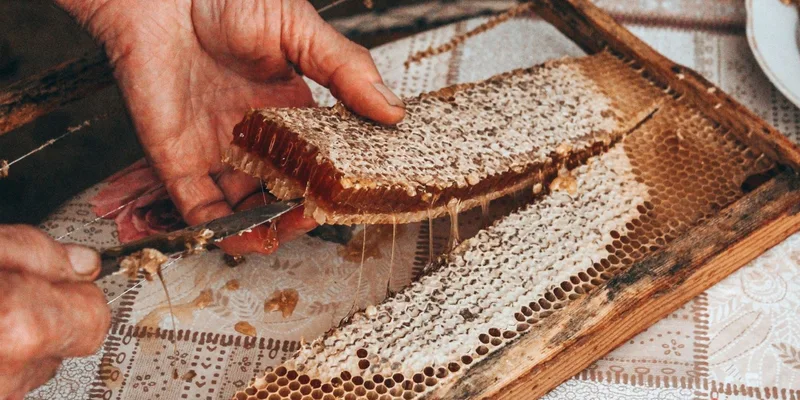
An uncapping fork has a row of thin tines set into a handle. You slide it under the layer of wax cappings at a shallow angle and lift, peeling the capping layer off in sheets and flakes that drop into whatever you have set below. The comb underneath stays intact, and the cells sit fully open for the extractor.
An uncapping roller is a barrel of short spikes on a handle. You roll it across the capped face and it perforates the wax rather than removing it. Honey can then leave the cells during the spin, but the punctured cappings stay on the frame, so there is very little loose wax to catch.
What You Give Up With the Roller
The roller trades wax for tidiness. Cappings wax is the cleanest wax your hive produces and the raw material for candles and wraps, and a roller keeps almost all of it on the frame instead of in your tank. If you were looking forward to rendering beeswax from your own cappings, the roller quietly removes that harvest.
There is a second, smaller trade. Because the cells are punctured rather than opened, some keepers find frames spin out a little less completely, especially with thick cappings or cool honey. Warm frames and a slightly longer spin usually close that gap, but it is the reason commercial operations do not use rollers.
What the Fork Is Genuinely Better At
The fork is the only one of the two that fixes uneven comb. Bees do not draw a flat surface: there are hollows, high patches and frames where the comb bulges past the wood. A knife rides on the frame rails and skips the low spots entirely, and the fork is what gets in there and opens them.
That makes it the backup tool even in kitchens where a heated knife does the bulk of the work. Run the knife down the face, then go back over the sunken patches with the fork before the frame goes in the drum. Our guide to uncapping honey frames walks through that sequence, and the uncapping knife guide covers when a knife is worth adding at all.
Picking a Tool That Lasts
The Fork Worth Buying
Look for stainless tines set firmly in the head rather than loose in a plastic collar, and a handle you can grip with sticky hands. Slightly angled tines make it easier to work at a shallow angle without digging into the comb, which is the mistake that turns uncapping into comb repair for the bees.

The Roller Worth Buying
Rollers live or die on the spike mounting. Stainless spikes in a barrel that turns freely on the handle will keep working; plastic spikes bend and stop puncturing after a season. Check that the barrel spins without wobble, because a stiff roller drags across the comb rather than rolling over it.

Somewhere for the Cappings to Land
If you go the fork route you need a container under the frame, and a bowl balanced on a chair is how kitchen floors get ruined. A tank with a rack across the top and a strainer below lets you rest the frame, scrape, and let the honey drain out from the wax while you keep working.

Fork Against Roller at a Glance
| Tool | What it does to cappings | Wax collected | Best for |
|---|---|---|---|
| Uncapping fork | Lifts them off in sheets | Most of it, ready to render | Uneven comb, keepers who want wax |
| Uncapping roller | Punctures, leaves them on | Almost none | Speed, minimal cleanup |
| Cold knife | Slices the top layer off | A lot, in slabs | Flat, well drawn frames |
| Heated knife | Melts through the layer | A lot, with more melted wax | Larger harvests, flat comb |
Mistakes That Cost You Comb
The most common one is going in too deep with the fork, which tears into the cell walls instead of lifting the caps. Drawn comb is the most valuable thing in the super, because a colony that gets comb back can fill it again quickly rather than spending a flow rebuilding wax. Shallow angle, light pressure, and let the tool do the work.
The second is uncapping cold. Honey thickens as it cools and cold wax shatters instead of peeling, so frames straight out of a cool garage fight you. Frames at room temperature, worked the same day they come off the hive, uncap far more easily with either tool.
Keep the Bees Out of It
Open honey outdoors starts robbing, and robbing turns into a fight at the entrances of every hive in the yard. Uncap indoors, or in a closed shed, with the door shut. It is the single easiest way to keep a harvest day from turning into a bad afternoon for your colonies and your neighbors.
Frequently Asked Questions
Is an uncapping roller better than a fork? Not better, different. The roller punctures cappings and leaves the wax on the frame, which is faster and much tidier. The fork removes the cappings, which is what you want if you plan to render the wax.
Do I need both? Most backyard keepers end up owning a fork whatever else they use, because it is the tool that opens sunken patches a knife or roller skims over. Owning both is cheap; owning only a roller leaves a gap.
Does a roller leave honey in the comb? It can, slightly, with thick cappings or cool frames, since the cells are opened by puncture rather than removal. Warm frames and a full spin usually deal with it.
What can I use if I have neither? A clean serrated bread knife or a sturdy fork from the kitchen will get a few frames uncapped. It is slower and messier, but for a first small harvest it works, and dedicated tools can wait.
How do I clean them? Warm water and a brush, not boiling water, since very hot water spreads melted wax over everything. Dry them fully before storing so the tines and spikes do not corrode at the mounting.
Does uncapping hurt the bees? No. You are opening stored honey in a super, not touching the brood nest, and the frames go back for the bees to clean and refill. Whether harvesting itself is fair to the colony is covered in our piece on that question.
The Bottom Line
For a few frames, both tools get honey out of comb, so choose on what you want left over. The fork hands you cappings wax and copes with uneven comb; the roller hands you a clean bench and a faster afternoon with almost no wax to show for it. If you own only one tool, make it the fork, then add whatever else your harvest size justifies. Our uncapping tank guide covers where the cappings should land, and the uncapping walkthrough puts the whole sequence in order.