Last updated: August 21, 2026
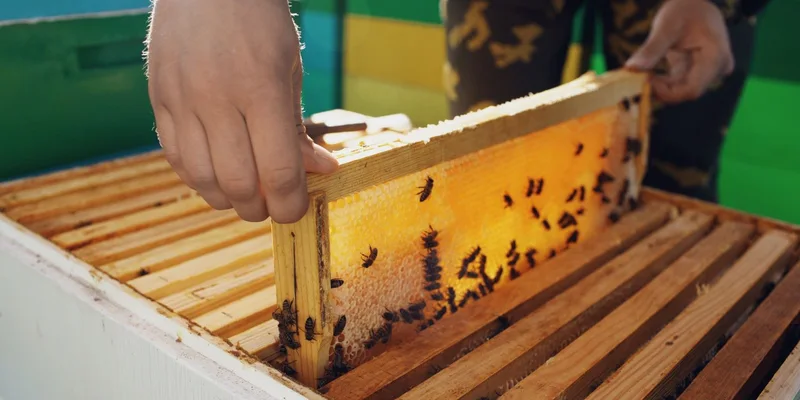
Uncapping is the step where a first harvest usually goes wrong. The frames come off the hive looking perfect, the extractor is waiting, and then someone drags a hot knife down the face and takes half an inch of comb with it. The honey still comes out, but the frame that goes back to the bees is a repair job instead of ready to refill.
Drawn comb is the most valuable thing in a super. A colony handed intact comb can start filling it during the same flow, while a colony handed torn comb spends that time rebuilding wax. Uncapping well is not about speed, it is about taking off the wax lid and nothing else, and it is a skill you get most of in the first ten frames.
This article contains affiliate links. If you buy through them, we may earn a commission at no extra cost to you. Learn more.
Quick Answer
How do you uncap honey frames without wrecking the comb?
- Work with frames at room temperature, indoors, with the door shut so you do not start robbing.
- Rest the frame on a rack or tank, take off only the wax lid, and let the tool ride along the frame rails rather than digging in.
- Go back over sunken and uneven patches with an uncapping fork, since a knife skims straight past them.
- Cappings go into a tank or strainer so the honey clinging to them drains out instead of being thrown away.
Bottom line: shallow angle, room temperature frames, and a fork for the low spots is the whole technique.
Set Up Before You Touch a Frame
Uncapping makes a mess and attracts every bee within reach, so the setup decides how the day goes. Work indoors with the door closed, on a surface you can wipe, with a tank or tray to rest frames on, a bucket for uncapped frames, and somewhere the cappings can drain. Have a damp cloth within reach before your hands are sticky.
Frames should be at room temperature. Honey thickens as it cools, and cold cappings shatter instead of peeling cleanly, so a super pulled the same day and kept indoors uncaps far more easily than one that sat overnight in a cool garage. If you cannot uncap the same day, bring the boxes inside to warm up first.
Check the Frame Is Actually Ready
Only capped honey is finished honey. Bees cap a cell when the water content is down where the honey will keep, so a frame that is mostly capped is a frame that is ready. Uncapped patches at the edges are common and usually fine, but a frame with large open areas may still be too wet to bottle safely.
The traditional field test is the shake test: hold the frame flat and give it a firm shake. If nectar flies out of the open cells, it is not ready. If nothing moves, the open cells are probably thick enough. Our guide to reading capped frames goes further, and a honey refractometer settles the argument with a number before you bottle.
The Uncapping Motion Itself
Stand the frame on one end in the tank, top bar up, resting on the rack or a support bar. Start at the bottom and work upward with a sawing motion so gravity carries the cut cappings away from the blade rather than back onto the comb. Let the tool rest lightly on both frame rails and use them as a depth guide.
The instinct to press is the enemy. If a knife or blade is sinking into the comb, the angle is wrong or the wax is too cold, not the pressure too light. You are removing a thin lid, so the sound and the feel should be closer to peeling than cutting.
Then Go Back With the Fork
No frame is flat. Bees leave hollows, and a blade that rides the rails passes straight over them, leaving capped cells that will not empty in the extractor. After the main pass, work the fork under the remaining cappings at a shallow angle and lift, covering every low patch and both bottom corners.

Choosing a Tool for the Frames You Actually Have
Match the tool to your comb and your harvest size. A cold knife suits flat, well drawn frames and a small harvest. A heated knife glides through thicker cappings and is worth it once you are doing many frames, at the cost of some melted wax and the risk of scorching honey if it runs too hot. The fork covers everything either one misses.
| Tool | Best on | Risk to comb | Wax you collect |
|---|---|---|---|
| Uncapping fork | Uneven and sunken patches | Low, unless you dig | Cappings in flakes |
| Cold knife | Flat, evenly drawn frames | Moderate if pressed | Clean slabs |
| Heated knife | Thick cappings, many frames | Higher if run too hot | Slabs plus melted wax |
| Uncapping roller | Speed with minimal mess | Low | Almost none |

Where the Cappings Go
Cappings are heavy with honey when they come off, and that honey is worth recovering. An uncapping tank with a rack across the top and a strainer inside lets you rest the frame, scrape, and leave the cappings to drain into the bottom while you carry on with the next frame. The gate at the bottom drains the recovered honey off later.
Once drained, cappings wax is the cleanest wax the hive makes, and it is the raw material for rendering beeswax at home. If you have no tank, a food safe bucket with a mesh strainer over a second bucket does the same job less elegantly.

Mistakes That Cost You a Frame
Cutting deep is the big one, and it usually happens on the first two frames before the angle becomes habit. The other frequent error is uncapping outdoors, which invites robbing and turns a quiet yard into a fight at every entrance. Close the door, and keep supers covered while they wait.
The third is rushing the low spots. A frame with capped hollows comes out of the extractor still heavy, and by the time you notice, the drum is closed and the frame is back in the stack. Do the fork pass every time, even when the frame looks finished.
Frequently Asked Questions
Do I have to uncap both sides? Yes. Both faces are capped and both need opening, so uncap one side, turn the frame and repeat before it goes into the extractor.
Can I uncap with a bread knife? For a few frames, yes. A long serrated knife works as a cold knife, and a table fork stands in for an uncapping fork. It is slower and less tidy, but a first harvest does not need dedicated tools.
What temperature should frames be? Room temperature, worked the same day they come off the hive if you can. Cold wax shatters and cold honey drags, which is why cool garage storage overnight makes the job noticeably harder.
What do I do with the cappings? Let them drain, then rinse or melt them down. Drained cappings wax is the cleanest wax you will get, and it goes to candles or wraps. Some keepers eat the drained cappings as comb honey.
Should I let the bees clean the wet frames? Many keepers do, putting wet frames back on the hive or well away from the yard so they are cleaned and dried before storage. Setting them out in the open near the hives invites robbing, so put them back on a colony rather than in the yard.
How long does uncapping take? Longer than the spinning. For most backyard setups the extractor sits waiting on the person with the knife, which is why working ahead in batches beats buying a bigger drum.
The Bottom Line
Uncapping well comes down to warm frames, a shallow angle, the frame rails as a depth guide, and a fork pass over every hollow the blade missed. Get those four right and the comb goes back to the colony intact, which is worth more to next season than any single jar. The uncapping knife guide covers which blade suits your harvest size, and the uncapping tank guide covers where the cappings should land.