Last updated: August 21, 2026
The eight frame or ten frame question comes up right when you are ordering your first hive, which is the worst possible moment, because you have no idea yet how heavy a full box feels. Ten frame is the historical standard and still the most widely stocked. Eight frame exists because a lot of beekeepers, having lifted a full ten frame deep once, decided they would rather not do it again.
This is a straight comparison of the two widths, what each one costs you in lifting and in box count, and where the choice quietly locks you in for years. The frames are identical between the two, which surprises people; only the boxes and the parts that sit above and below them differ.
This article contains affiliate links. If you buy through them, we may earn a commission at no extra cost to you. Learn more.
Quick Answer
Should you run an eight frame or a ten frame hive?
- An eight frame box holds four fifths of the comb of a ten frame box, so a full one is roughly a fifth lighter to lift.
- Ten frame is the default in supply catalogs and the used market, which matters when you need a box in a hurry.
- Frames interchange freely between the two widths; boxes, covers and bottom boards do not.
- Eight frame colonies grow upward, so expect more boxes in the stack for the same colony size.
Bottom line: pick eight frame if lifting is the limiting factor, ten frame if availability and fewer boxes matter more, then buy everything in that width.
The Only Difference Is Width
Both widths use the same box length and the same three heights, deep, medium and shallow, and both take the standard 19 inch top bar. An eight frame box is simply narrower, holding eight combs where a ten frame box holds ten. Everything the bees do inside is the same; the geometry of the cluster and the stack is what changes.
Because the frames are identical, you can move a frame of brood or honey from an eight frame box into a ten frame box without a second thought. What you cannot do is stack the boxes on each other, or use one bottom board and cover for both. The exact measurements are listed in our Langstroth hive dimensions reference.
The Lifting Argument
A full deep is the heaviest thing most backyard beekeepers lift routinely, and it is lifted at chest height, at arm’s length, over a hive, while wearing gloves and a veil. Removing two frames worth of honey from that box takes roughly a fifth of the weight out of it, which is a meaningful difference when your back is the limiting factor.
Published weights vary widely because comb, wood, moisture and how full the box is all move the number, so treat any single figure with suspicion and pick up a full box yourself before deciding. The reliable statement is the ratio: eight frames of anything weigh about four fifths of ten frames of the same thing.
The Other Way to Solve Weight
Box width is not the only lever. Running mediums instead of deeps cuts weight further and does it in both widths, and plenty of keepers combine the two ideas and run eight frame mediums throughout. That is covered in our comparison of all mediums against deeps and supers, which is the other half of this decision.
Availability and the Used Market
Ten frame is what suppliers stock deepest, what most clubs have spare, and what turns up in classifieds when someone gives up beekeeping. Eight frame is widely sold but less universally, and used eight frame gear is scarcer. If you like buying secondhand or borrowing a box from a mentor in an emergency, that is a real argument for ten.
It also affects the accessories. Feeders, queen excluders, screened bottom boards, mouse guards and winter wraps are all sold per width, and the eight frame version is occasionally the one that is out of stock in the month you need it. Order spares in the fall rather than in the week you discover you need them.
How the Colony Uses Each Shape
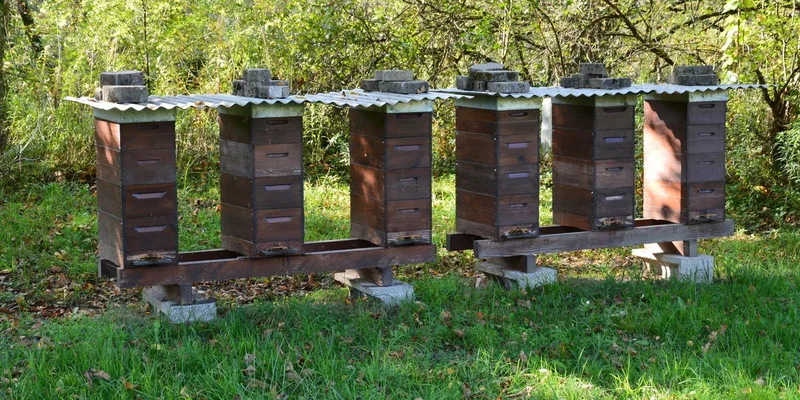
A colony in an eight frame hive grows as a taller, narrower column, and in a ten frame hive as a shorter, wider one. Both work. The narrower stack means the winter cluster moves upward through stores more than sideways, which some keepers consider an advantage because bees move up more readily than across in cold weather.
The flip side is stability and box count. A tall eight frame stack catches more wind and needs a solid, level stand and a strap or a weight on the lid. You will also be lifting and setting aside more boxes during a full inspection, since the same colony occupies more of them.
Eight Against Ten in One Table
The two widths trade the same three things back and forth: weight per box, number of boxes, and how easy it is to find parts. Nothing here is a quality difference, and bees do well in both.
| Consideration | Ten frame | Eight frame | Who it favors |
|---|---|---|---|
| Weight of a full box | Heaviest standard box | About four fifths of that | Eight frame, if lifting is the limit |
| Boxes in the stack | Fewer for the same colony | More, taller stack | Ten frame |
| Parts and used gear | Stocked everywhere | Widely sold, thinner used market | Ten frame |
| Stand and wind | Low and stable | Taller, wants strapping | Ten frame |
Nucs, Packages and What You Can Buy
Bees are sold on frames, and a five frame nucleus colony transfers into either width without trouble because the frames are the same. Packages have no frames at all, so they go into whatever you have ready. Neither purchase forces your hand on width, which is why this decision stays yours.
What does matter is being consistent within your own yard. Two hives in the same width let you swap a frame of brood from a strong colony into a weak one, share a spare box, and keep one set of covers on the shelf. Our comparison of package bees and nucs covers the bee side of that first order.
Frequently Asked Questions
Do eight frame and ten frame hives use the same frames? Yes. Both take the standard 19 inch top bar in deep, medium or shallow height, so frames move freely between them. The boxes, covers and bottom boards do not interchange.
Is an eight frame hive better for beginners? It is easier on your back, which is a genuine advantage. Ten frame is easier to supply and borrow. Beginners who expect to work alone often prefer eight frame, and beginners with a nearby club and mentor often follow whatever that club runs.
How much lighter is an eight frame box? It holds eight combs instead of ten, so roughly a fifth less weight for the same fill level. Actual weights vary too much with moisture, wood and how full the box is to quote a single number.
Do eight frame hives produce less honey? Per box, yes, since there is less comb in it. Per colony, the harvest depends on the colony, the forage and the season, not the width of the box, and you can always add another super.
Can I run eight frame boxes on a ten frame bottom board? Not properly. The overhang leaves open ledges that bees fill with comb and that let robbers and pests in. Match bottom board, boxes and covers to one width.
Which width should I choose if I plan to expand? Whichever you can most easily buy more of locally. Consistency across your whole yard is worth more than the width itself once you have several hives.
The Bottom Line
Eight frame and ten frame hives keep bees equally well; the choice is about your back, your shelf and your supplier. Lift a full deep before you commit if you can, then buy boxes, bottom boards and covers all in one width and stay there. Next, read all mediums or deeps and supers for the other half of the weight question, and our beginner beehive guide for the setup that forgives the most mistakes.