
Last updated: August 21, 2026
Beekeeping is one of the few hobbies where books still beat the internet for the parts that matter. Not because online information is bad, but because a colony is a system, and a forum answer describes one symptom while a good book describes how the whole thing fits together. Reading about brood patterns in January is what makes the frame in May legible.
The catch is that the shelf is crowded and repetitive. Half the titles cover the same beginner ground with different photographs, and a few genuinely different books get lost among them. This guide sorts the shelf by what each book is actually for, rather than ranking them against each other.
This article contains affiliate links. If you buy through them, we may earn a commission at no extra cost to you. Learn more.
Quick Answer
Which beekeeping books are worth the shelf space?
- One broad beginner book to read cover to cover before your first spring.
- One reference manual with real detail, to open when something specific goes wrong.
- One book about bee behavior, because understanding why colonies do things beats memorizing what to do.
- Nothing at all on mite treatment, since product labels and extension services change faster than books do.
Bottom line: buy one beginner guide, one reference, and one behavior book, then let a local club handle the rest.
What a Book Does That a Search Cannot
A search answers the question you thought to ask. A book teaches you which questions exist, which is the actual problem in a first year. New beekeepers do not know that queen cells on the bottom bar mean something different from cells in the middle of a frame, so they never search for it.
Books also build sequence. Reading a full season laid out in order, before living through one, gives you a mental calendar that a stream of forum threads never quite assembles. Our own first twelve months guide does the same job in shorter form.
The One Book Most Beginners Start With
If you buy a single title before your first colony, buy a broad beginner guide that covers equipment, installation, the season and basic problems in one volume. The point is coverage rather than depth: you want the whole map before you need any specific corner of it.
Howland Blackiston’s Beekeeping for Dummies is the most widely recommended entry point in the United States for exactly that reason. It is comprehensive, plainly written, and organized so you can read it straight through in winter and then dip back into it in June.

Books by What You Need Them For
Beyond the first title, books stop being interchangeable. A reference manual, a behavior book and a practical season guide do genuinely different jobs, and owning one of each is more useful than owning four beginner guides that repeat one another.
The Practical Season Guide
Kim Flottum’s The Backyard Beekeeper is written squarely for the small scale keeper with a hive or two behind the house, with heavy photography and a focus on what you do and when. It reads well alongside a first season rather than only before one.
![[Kim Flottum] The Backyard Beekeeper, 4th Edition: an Absolute Be...](https://m.media-amazon.com/images/I/51V+YliRc7L.jpg)
The Reference Manual
The Beekeeper’s Handbook by Diana Sammataro and Alphonse Avitabile is the denser, more technical option, closer to a manual than a narrative. It is the book to open when you need step by step detail on a specific operation and the beginner guide has already been exhausted.
![[The Beekeeper's Handbook] [By: Sammataro, Diana] [July, 2011]](https://m.media-amazon.com/images/I/51tyj2AzCmL.jpg)
The Book About Why Bees Do Things
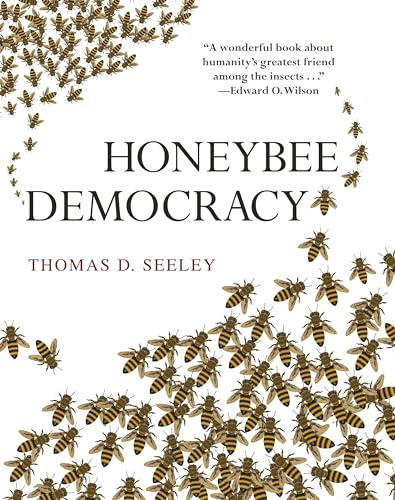
Thomas Seeley’s Honeybee Democracy is not a how to book at all. It is an account of how a swarm chooses a new home, written by a researcher who spent decades on the question, and it changes how you interpret what you see on a frame. Several beekeepers describe it as the book that made the hobby click.
The Broad Homestead Reference
Storey’s Guide to Keeping Honey Bees sits between a beginner guide and a manual, with a practical, farm oriented tone that suits people keeping bees alongside other animals or a large garden. It is a common second book for keepers who want more depth without a textbook.

The Shelf Compared
The table sorts the five titles by the job they do, how they read, and when in your beekeeping life they are most useful. None of them replaces another, which is the point.
| Book | What it is for | How it reads | Best time to buy it |
|---|---|---|---|
| Beekeeping for Dummies | Complete beginner overview | Plain, sequential, easy to skim | Before your first spring |
| The Backyard Beekeeper | Season by season practice | Photo heavy, hands on | During the first season |
| The Beekeeper’s Handbook | Technical reference | Dense, procedural, illustrated | Once you have specific questions |
| Honeybee Democracy | Understanding colony behavior | Narrative science writing | Any winter, ideally the first |
| Storey’s Guide to Keeping Honey Bees | Broad practical reference | Structured, homestead oriented | Second season onward |
Where Beekeeping Books Go Out of Date
Books age badly in exactly one area, and it is the most important one. Mite management changes as products are registered, withdrawn and relabeled, and any specific instruction printed in a book may no longer match the current label. Treat printed guidance on mite products as historical context rather than instruction.
The current answer always comes from two places: the EPA registered label on the product in your hand, and your regional extension service. Penn State Extension and the University of Minnesota Bee Lab both publish current management guidance for beekeepers in their regions. Our overview of the treatment categories explains how they differ, and our monitoring guide covers the counting that comes first.
What to Skip
Skip the fourth beginner guide. After two, the marginal book repeats what you already know with different photographs, and the money is better spent on a second brood box. Skip anything promising unusual yields or a shortcut to a hands off hive, since neither survives contact with a real colony.
Be cautious with self published titles that read like reformatted blog posts, which have multiplied on every marketplace. The tell is usually a table of contents that covers everything in the same shallow depth, and a treatment chapter that gives specific instructions without pointing at a label. Our starter kit guide covers where that budget goes further.
Frequently Asked Questions
What is the best beekeeping book for a complete beginner? A broad, plainly written overview that covers equipment, installation and the full season in one volume. Beekeeping for Dummies is the most commonly recommended starting point in the United States, and a local club will usually suggest the same or a regional equivalent.
How many beekeeping books do I actually need? Three covers it: one beginner guide, one detailed reference and one book about bee behavior. Beyond that the returns drop sharply, because most beginner titles cover identical ground.
Are older beekeeping books still useful? Yes for biology, equipment and seasonal management, which change slowly. No for mite management and disease treatment, where current product labels and extension service guidance supersede anything printed.
Should I buy a regional beekeeping book? If one exists for your state or region it is often the most useful single title you can own, because timing is intensely local. Local clubs and state extension services are the best source for finding them.
Do I need a book if my club runs a beginner course? A course and a book do different things. The course gives you people and hands on practice, the book gives you the whole season in order before you live through it. Most beginners benefit from both.
Is an ebook as good as a print copy? For reading through in winter, yes. For flipping to a diagram with gloves on while standing next to an open hive, print wins, which is why many keepers own the beginner guide on paper and the rest digitally.
The Bottom Line
A useful beekeeping shelf is short: one beginner guide read cover to cover before spring, one reference for when something specific goes wrong, and one behavior book that explains why colonies act the way they do. Everything about mites and disease should come from a current label and your extension service instead. Next, read the first twelve months and the backyard start sequence.