Last updated: August 21, 2026
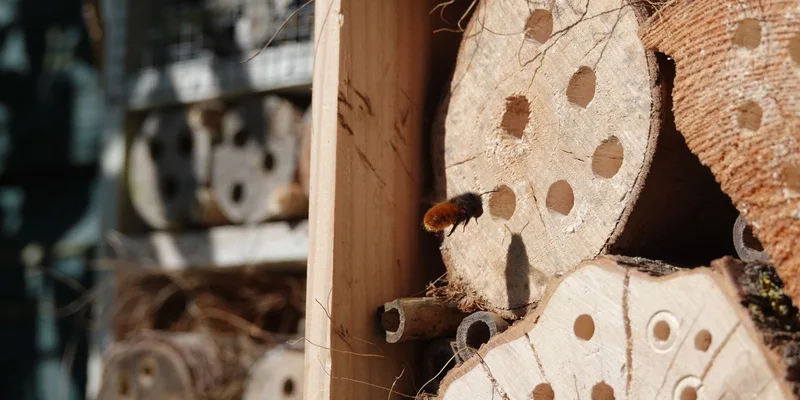
Most of the decorative bee hotels sold in garden centers are the wrong shape for the bees they are named after. Bamboo bundles with six different hole diameters, drilled pine blocks that cannot be opened, roofs that shed rain straight onto the tube openings: charming on a fence, and they raise very few mason bees.
What decides whether bees move in is measurable: the diameter and depth of the nesting cavity, whether you can open the house in fall to harvest cocoons, how it is mounted and which way it faces. This guide covers those four, plus what separates the styles on the shelf from each other.
This article contains affiliate links. If you buy through them, we may earn a commission at no extra cost to you. Learn more.
Quick Answer
What makes a good mason bee house?
- Nesting cavities around 5/16 inch across and roughly six inches deep, closed at the back, which Oregon State University Extension names as the productive combination for spring mason bees.
- Tubes, liners or trays you can actually remove, because a house you cannot open in fall is a house you cannot clean.
- A solid roof with an overhang, mounted firm and level, not swinging from a branch.
- Morning sun on the face of the house, sheltered from driving rain and afternoon heat.
Bottom line: cavity size, cavity depth and the ability to open the house in fall matter far more than the decorative shell around them.
What a Mason Bee House Is Really For
A mason bee house is a stack of dry, dark, dead-end tunnels. Female mason bees do not build wax comb and do not live in a colony. Each female works alone, packs a tunnel with pollen, lays an egg, seals the cell with a mud wall, and repeats until the tunnel is full. Your house only has to supply the tunnel.
That single fact explains most of the design rules. There is no queen to protect, no honey to harvest, and no equipment to lift, which is why these houses appeal to people who want pollinators in the yard without keeping a colony. If you are still deciding between the two paths, our comparison of mason bees and honey bees for a small yard lays out what each one asks of you.
Tube Size and Depth: The Two Numbers That Matter
Oregon State University Extension points at cardboard tubes with paper liners, 5/16 inch in diameter and about six inches long, closed at one end, as the combination that works for the common spring mason bees. Diameter decides which species can use the tunnel at all. Depth decides how many of the eggs in it become females.
The depth rule surprises people. A female lays female eggs at the back of the tunnel and male eggs near the entrance, so a shallow cavity fills up before she ever gets to the female end of her sequence. Extension guidance is blunt about it: short holes produce a mostly male population, and males do not nest the following year. Four inch drilled blocks are the usual culprit.
Why a Mixed Bag of Diameters Is a Trap
Decorative hotels usually offer a spread of hole sizes on the theory that variety attracts more insects. It does, and most of what it attracts is not a mason bee. Larger holes fill with wasps and other cavity nesters while the correct ones are taken within days.
Standardize on one diameter and add a second house later for the summer species, which want a noticeably narrower tunnel. That half is covered in our guide to leafcutter bees and the summer half of a bee hotel.
Removable Tubes Beat a Drilled Block Every Time
The single biggest quality divider on the shelf is whether the house opens. Pollen mites, chalkbrood and parasitic wasps build up in nesting material that is used year after year without cleaning, and extension guidance for solitary bees consistently steers people toward nesting material that can be opened and inspected rather than a permanently drilled block.
In practice that means cardboard tubes with tear-open paper liners, natural reeds that split with a thumbnail, or wooden trays that come apart like a deck of cards. All three let you reach the cocoons in fall and put clean material out in spring. A drilled block gives you none of that.
Mason Bee Houses by Situation
The House You Will Still Be Using in Five Years
Wooden nesting trays are the format serious mason bee keepers converge on, because the trays separate for inspection and go back together without consumables. They cost more up front than a tube house and they reward anyone who intends to harvest cocoons every fall rather than let the house run itself.

A First House That Comes Ready to Hang
A kit with the house, a roof and a set of correctly sized cardboard tubes already in it removes the guesswork about whether the tubes match the housing. It is the low-friction way to find out whether mason bees are even active in your yard before you invest in a tray system.

Refilling a House You Already Own
Tubes are consumables. Once they have raised a generation they should be replaced rather than reused, and buying refills in bulk is cheaper than replacing the whole house. This is also the fix for a decorative hotel with the wrong hole sizes: pull the bamboo, fill the cavity with correctly sized tubes.

Keeping Birds Off the Front Panel
Woodpeckers and chickadees learn very quickly that a full tube is a food source, and a house that filled beautifully in April can be shredded by August. A mesh or wire guard mounted a few inches off the face lets bees through and keeps beaks at a distance.

A Natural Material That Splits Open Easily
Cut reeds are the traditional alternative to cardboard. They vary a little in diameter, which is a mild drawback, but they split cleanly with a thumbnail at harvest time and they breathe better than plastic straws, which trap moisture against the cocoons.

Comparing the Main House Styles
Four formats cover almost everything sold as a mason bee house. The differences that matter are whether you can open it, how the material handles moisture, and how much work it asks of you each fall.
| Style | Opens for harvest | Moisture behavior | Best suited to |
|---|---|---|---|
| Wooden trays | Yes, trays separate | Wood breathes, needs a dry roof | Anyone harvesting cocoons yearly |
| Cardboard tubes with liners | Yes, liners tear open | Good, replace annually | First house and refills |
| Natural reeds | Yes, split by hand | Good, diameter varies | Low-cost natural option |
| Drilled wood block | No | Traps debris and pests | Decorative use only |
Where to Mount It and Which Way to Face
Mount the house solidly against a wall, post or fence at roughly head height, with the tube openings facing where the morning sun lands. Mason bees are cool-weather fliers and a face that warms early gets them working sooner in the day. A house that swings on a wire gets ignored.
Shelter matters as much as sun. Rain driving into open tubes ruins the cells behind them, so a real roof overhang or a spot under an eave does more for occupancy than any feature on the box. Keep it clear of where you park the mower, because nothing should disturb it from March through summer.
Mud and Flowers Within Reach
Every cell wall in the house is mud the female carries in her jaws, so a patch of bare damp clay soil within a short flight is part of the setup rather than a detail. If your yard is all lawn and bark mulch, dig a small bare patch and keep it damp through spring.
Forage works on the same short radius, so early bloomers close to the house beat a spectacular border at the far end of the property. Our guide to what to plant near the hives covers the early spring end of that list.
What the House Asks of You in Fall
A mason bee house is not a set and forget object. Filled tubes hold cocoons through summer and fall, and the standard practice among people who keep these bees productively is to harvest the cocoons in fall, look them over, and store them cool until spring rather than leaving everything outside in the weather.
That is also when you deal with problems. Pollen mites, mold and empty tubes all show up at harvest, and each one points at a different cause. Our guide to mason bee house problems works through what each symptom means and what to change the following spring.
Frequently Asked Questions
What size holes should a mason bee house have? Around 5/16 inch in diameter and roughly six inches deep, closed at the back, which is the combination Oregon State University Extension names for common spring mason bees. Shallower cavities skew the offspring toward males.
Which direction should a mason bee house face? Toward the morning sun, typically an east or southeast facing wall in most of the country, sheltered from driving rain. Mason bees fly in cooler weather than honey bees and an early warming face gets them started sooner.
When should I put a mason bee house out? In late winter or early spring, before the first warm days when the local mason bees emerge. Timing varies a lot by region, so a local extension office or native bee group is a better guide than a fixed date.
Do mason bees sting? They can, but with no colony or stores to defend they are widely described as extremely reluctant. That is why these houses end up next to patios where nobody would place a colony.
Can I reuse the tubes next year? Cardboard tubes and paper liners are meant to be replaced each season, since used nesting material accumulates mites and disease. Wooden trays and reeds are reusable because they open for cleaning.
Do I need a mason bee house if I already keep honey bees? No, but the two do different jobs. Mason bees are efficient early spring fruit pollinators and fly in weather that keeps a colony inside. Plenty of backyard beekeepers run both.
The Bottom Line
A mason bee house earns its place on the fence when the cavities are the right diameter and depth, when the nesting material comes apart in fall, and when the whole thing is mounted solid, dry and facing the morning sun. Everything else is decoration. If you want to build rather than buy, our scrap wood build guide covers the same numbers with a saw instead of a shopping cart, and mason bee house problems explains what the empty tubes are telling you.