Last updated: August 21, 2026
Plenty of people arrive at beekeeping from the pollination side rather than the honey side. The fruit trees are not setting well, the vegetable garden is underwhelming, and somewhere in the research a hive starts to look like the answer. Then the equipment list appears, along with the mite monitoring, the winter feeding and the question of what the neighbors will say, and the whole thing starts to look like a commitment rather than a garden improvement.
Mason bees sit in that gap. They pollinate hard, they need a box of tubes instead of a stack of woodenware, and they ask almost nothing of you for ten months of the year. What they do not do is make honey. This comparison lays out what each one actually asks of a small yard so you can pick the one that matches what you wanted in the first place.
This article contains affiliate links. If you buy through them, we may earn a commission at no extra cost to you. Learn more.
Quick Answer
Should I keep mason bees or honey bees?
- Want honey, wax and a colony to manage: honey bees, with the equipment, inspections and mite monitoring that come with them.
- Want early spring fruit pollination with minimal handling: mason bees, which need a house of tubes and a fall cocoon harvest.
- Tight yard, nervous neighbors or an HOA in play: mason bees are the far easier conversation.
- Nothing stops you running both, and many backyard beekeepers do.
Bottom line: mason bees are a pollination project, honey bees are a livestock project, and choosing badly usually means picking the second one while wanting the first.
Two Completely Different Animals
A honey bee colony is a superorganism: one queen, thousands of workers, wax comb, food stores and a defended nest that has to survive winter as a unit. A mason bee is a solitary female who works alone for a few weeks in spring, provisions a row of cells in a tunnel, seals them with mud, and dies before her offspring emerge the following year.
Almost every practical difference falls out of that. There is no colony to inspect, no stores to steal, no swarm to catch and no cluster to overwinter with mason bees, and there is also no honey, no wax and no queen to find. You are hosting a nesting site rather than managing an animal.
What Each One Asks of You
Honey bees ask for a season-long rhythm. Roughly ten minutes per hive per inspection, every week or two through spring and early summer, plus swarm management, mite monitoring, harvest, and winterizing in fall. It is not heavy work but it is scheduled work, and skipping it has consequences for the colony.
Mason bees ask for two moments a year: setting the house out before local emergence in late winter, and harvesting the cocoons in fall. Between those, they are on their own. If your objection to beekeeping was never the cost but the calendar, that difference is the whole answer.
Equipment Compared
The honey bee list is long enough that it usually gets bought as a bundle, which is what our starter kit guide works through: hive bodies, frames, a smoker, a hive tool and protective clothing before a single bee arrives. Protective clothing in particular is not optional, and the bee suit buying guide covers what actually keeps stings out.
The mason bee list is a house and a bundle of tubes. Our mason bee house guide covers the two dimensions that decide whether it works, and most people handle the bees bare-handed without a veil, because these bees have no colony or food stores to defend.
Pollination: Where Mason Bees Genuinely Win
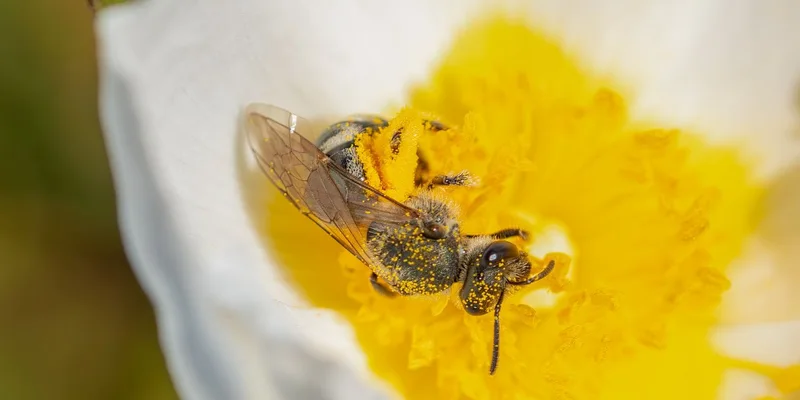
Mason bees fly in cooler, greyer weather than honey bees, which is exactly the weather during apple, cherry and plum bloom in much of the country. They also carry pollen loose on the underside of the abdomen rather than packed in tidy baskets, so they shed it messily across flowers as they go.
The trade-off is range and season. A mason bee works a small radius around her nest for a few weeks in spring, so she is excellent for the fruit trees in your yard and irrelevant to anything blooming in July. A honey bee colony forages far and all season, which is why it is the one that makes surplus honey.
Stings, Neighbors and the Rules
Mason bees are famously reluctant to sting. There is no colony and no stores to defend, so the defensive behavior that makes a honey bee hive a neighborhood conversation simply is not there. That is why these houses end up mounted next to patios and back doors.
Honey bees are a different social situation, and the rules around them are not ours to state. Whether you may keep a colony, how many, how far from a property line and whether registration applies varies by state and county, and an HOA covenant can add its own layer. Ask your state apiarist and your county or city office, and read the covenant. Our guide to who decides in your state explains how to find the right desk.
Side by Side
The differences that decide the choice for most backyard growers are workload, what you get out of it, and how the neighbors experience it.
| Factor | Mason bees | Honey bees | Who cares most |
|---|---|---|---|
| Time per year | Two sessions, spring and fall | Inspections every week or two in season | Busy households |
| What you get | Early spring pollination | Pollination, honey, wax, a colony | Fruit growers vs honey wanters |
| Sting risk | Very low, no nest to defend | Real, protective clothing required | Small yards and families |
| Rules and neighbors | Rarely an issue | Varies by state, county and HOA | Anyone under a covenant |
The Honest Case for Starting With Honey Bees Anyway
If what you actually want is honey, mason bees will not scratch that itch, and no amount of pollination enthusiasm changes it. The first season with a colony is mostly about learning to read frames and getting the colony strong enough to overwinter, and many first-year hives produce no surplus to harvest at all.
That is worth knowing before you buy rather than after. If you go in expecting a colony to establish itself in year one and a harvest to be a later question, the first summer is enjoyable instead of disappointing. Our guide to starting in your backyard walks the ordering and setup sequence in the order it actually happens.
Frequently Asked Questions
Do mason bees make honey? No. They provision each cell with a loaf of pollen and nectar for a single larva and store nothing beyond that. Honey is a product of a colony that has to feed itself through winter.
Are mason bees better pollinators than honey bees? For early spring fruit in a small area, they are extremely effective, and they fly in cooler, cloudier weather than honey bees. Honey bees cover a far bigger range and a much longer season.
Can I keep both in the same yard? Yes, and plenty of backyard beekeepers do. They nest differently, forage differently and do not compete for the same nesting site.
Do mason bees sting? They can, but with no colony or stores to defend they are widely described as very reluctant to do so. Most people handle the houses and cocoons without protective gear.
Which is cheaper to start? Mason bees, by a wide margin, because the entire setup is a house and a bundle of tubes rather than woodenware, tools and protective clothing.
Do I need permission to put up a mason bee house? Local rules generally concern managed honey bee colonies rather than solitary bee nesting boxes, but rules vary by state, county and HOA. Check your covenant and your county office rather than assuming.
The Bottom Line
Pick mason bees if the goal is fruit set and you want the pollinators to run themselves; pick honey bees if you want honey, wax and a colony to learn. The mistake is buying a hive because you wanted better apples. If you are leaning toward tubes, start with the mason bee house guide; if you are leaning toward a colony, the starter kit guide and the bee suit guide are the two decisions that come first.