
Last updated: August 21, 2026
Oxalic acid vaporizers are the piece of varroa equipment most likely to be bought on the strength of a video and used without reading anything. They look simple: a heating element, a pan for the crystals, a lead to a battery, and a hive entrance to slide it into. That simplicity hides the fact that this is the one job in backyard beekeeping where getting the safety wrong hurts you rather than the bees.
This guide covers the hardware. Which types of vaporizer exist, what separates a unit worth owning from one that will cook itself, what to check before buying, and what protective equipment the job requires. It does not cover the procedure, the quantity, the timing or the number of applications, because those come from the EPA registered label of the oxalic acid product you are using and from extension guidance, not from a website.
This article contains affiliate links. If you buy through them, we may earn a commission at no extra cost to you. Learn more.
Quick Answer
What should you look for in an oxalic acid vaporizer?
- Two broad types: pan style units that slide into the entrance and run off a battery, and enclosed heater units that push vapor in from outside the hive.
- Build quality shows up in the element, the pan coating and the lead. Cheap units warp, scorch residue into the pan and fail at the connector.
- Respiratory protection is not optional. The correct type is specified by the acid product label and by the mask manufacturer, not by another beekeeper.
- Everything about how much, how often, when in the season and whether supers may be on comes from the EPA registered label of the oxalic acid product.
Bottom line: buy a unit with a solid element and a clean pan, buy the protective gear at the same time, and read the acid label before either of them comes out of the box.
What a Vaporizer Actually Is
A vaporizer is a heating device that sublimates oxalic acid crystals, turning them directly from solid into vapor which then settles as fine crystals throughout the hive. Mites riding on adult bees are affected by that deposit. The equipment is nothing more than a controlled way to apply heat to a measured quantity of crystals inside a closed hive.
What it does not do is reach mites inside sealed brood cells. That limitation is inherent to the active ingredient rather than the hardware, and it shapes when in the season keepers reach for oxalic acid at all. The treatment options comparison puts it alongside the other categories.
The Two Main Types
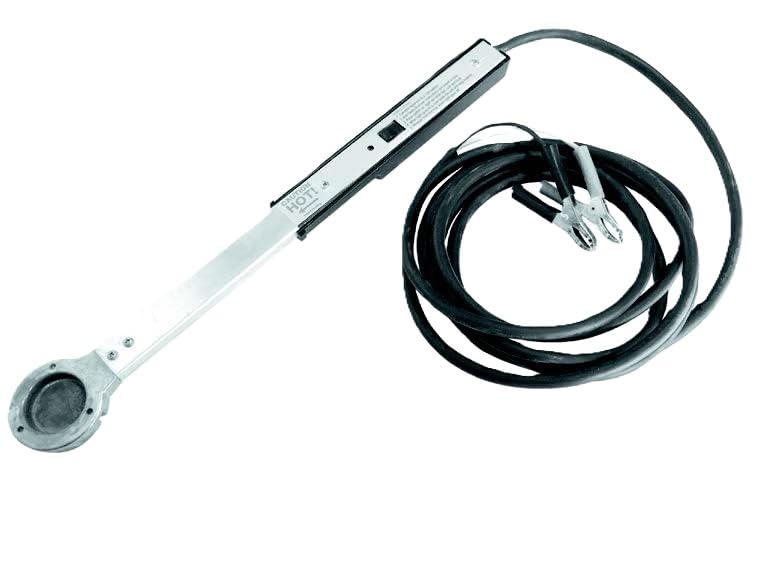
Pan style vaporizers are a metal pan on a long handle with a heating element underneath, wired to alligator clips for a battery. You load the pan, slide it through the entrance, connect the battery, and the element heats the crystals. They are the cheapest and the most common among backyard keepers.
Enclosed heater units work from outside the hive, heating the crystals in a sealed chamber and pushing the vapor in through a tube at the entrance. They cost considerably more, they warm up faster, and they keep the hot part of the equipment out of the hive entirely, which is easier on the woodenware and on your back.
Battery, Cord and Power Source
Most pan style units run from a 12 volt source, which in practice means a car battery, a deep cycle battery or a jump pack sitting in the grass next to you. Check the length of the lead against how far the battery will realistically sit from the hive, because short leads mean carrying a battery from hive to hive.
Some enclosed units run from mains power, which is fine in a home apiary with an outlet and unhelpful anywhere else. Battery powered versions of the enclosed type exist too, and they are the format that suits a backyard keeper with hives at the end of a yard.
What Separates a Good Unit From a Bad One
Three parts fail on cheap vaporizers: the heating element, the pan surface and the electrical connection. Elements burn out or heat unevenly, pans pit and hold scorched residue that ruins the next application, and connectors work loose at exactly the wrong moment with a hot device inside a hive full of bees.
Look for a substantial element rather than a thin coil, a pan that is machined or coated rather than a stamped dish, and a lead attached through a strain relief instead of soldered straight to the body. Read owner reports for mentions of warping, since a pan that distorts with heat never sits flat in the entrance again.
Cleaning and Residue
Residue left in the pan after use hardens and interferes with even heating next time, so the pan gets wiped out once it has cooled fully. Never wipe a hot pan, and never quench a hot unit in water, because thermal shock is how elements crack.
Store the unit dry and away from anything that will corrode near it. Oxalic acid residue is corrosive to some metals, and a vaporizer put away dirty in a damp shed is a vaporizer that will disappoint you in August.
Protective Equipment Is Part of the Purchase
Oxalic acid vapor is hazardous to breathe and to get in your eyes. That is not a caution about a strong smell; it is the reason the acid product label specifies respiratory protection, eye protection and gloves as conditions of use. This is genuinely the most dangerous routine job in backyard beekeeping, and it is dangerous to you rather than to the bees.
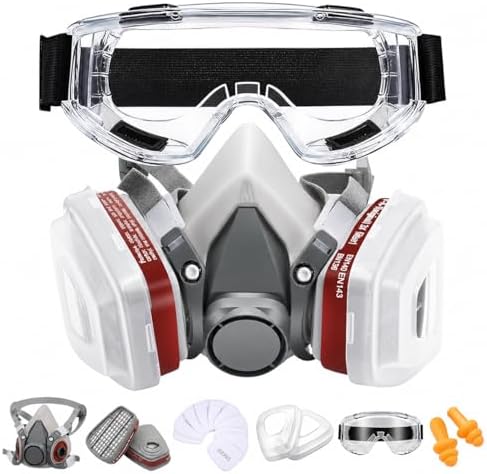
The correct filter or cartridge type for the mask is specified on the acid product label and by the mask manufacturer. Do not take a filter recommendation from another beekeeper, from a forum, or from this page. Match the label’s requirement to the manufacturer’s own cartridge chart, and replace cartridges on the manufacturer’s schedule.
Wind, Position and the Rest of the Setup
Stand upwind and to the side, not over the entrance, and treat every hive as if vapor will find its way toward you, because it will. Seal the hive as the label directs, keep bystanders and pets away for as long as the label specifies, and do not do this in an enclosed space such as a shed or a garage.
A full suit and gloves are sensible for the beekeeping side of the job in any case, since you are working directly at the entrance of a closed colony. Our bee suit guide covers fabric and fit if you are still choosing one.
Vaporizer Options by Setup
A Few Hives, Battery in the Grass
A pan style unit on a 12 volt lead is the standard backyard answer: inexpensive, simple, and easy to replace if it burns out. Check the lead length and the pan build before ordering, and plan on a jump pack or a deep cycle battery as the power source.
Keeping the Hot Part Outside the Hive
An enclosed heater unit that pushes vapor in through a tube warms up faster and never puts a glowing element inside the box. It costs more and it is bulkier to carry, but it is the format keepers with several hives tend to move to.

The Protection the Label Requires
A half face respirator with replaceable cartridges plus sealed goggles is the standard combination. Match the cartridge type to what the acid product label calls for and to the mask maker’s own chart, and check the fit before you are standing in front of a hive.
Knowing Whether Anything Changed
A vaporizer tells you nothing about mite load. A monitoring cup used before and after, with the same method both times, is what turns an application into information. It is the cheapest item in the varroa toolkit and the one most often missing.

Comparing the Formats
| Format | Where the heat sits | Power | Suits |
|---|---|---|---|
| Pan style | Inside the hive entrance | 12 volt battery or jump pack | One to a few hives, tight budget |
| Enclosed heater | Outside, vapor piped in | Battery or mains depending on model | Several hives, frequent use |
| Mains powered | Outside, vapor piped in | Household outlet | Home apiary with power nearby |
| Extended release strips | No equipment at all | None | Keepers who would rather not vaporize |
The Alternative Worth Knowing About
Oxalic acid is also registered in extended release strip form, which is applied to the hive and left to work over time without heat, a battery, or a respirator. For keepers who are uneasy about vaporizing, that is a legitimate route to the same active ingredient with a completely different set of handling requirements.
As with everything in this area, the specifics of application come from the EPA registered label for that product. What matters here is simply knowing the option exists before you buy hardware you may not want to use twice.
Frequently Asked Questions
How much oxalic acid do I use? That is set by the EPA registered label of the oxalic acid product you have bought, and it is the legally binding instruction. Do not use a quantity you read in a video description or a forum thread.
Can I vaporize with honey supers on the hive? Read the label. This is a per product question with real consequences for the crop, and no general answer applies across formulations. Our article on treating with supers on explains why.
What mask do I need? The type specified by the acid product label, matched to the cartridge chart published by the mask manufacturer. Beekeepers frequently repeat filter recommendations to each other; those are not a source you should rely on.
Does vaporizing reach mites in capped brood? No. Oxalic acid acts on mites riding on adult bees, which is why its place in the season is tied to periods when the colony has little or no sealed brood.
Can I use a vaporizer in a shed or garage? No. The vapor is hazardous to breathe and this work belongs outdoors, upwind, with the protective equipment the label requires and nobody standing nearby.
Is a cheap vaporizer good enough? For a couple of hives, a well built pan style unit is fine. What is not fine is a unit with a thin element or a flimsy connector, since a failure happens with a hot device inside a closed hive.
The Bottom Line
Buy the vaporizer on the element, the pan and the lead, and buy the respirator and goggles in the same order rather than promising yourself you will get them later. Then put both aside and read the EPA registered label of the acid product, because that document, not the hardware, decides how much, how often, when, and whether supers may be on. Count before and after using an alcohol wash or sugar roll, and read the full treatment comparison to see where oxalic acid sits among the other options.