Last updated: August 21, 2026
Sugar syrup is carbohydrate. It fuels flight and wax and keeps a colony from starving, and it does nothing at all for raising brood. Brood needs protein, and protein comes from pollen. When there is no pollen coming in and the colony needs to raise bees anyway, a pollen patty is the substitute, and it is one of the few backyard beekeeping products that can genuinely change the trajectory of a colony.
It can also cause problems. A patty left on too long is a breeding site for small hive beetles, and a colony pushed into brood rearing before the local forage supports it can end up worse off than if you had left it alone. This guide covers both sides: what patties are for, when they help, and the situations where the honest answer is not to feed them.
This article contains affiliate links. If you buy through them, we may earn a commission at no extra cost to you. Learn more.
Quick Answer
When should you feed pollen patties to bees?
- In late winter and early spring, to support brood rearing before natural pollen is reliably available.
- In a summer dearth or a poor pollen year, when a colony needs protein it cannot forage.
- Not in beetle season if the colony is small, because unattended patties are a known small hive beetle breeding medium.
- Feed pieces the colony can finish quickly rather than a slab that sits there for weeks.
Bottom line: pollen patties are for protein shortages with a purpose, and the timing question matters more than the brand.
What a Pollen Patty Actually Is
A pollen patty is a soft cake of protein feed, usually built on a base of soy flour, brewer’s yeast or similar ingredients bound with sugar syrup, sometimes with real pollen mixed in. It comes wrapped in wax paper, and it goes directly on the top bars where the bees can reach it from the cluster.
The colony treats it the way it treats stored pollen, breaking it down and feeding it to nurse bees who convert it into the food that larvae get. It is a substitute, not a duplicate. Natural pollen from a range of plants is nutritionally richer than any commercial mix, which is why patties are a stopgap rather than a program.
When Pollen Patties Help
The strongest case is late winter and early spring. The queen restarts laying before natural pollen arrives, the colony has to feed those larvae from whatever protein it stored last fall, and in a long winter those reserves run thin. A patty at that point supports the buildup that produces foragers in time for the first flow.
The second case is a dearth. A summer with no pollen coming in, a colony rebuilding after a split, or a package installed into a poor forage window are all situations where protein is the limiting factor and the bees cannot fix it themselves.
Timing Against the Flow
Feeding protein is a way of asking a colony to raise more bees, so the question is always whether you want more bees at that moment. Aiming for a population peak that lines up with your local main flow is the usual goal, and that timing is regional. A county association or a university extension service will know when the flow starts where you live.
When They Backfire
Small hive beetles lay eggs in pollen patties, and a patty a colony is not actively covering can turn into a slimy mess with a beetle population living in it. In the southeastern states especially, this is the single reason many keepers restrict patty feeding to strong colonies and small pieces. Our beetle trap guide covers the rest of that fight.
The second failure is stimulating brood rearing at the wrong time. More brood means more mouths and a much tighter temperature requirement in the cluster, so a colony pushed into expansion ahead of the forage can burn through stores fast. In late winter that is a real risk, and it is why patties and a weight check belong together.
The Third Problem: Robbing
Protein feed has a smell, and a patty broken up around the entrance or spilled in the yard draws attention during a dearth. Feed inside the hive, on the top bars, and clean up crumbs. If your yard has robbing pressure already, the same logic applies as with syrup.
Pollen Percentage and Pollen-Free Substitutes
Commercial patties are sold with different amounts of real pollen mixed into the base, commonly labeled as a percentage. Manufacturers describe the difference mainly in terms of how quickly colonies consume the patty rather than as a nutrition ranking, so the right percentage depends on how fast you want it eaten and how strong the colony is. Follow the maker’s own guidance for their product.
There are also pollen-free substitutes, made entirely from non-pollen protein sources. These avoid one specific concern, which is that pollen collected from other apiaries can carry disease spores between colonies. If that concern matters to you, a substitute with no bee-collected pollen in it is the conservative option.
Best for Spring Buildup in a Strong Colony
A patty with real pollen in the mix is the version most keepers reach for when they want the colony to take it quickly.

Best for Keepers Avoiding Bee-Collected Pollen
A pollen-free protein substitute delivers the same protein role without pollen sourced from other apiaries.
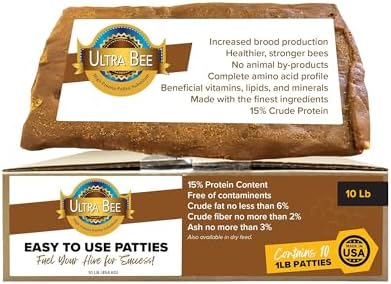
Best for Mixing Your Own Amount
Dry pollen substitute powder lets you mix only what a colony will finish, which is the main defense against beetles in a patty.

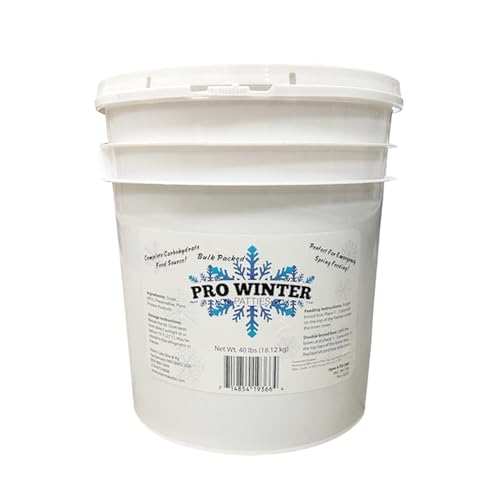
Best for Fall and Winter Protein
Patties formulated for the cold months are built to be eaten slowly by a clustered colony rather than to drive a spring buildup.
Placement and Handling
Lay the patty directly on the top bars over the cluster, paper and all, with the wrapper slit or the top peeled back so the bees can reach it. Leaving the paper on the bottom keeps the patty from sticking to the frames and makes the remnant easy to lift out later.
Give the colony a piece it can consume in a reasonable stretch rather than a full slab, and check what is left when you next open the hive. A patty being actively worked by bees is doing its job; a patty sitting untouched with beetles running over it is not, and should come out.
Comparing the Options
The table sorts the common formats by what each one suits. All of them are protein feed; the difference is timing, speed of consumption and how much control you have over portion size.
| Format | Best season | Portion control | Watch out for |
|---|---|---|---|
| Ready-made patty with pollen | Late winter and spring buildup | Cut a slab into pieces | Beetle risk if the colony cannot cover it |
| Pollen-free substitute patty | Any protein shortage | Same as above | Some colonies take it more slowly |
| Dry substitute powder | Dearth feeding, mixing your own | Excellent, mix what you need | Requires mixing time and a recipe |
| Winter protein patty | Cold months, clustered colony | Small pieces on the top bars | Do not use it to force early brood |
Making Your Own
Homemade patties are straightforward, and mixing your own is the cheapest way to control portion size and keep the beetle risk down. The base ingredients are widely available and the mixing is closer to baking than to chemistry.
Follow a published recipe rather than improvising the ratios, since the balance of protein source, sugar and moisture determines whether the result holds together and whether the bees will take it. Our pollen patty recipe guide walks through the version most backyard keepers use.
Frequently Asked Questions
When should I put pollen patties on my hive? Most keepers feed in late winter and early spring, ahead of natural pollen, and during a summer dearth. The aim is to have the population peak when your local flow arrives, so ask a county association about timing where you live.
Do pollen patties attract small hive beetles? Yes, they are a known breeding medium. Feed pieces the colony can consume quickly, keep patties on strong colonies rather than weak ones, and remove any remnant that is not being worked.
What is the difference between pollen patties and pollen substitute? A patty with pollen contains real bee-collected pollen mixed into the protein base; a substitute contains none. Substitutes avoid the risk of moving disease spores between apiaries, while pollen in the mix tends to make patties more attractive to the bees.
Can I feed pollen patties in winter? Patties formulated for cold months exist and some keepers use them, but stimulating brood rearing in deep winter raises food consumption at the worst time. If you feed protein in winter, do it deliberately and keep checking the hive weight.
Do bees need pollen patties at all? Not when natural pollen is coming in. Patties are a response to a shortage, not a routine supplement. A colony in a good forage area with a normal spring often needs nothing.
How much should I feed? Enough that the colony finishes it in a reasonable stretch and no more, because the remainder is what beetles use. Follow the manufacturer’s guidance for the product you buy, and adjust down for a small colony.
The Bottom Line
Pollen patties supply the protein a colony needs to raise brood when no pollen is coming in, which makes them a late winter and dearth tool rather than a routine feed. Feed pieces the bees can finish, keep them on colonies strong enough to cover the patty, and watch the hive weight if you are pushing an early buildup. Read next: sugar syrup ratios for the carbohydrate side, and the recipe guide if you would rather mix your own.