Last updated: August 21, 2026
Mixing your own pollen patties is one of those winter jobs that appeals to beekeepers for the same reason building frames does. It is cheap, it is done at the kitchen table in February when there is nothing else to do, and it gives you control over what goes on top of your bees in early spring.
It is also easy to get slightly wrong in ways that cost you. Patties that are too dry get ignored, patties that are too wet run down between the frames, and patties fed at the wrong moment push a colony into raising brood it cannot feed. This walks through how the mixing actually works, where the proportions should come from, and when a homemade patty is the wrong answer.
This article contains affiliate links. If you buy through them, we may earn a commission at no extra cost to you. Learn more.
Quick Answer
How do you make pollen patties at home?
- You combine a dry protein mix, usually a commercial pollen substitute powder, with sugar syrup until it forms a soft dough.
- Use the mixing ratio printed on the bag of the substitute you buy, or a published recipe from a university extension service, rather than a number from a forum.
- Consistency is the real target: a dough that holds its shape and does not run, pressed flat between sheets of wax paper.
- Timing matters more than the recipe. Protein feeding stimulates brood rearing, which is helpful before a flow and harmful if the colony cannot support it.
Bottom line: follow the ratio on the substitute you buy, mix to a dough that holds together, and think hard about whether the colony needs it at all.
What a Pollen Patty Is Actually For
Bees need protein to raise brood, and in nature that protein is pollen. When there is no pollen coming in, brood rearing slows or stops. A patty is a protein supplement laid on the top bars where nurse bees can reach it, used to keep or push brood rearing going when the landscape is not providing.
That is why it is a decision rather than a routine. Late winter feeding to build a population before the spring flow is the classic use. Feeding a colony that has no reason to expand simply grows a workforce that has nothing to forage on, and does it in a hive that may not have the stores to support it.
What Goes Into the Mix
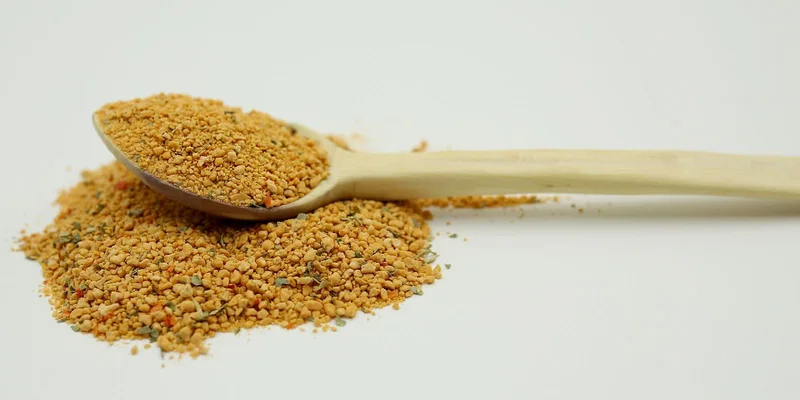
The dry side is a protein source. Commercial pollen substitute powders are built around ingredients like soy flour and brewer’s yeast, sometimes with real pollen added, and they are formulated to be digestible for bees rather than simply high in protein. The wet side is sugar syrup, which binds the dry mix and makes the whole thing attractive to the bees.
Some beekeepers add trapped pollen for palatability. That comes with a real caution: pollen from an unknown source can carry disease into your hive, which is why commercial products that include pollen use irradiated pollen. If you did not trap it yourself from your own healthy colonies, leave it out.
| Component | What it does | Usual source | Watch out for |
|---|---|---|---|
| Protein powder | Supplies the protein for brood rearing | Commercial pollen substitute | Follow the bag’s own mixing ratio |
| Sugar syrup | Binds the dough, adds palatability | Mixed at home | Too much makes it run |
| Real pollen | Improves acceptance | Trapped or bought | Disease risk from unknown sources |
| Wax paper | Handling and storage | Kitchen supply | Bees chew it away, that is normal |
Where the Proportions Should Come From
Every pollen substitute is formulated differently, so the ratio of powder to syrup that works for one product is wrong for another. The manufacturer prints a mixing ratio on the bag for exactly that reason, and it is the number to use. Published substitute recipes from university extension services, such as Michigan State Extension or the University of Minnesota Bee Lab, are the other reliable starting point.
Beyond the ratio, the practical target is texture. You want a dough stiff enough to hold its shape at hive temperature, soft enough that bees can work it, and not so wet that syrup weeps out and runs down the frames. Add syrup gradually and stop when the dough comes together.
Mixing and Shaping
Work the dry powder in a large bowl or bucket, then add syrup a little at a time, mixing by hand or with a sturdy spoon until it stops crumbling and starts holding together. Overshooting on liquid is the common error, and it is easier to add more syrup than to rescue a soup with more powder.
Press the finished dough flat between two sheets of wax paper, to roughly the thickness of a thin book, and cut it into slabs sized to sit on top of the frames. The wax paper stays on. It keeps them from sticking together in storage and the bees chew through it once the patty is on the hive.
Storing What You Do Not Use
Stacked between wax paper, patties keep in a sealed container in the freezer, and going straight from the freezer to the hive is fine. Left at room temperature they dry out, and dried out patties get ignored by the bees and become a home for pests instead.
Putting a Patty on the Hive
The patty goes on the top bars directly over the cluster, so nurse bees can reach it without leaving the brood. Bees will not cross a cold gap to find food, so a patty placed off to one side of the box in late winter may as well not be there. Peel back one side of the paper or slit it so they can start.
Check it when you next open the hive. If it is being eaten steadily, the colony wanted it. If it is untouched after a couple of weeks, take it off rather than leaving it to sit, because an ignored patty is a problem waiting to happen.
When a Patty Is the Wrong Move
Small hive beetles breed in pollen patties. In regions where beetles are established, a large patty left on a colony that is not consuming it quickly becomes a beetle nursery, and that is the single most common way well intentioned feeding goes wrong. Feed small pieces the colony can finish, and pull anything that is not being eaten.
Protein feeding also stimulates brood rearing, which raises the colony’s food needs. A hive that is short on carbohydrate stores needs those addressed first, and our guide to sugar syrup covers that side. Feeding protein into a colony that cannot feed the resulting brood makes the problem worse rather than better.
The Case for Buying Instead
Commercial patties arrive at a consistent moisture level, use irradiated pollen where pollen is included, and remove the guesswork about proportions. For one or two hives, the saving from mixing your own is small, and our pollen patty guide covers when they help and when they backfire. If you are comparing brands, HiveAlive against Global Patties lays out the differences.
Frequently Asked Questions
What ratio of pollen substitute to syrup should I use? The one printed on the bag of the substitute you bought, since formulations differ. Published recipes from university extension services are the other reliable source. Mix to a dough that holds its shape without weeping syrup.
Can I make pollen patties without a commercial substitute? Home mixes based on soy flour and brewer’s yeast exist and appear in extension publications, but acceptance and digestibility vary. For a couple of hives, a formulated substitute is the more predictable route.
When should I feed pollen patties? Most commonly in late winter and early spring to build population ahead of the flow, and sometimes in a fall dearth. It is a deliberate intervention rather than a routine, because it pushes the colony to raise brood.
Do pollen patties attract small hive beetles? Yes. Beetles breed in them, especially in patties that sit uneaten. Feed pieces small enough to be consumed quickly and remove anything the colony is ignoring.
Should I add real pollen to the mix? Only if you trapped it from your own healthy colonies. Pollen from unknown sources can introduce disease, which is why commercial products use irradiated pollen when they include it at all.
How long do homemade patties keep? Stacked between wax paper in a sealed container in the freezer, they keep well through a season. At room temperature they dry out and stop being attractive to the bees.
The Bottom Line
Mixing pollen patties at home is straightforward: a formulated protein powder, sugar syrup added gradually, a dough that holds its shape, pressed between wax paper and frozen until needed. Take the proportions from the bag or from a university extension recipe rather than from memory, put the patty directly over the cluster, and pull anything the bees are not eating before the beetles find it. For the decision of whether to feed at all, see the pollen patty guide, and for the carbohydrate side see sugar syrup for bees.