Last updated: August 21, 2026
Every extractor listing splits into two camps, and the argument between them is older than most backyard apiaries. One side says a hand crank is all anyone with a few hives will ever need and the motor is money spent on laziness. The other side says nobody who has cranked through eight loads on a warm afternoon has ever regretted the motor. Both camps are describing their own colony count and calling it a rule.
The useful version of this question is not which one is better. It is where the line sits for your setup: how many supers come off in a single weekend, whether anyone is helping on the uncapping bench, how fragile your comb is, and how much garage space and power access you actually have. This comparison puts the two formats side by side on those terms.
This article contains affiliate links. If you buy through them, we may earn a commission at no extra cost to you. Learn more.
Quick Answer
Electric or manual honey extractor: where is the line?
- One to three colonies: a hand crank is genuinely sufficient, and the slow start it gives you is kinder to new comb.
- Four colonies and up, or several supers in one weekend: a motor stops being a luxury and starts saving your afternoon.
- Neither format extracts more honey. They differ in how much of the work lands on your arms and your attention.
- If you buy electric, buy variable speed. A single speed motor will tear comb that has never been spun before.
Bottom line: count your supers, not your hives, and let that number decide. Below a handful of loads the crank is fine, above it the motor earns its place.
The Two Formats in Plain Terms
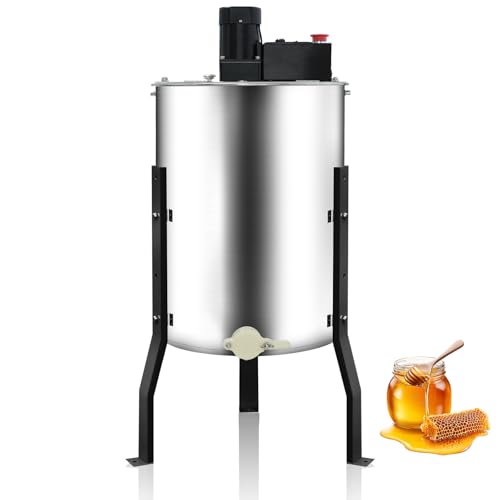
Both machines are the same drum doing the same job. A manual extractor spins the basket through a geared hand crank on the lid, so your arm sets the speed. An electric extractor drives the same basket with a motor, usually top mounted, controlled by a dial or a switch. The honey comes out identically either way.
What changes is what you can do while the drum runs. With a crank, you are the drive, so you stand there. With a motor, your hands are free, which means you can uncap the next set of frames while the current load spins. That is the real difference, and it only matters when there is a next set of frames waiting.
Where the Line Actually Falls
The honest dividing line is the number of loads, not the number of colonies. Two loads is a workout you will barely remember. Four is a job. Eight is the point where people stop mid harvest, put the crank down and start reading extractor listings on their phone with sticky fingers.
Translate that into hives and it lands somewhere around three to four colonies for most backyard keepers, assuming mediums and a decent flow. Run all deeps, or take two supers off each hive, and the same colony count generates twice the loads, which is why the answer shifts for people who look identical on paper.
The Helper Variable Nobody Mentions
If someone else is uncapping while you spin, a manual extractor keeps pace surprisingly well, because the bench and the drum run in parallel anyway. Working alone, the crank forces the two jobs into sequence, and the afternoon roughly doubles.
This is why the same question gets opposite answers from two people with the same number of hives. One of them has a partner on the uncapping tray and the other is doing every step alone in a hot garage.
Comb Damage and Speed Control
New comb that has never been extracted is the fragile case. It has no reinforcement from a previous cycle, and taking it to full speed straight away can pull the sheet out of the frame. A hand crank protects against that by default, because you physically cannot ramp faster than your arm.
An electric extractor with variable speed gives you the same control and better repeatability, since you can set a low speed and leave it. An electric extractor with a single on and off switch does not, and that is the version to skip regardless of what else it offers.
Braking and Coast Down
Stopping matters as much as starting. A loaded basket carries real momentum, and jamming it to a halt puts a twisting load through the frames and the bearings. Manual extractors coast down naturally when you stop cranking, which is one quiet advantage of the format.
On motorized units, look for a controller that ramps down rather than cutting power dead, or at minimum one that lets the drum freewheel. It is a small detail that shows up in how long the machine stays quiet and true.
Cleanup, Storage and Power
A manual extractor is one fewer thing to keep dry. There is no motor housing, no cord, no controller and no bearing assembly that dislikes being hosed out, so cleanup is simply a matter of rinsing the drum, the gate and the basket and letting everything air dry with the lid off.
Electric units are not difficult to clean, but the motor end needs respect. Keep water away from the housing, wipe rather than rinse around the drive, and make sure the unit dries fully before it goes back in a corner for eleven months. Check that a standard household outlet is within reach of wherever you extract, because extension cords and sticky floors are a poor combination.
Head to Head
| Factor | Manual crank | Electric motor | Who it favors |
|---|---|---|---|
| Speed control | Direct, by arm | Only with a variable speed dial | Manual, for brand new comb |
| Working alone | Spin and uncap in sequence | Spin and uncap in parallel | Electric, clearly |
| Cleanup and storage | Rinse and air dry, no housing | Keep water off the drive end | Manual |
| Loads per session | Comfortable up to a few | Unbothered by many | Electric above roughly four hives |
Which One to Buy for Your Setup
One to Three Colonies, Working Alone or With Help
A two frame hand crank drum in food grade stainless covers this comfortably. The cycles add minutes, not hours, and the arm powered ramp up is exactly what first year comb wants. Check that the basket takes your frame depth, since many small drums hold mediums easily and deeps only just.

Four Colonies or More, Usually Alone
This is where a four frame electric drum with a variable speed controller changes the day. Load, start slow, and spend the spin uncapping the next four frames instead of standing over a crank. Height adjustable legs matter here, because the gate needs to clear a bucket with a strainer sitting in it.
Whichever You Buy, This Sits Under the Gate
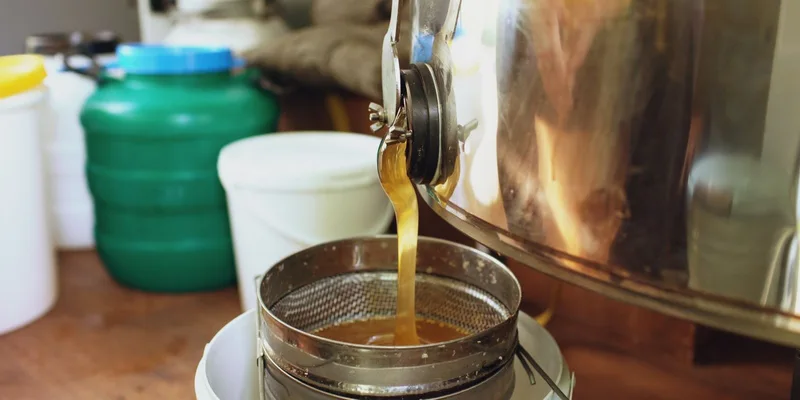
Honey coming off the frames carries wax flakes and bits of cappings, so it needs a sieve on the way into a food grade bucket. This is the piece people discover they are missing at the least convenient moment, usually with a full drum and an open gate.

Frequently Asked Questions
Does an electric extractor get more honey out of the frames? No. Both formats spin the same basket in the same drum. What a motor buys is consistency and free hands, not a fuller bucket at the end of the day.
Can I add a motor to a manual extractor later? Some drums are sold with a drive mount that accepts a motor kit, and some are not. If retrofitting matters to you, confirm it on the specific listing before buying rather than assuming a universal fit.
Is a hand crank hard work? It is steady rather than heavy. The effort is in repetition across loads, not in any single spin, which is why the total number of supers matters more than how strong you are.
What speed should I spin at? Slower than feels productive, especially on comb that has never been extracted. Build up gradually, flip, and build up again. Comb that survives the first extraction is much tougher in later seasons.
Do I need a dedicated outlet for an electric extractor? A standard household outlet within reach of the extracting space is normally enough for the small units backyard keepers use. Plan the location before harvest day so you are not running a cord across a sticky floor.
The Bottom Line
Count the loads rather than the hives. Up to a handful of loads, a manual crank is a complete answer and gives you speed control for free; past that, a variable speed motor is the difference between finishing in the afternoon and finishing after dark. Whichever way you go, the drum is only half the purchase. Our full honey extractor guide covers frame depth, gates and legs, and the two frame format gets its own breakdown if that is the size you have landed on. If neither format fits the budget this year, harvesting without an extractor is a legitimate route.