Last updated: August 21, 2026
The two frame extractor is the cheapest way into spinning your own honey, and it is the machine most backyard beekeepers look at first. It is a stainless drum, a basket that holds two frames, a hand crank or a small motor on top, and a gate at the bottom. Nothing about it is complicated, which is exactly why the question is not whether it works but whether it keeps up with a harvest day.
That question depends less on hive count than most buying advice suggests. What decides your afternoon is how fast you can uncap and whether the basket is tangential, meaning each frame gets spun on one side at a time and has to be turned around halfway.
This article contains affiliate links. If you buy through them, we may earn a commission at no extra cost to you. Learn more.
Quick Answer
Is a two frame extractor enough for two or three hives?
- For one to three backyard hives, yes, as long as you accept that extraction becomes a slow, steady rhythm rather than a fast one.
- Most small drums are tangential, so every frame gets flipped halfway through, which roughly doubles the handling per load.
- Many drums sold as two frame actually hold four medium or shallow frames and only two deeps, so check the frame depth you run before you judge capacity.
- Uncapping, not spinning, is the real bottleneck on harvest day for almost every backyard setup.
Bottom line: a two frame drum suits a few hives and a patient afternoon; step up in basket size when you are pulling more than a handful of full supers at once.
What a Two Frame Extractor Actually Does
A two frame extractor is a centrifuge. Uncapped frames go into a wire basket inside a stainless drum, you crank or motor the basket up to speed, and honey flings out against the wall and runs down to a gate at the bottom. The comb survives intact, which is the whole point, because drawn comb handed back to the bees is worth far more than the wax itself.
The small drums are almost always tangential rather than radial. Tangential means the frame faces the drum wall flat on, so only the outward face empties. Radial baskets stand frames like spokes on a wheel and empty both sides at once, but they need a wider drum, which is why radial designs start further up the size range.
Why the Frame Count on the Box Can Mislead
Listings often read as two or four frame, and both numbers are true at once. The basket typically takes four medium or shallow frames, or two deep frames, because deeps are taller and eat the vertical space of two shallower frames. If you run all mediums, a drum sold as two frame may be a four frame machine for you in practice.
That single detail changes the math more than any other spec. Before you buy, look at the listed internal drum height and the frame sizes it accepts, then compare that to the boxes you actually harvest from. A keeper running deeps for honey and a keeper running all mediums will have very different days on the same machine.
The Bottleneck Is Uncapping, Not Spinning
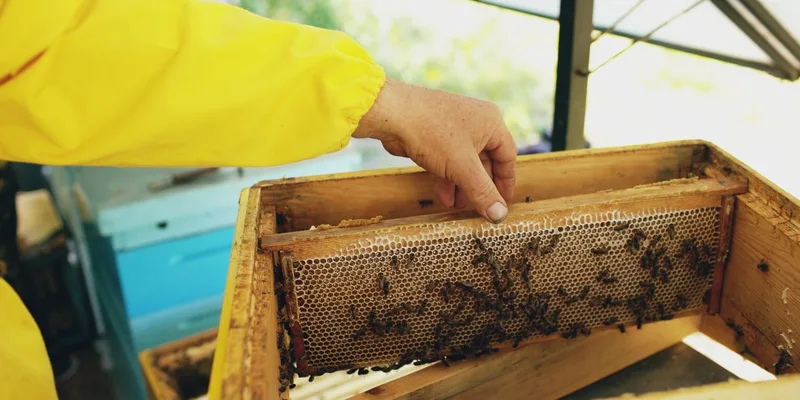
A spin cycle is a few minutes. Uncapping a frame properly, catching the cappings, and setting the frame somewhere it will not drip on the floor takes longer than the spin it feeds. For most backyard harvests the drum sits idle waiting for the person with the knife, which is why a bigger basket often buys less time than people expect.
The practical fix is to work ahead. Uncap a full basket load before you start cranking, keep a second load uncapped and draining while the first spins, and let the machine run while your hands are busy. Our guide to uncapping honey frames covers how to keep the comb intact while you do it, and the uncapping knife guide covers which blade type suits a small harvest.
Two Frame Extractors by Situation
One or Two Hives, Hand Crank
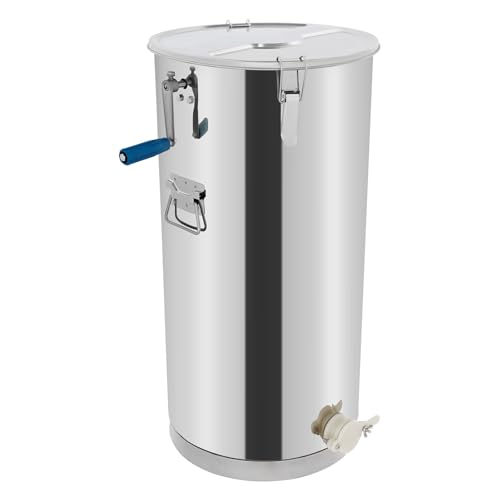
A manual stainless drum with a hand crank and a clear lid is the standard first extractor for a backyard apiary. You control the speed by hand, which matters with new comb that has never been spun before, and there is no motor to fail. The trade is your shoulder and the flipping.
Three Hives and a Bad Shoulder
Small electric drums put a motor and a speed control on the same size basket. You give up hand feel on the first spin of fresh comb, and you gain the ability to load, close the lid and go uncap the next batch while the machine works. For anyone who finds repetitive cranking uncomfortable, that is the whole argument.

You Want the Drum Off the Floor
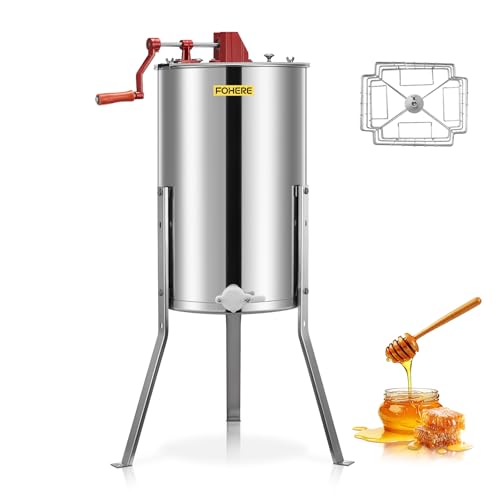
An extractor is only usable when the honey gate clears the top of a bucket. Many small drums now ship with a height adjustable stand for exactly that reason, and it is worth checking whether yours does before you improvise with cinder blocks. A drum that walks across the floor while it spins is the other reason a proper stand matters.
Already Outgrowing the Small Basket
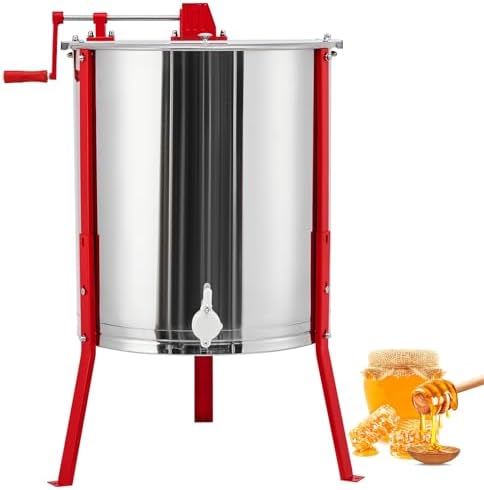
If you are pulling more than a few full supers at a time, a four frame tangential or a small radial drum halves the number of load cycles and, in the radial case, removes the flipping step entirely. That is the point where the step up buys you real hours rather than convenience.
How the Small Drums Compare
| Setup | Frames per load | Flipping | Suits |
|---|---|---|---|
| Two frame manual | Two deeps or up to four mediums | Yes, every frame | One to three hives, patient harvest |
| Two frame electric | Same as manual | Yes, every frame | Same hive count, hands free while spinning |
| Four frame tangential | Roughly double | Yes, every frame | Three to five hives |
| Radial basket | Six or more mediums | No, both sides at once | Steady harvests, club or shared use |
What Backyard Keepers Regret About the Small Drum
The two complaints that come up most are cleanup and stability. A stainless drum with a welded seam and a smooth interior rinses out with warm water, while a drum with an awkward internal lip holds honey in places a sponge cannot reach. Stability is the other one, because a lightly loaded basket that is not balanced will make the whole drum hop.
Balance is easy to manage once you know about it. Load frames of roughly equal weight opposite each other, start slow and let the speed come up gradually, and do not run an unbalanced single frame at full speed. Fresh, newly drawn comb is fragile enough that starting slowly is worth doing even when the load is even.
Cleanup Is a Two Bucket Job
Warm water, not hot, is the rule for rinsing an extractor, since very hot water melts wax onto stainless and makes the next clean harder. Drain everything you can through the gate first, then rinse and dry the drum fully before storage so nothing corrodes at the bearing.
Frequently Asked Questions
How many hives can a two frame extractor handle? One to three backyard hives is the comfortable range. It will physically handle more, but the number of load and flip cycles grows fast, and a harvest from five or more hives turns into a very long day.
Does a two frame extractor really only hold two frames? Usually not. Most take two deep frames or up to four medium or shallow frames, since two shallower frames stack into the height one deep needs. Check the listed frame sizes rather than the model name.
Manual or electric for a small extractor? Manual gives you speed control by feel, which is kinder to newly drawn comb, and nothing electrical to fail. Electric frees your hands to keep uncapping. Both use the same basket, so neither changes capacity.
Do I have to flip the frames? In a tangential basket, yes. Only the face pointing at the drum wall empties, so each frame gets spun, turned and spun again. Radial baskets avoid this, but they need a larger drum.
Can I extract without any machine at all? Yes. Crush and strain works for small harvests and for top bar comb, at the cost of the drawn comb, which the bees then have to rebuild. Our guide to harvesting honey without an extractor walks through it.
Is a plastic drum worth avoiding? Food grade plastic drums exist and cost less, but they scratch more easily and can hold odors, and scratched surfaces are harder to get properly clean. Stainless is the standard for a reason, and most small drums on the market are stainless anyway.
The Bottom Line
A two frame extractor is genuinely enough for two or three backyard hives, provided you plan the day around uncapping rather than spinning and you accept the flipping that a tangential basket demands. Check the frame depths it accepts before you judge its capacity, because most of these drums hold twice as many mediums as the name suggests. If you are weighing the crank against a motor, our electric or manual extractor comparison lays out where the line falls, and the broader honey extractor guide covers drum size and drive from the top down.