Last updated: August 21, 2026
People buy bee suits for wasps far more often than beekeepers realize. A yellow jacket nest under the deck, a paper wasp colony in the eaves, a bald faced hornet nest the size of a football in the hedge: at some point a homeowner decides they need to get close to it, and the first thing they search for is protective clothing.
This article is about the clothing side of that, and only the clothing side. A bee suit is protection for the person wearing it. It is not a plan, it does not make an aggressive nest safe to approach, and nest removal is a job for a licensed pest control professional rather than for equipment bought online. What follows covers what a suit does and does not do around wasps and hornets, and where the gaps are.
This article contains affiliate links. If you buy through them, we may earn a commission at no extra cost to you. Learn more.
Quick Answer
Does a bee suit protect against wasps and yellow jackets?
- Partly. The same standoff that resists honey bee stings works against wasps, but wasps sting repeatedly and search harder for a gap.
- Full body coverage with sealed wrists, ankles, and veil zipper matters far more here than it does at a hive.
- No suit is absolute. Sting-resistant is the honest word, and a suit is not a reason to approach a nest you would otherwise leave alone.
- Nest removal is a licensed pest control job. Call a professional rather than solving it with clothing.
Bottom line: a full suit reduces stings around wasps, and it is not a substitute for having someone qualified deal with the nest.
Why Wasps Are a Harder Test Than Honey Bees
Honey bees sting once and die, which limits how much a single defensive bee can do. Wasps, yellow jackets, and hornets have smooth stingers and can sting repeatedly, and they tend to pursue further from the nest than honey bees pursue from a hive. The same suit therefore faces a longer and more persistent test.
They also behave differently on the fabric. Wasps walk and probe more, which means they find seams, pocket flaps, and the corners of a veil zipper that a honey bee would never investigate. The protection principle is the same, but the margin for a sloppy closure is much smaller.
What a Bee Suit Actually Gives You Here
It gives you distance. Protection in any bee or wasp suit comes from holding fabric off your skin, so a loose coverall or a three layer ventilated suit resists a sting that a shirt pressed against your arm would not. That is real, and it is why beekeeping clothing gets bought for this purpose at all.
What it does not give you is coverage of the places you forget. Bare wrists between glove and sleeve, an ankle above a low shoe, a veil that has not been zipped past the corner, and the gap where a pocket flap lifts are the four places stings actually happen. Our bee suit buying guide covers which closures seal properly.
The Colors and Movement Point
Light colored, smooth clothing draws less attention than dark or fuzzy clothing, which is why beekeeping suits are white. Fast movement and swatting are what turn a few investigating wasps into a defensive response, so the same slow, deliberate movement that works at a hive works here.
Sealing the Four Gaps
Wrists first: the glove cuff goes over the suit sleeve, not the sleeve into the glove, so the overlap runs downhill. A long gauntlet glove that reaches the forearm gives you more overlap to work with, and thumb loops in the suit keep the sleeve from riding up when you reach overhead.
Then ankles, veil, and pockets. The suit leg goes over a boot with a snug top rather than tucking in, the veil zipper closes past both corners with the flap or tab secured, and pocket flaps should lie flat rather than gaping. Checking those four before you walk out is a thirty second habit that does most of the work.
Gear for Working Near Wasps
Full Coverage With Proper Closures
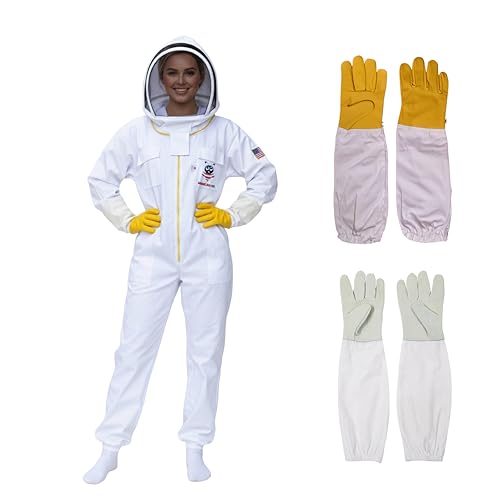
A full body suit with elastic at the wrists and ankles and a zippered veil is the baseline. Coverage from hood to ankle is not optional here in the way it arguably is for a calm hive inspection, because wasps go looking for the way in.
Ventilated Mesh for Standoff and Heat
Three layer mesh holds fabric away from skin across the whole suit rather than only where it hangs loose, which is the property that matters most against an insect that can sting more than once. It is also cooler, and heat is what makes people rush.

Long Gauntlet Gloves
Cowhide gloves with a long reinforced sleeve give you the forearm overlap that short cuffs cannot. Dexterity matters less here than it does at a hive, so this is the situation where the thicker leather is the right call.

Coverage Compared
| Clothing | Standoff from skin | Weak points | Suitable for |
|---|---|---|---|
| Full ventilated suit | Across the whole suit | Zipper corners, compressed spots | Working near an active nest area |
| Woven full suit | Only where it hangs loose | Shoulders, knees, seat | General yard work near wasps |
| Jacket and work trousers | Upper body only | Legs, ankles, waist gap | Standing well back |
| Ordinary clothing | None where it touches | Everywhere | Not suitable near a nest |
Identify Before You Do Anything
Before anyone puts on a suit, work out what you are actually looking at. A cluster of honey bees hanging from a branch is a swarm, and a local beekeeper or your county beekeeping association will usually collect it for free. Killing a honey bee swarm is both unnecessary and a waste of a colony that someone would gladly take.
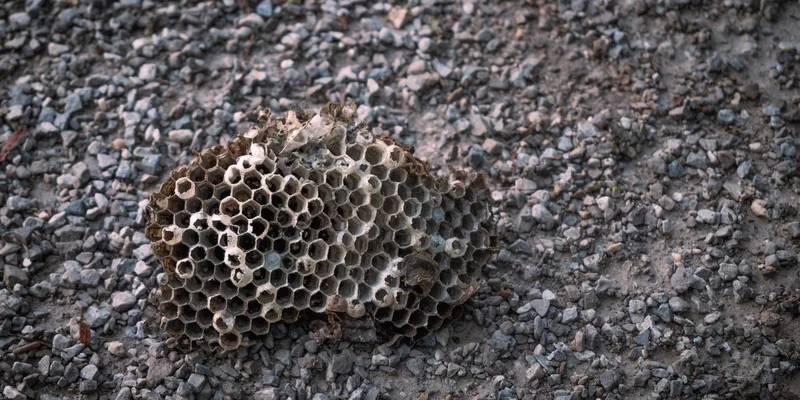
Paper wasps in the eaves, yellow jackets in the ground, and bald faced hornets in a shrub are different animals with different behavior. Your county extension office can help identify what you have, and that identification changes who you should be calling. Guessing is how people end up standing over a ground nest in a suit they bought yesterday.
Where This Article Stops
Nest removal is a licensed pest control job, and this site does not cover it. Professionals carry equipment, insurance, and training for exactly the situations where a homeowner in a bee suit gets hurt: nests inside walls, nests underground with multiple exits, nests at height on a ladder, and nests near anyone with a known sting allergy.
If someone shows signs of a whole body reaction after a sting, you call 911, not look it up. Everything about allergy testing, prescriptions, and what to keep on hand belongs with a doctor or an allergist, and no purchase on this page changes that.
Frequently Asked Questions
Will a bee suit protect me from yellow jackets? It reduces stings by holding fabric away from your skin, and it is not absolute. Yellow jackets sting repeatedly and probe harder for gaps, so full coverage with sealed wrists, ankles, and veil matters more here than at a hive.
Is there a special suit for wasps or hornets? Purpose built pest control suits exist and are aimed at professionals. For a homeowner, a full body beekeeping suit with proper closures is the commonly used option, with the same honest limits.
Can hornets sting through a bee suit? Anywhere the fabric is pressed flat against skin, such as under a strap, at the knees when you kneel, or across the shoulders. Three layer ventilated construction reduces that considerably because it maintains a gap across the whole garment.
Should I remove a wasp nest myself in a bee suit? No. Nest removal is a licensed pest control job, and a suit does not supply the training, the equipment, or the insurance that makes it a reasonable thing to attempt.
What if the nest turns out to be honey bees? Contact a local beekeeper or your county beekeeping association. Honey bee swarms are usually collected free of charge, and a swarm hanging in the open is generally at its least defensive.
Do I need gloves as well as a suit? Yes, and long ones. Hands and forearms are the most exposed part of anyone working near a nest, and a gauntlet cuff that overlaps the suit sleeve closes the gap that short gloves leave.
The Bottom Line
A bee suit around wasps and hornets does one job well: it holds fabric off your skin so that a sting that would land does not. Full body coverage, a gauntlet glove overlapping the sleeve, the suit leg over a boot, and a veil zipper closed past both corners is what makes that work, and none of it turns an active nest into a safe thing to approach. Identify what you have, hand nest removal to a licensed professional, and pass honey bee swarms to a local beekeeper. Read our bee suit buying guide and the ventilated suit guide for the gear side in full.