Last updated: August 21, 2026
Ask a room of backyard beekeepers what they wear and you will get a split answer. Almost everyone owns a full suit. Most of them, on a normal Saturday in June, are wearing a jacket. That gap between what people buy first and what they actually reach for is worth understanding before you spend money, because buying the wrong one first is the most common way new keepers end up owning both anyway.
This comparison looks at where the jacket wins, where it stops being enough, and how the decision changes with your climate, your colonies, and whether you kneel or stand while you work. It is not a case of one being safer than the other in every situation; it is a case of coverage versus the friction of getting dressed.
This article contains affiliate links. If you buy through them, we may earn a commission at no extra cost to you. Learn more.
Quick Answer
Should you buy a bee suit or a beekeeping jacket?
- Buy the full suit first if this is your first colony. Confidence matters more than convenience in your first season.
- The jacket is the piece you will use most once you know your bees, because it goes on in seconds over work clothes.
- A jacket leaves your legs and ankles exposed, which matters when you kneel, when you work a defensive colony, and during harvest.
- Many keepers end up with both. If you can only own one, own the suit.
Bottom line: the suit is the safety floor, the jacket is the convenience that keeps you inspecting on schedule.
What Each One Actually Covers
A full bee suit is a one piece coverall with an attached or detachable veil, closing at the wrists and the ankles so there is no seam a bee can walk into. A jacket covers you from the veil to roughly the hips, with elastic at the waist and wrists, and leaves whatever you are wearing on your legs as the only thing between bees and your knees.
That difference sounds obvious and is still underestimated. Bees investigating a disturbance work upward from the ground and from the hive entrance, so ankles and lower legs take more attention than newcomers expect, particularly when you are standing right in front of the entrance rather than beside or behind the hive.
Where the Jacket Wins
The jacket wins on friction. It goes on over jeans in under a minute, comes off just as fast, and does not need a laundry cycle after every syrup spill on the trouser leg. That speed is the reason jackets get used, and a quick look you actually take beats a thorough inspection you postpone because getting suited up feels like a project.
It also wins on heat, but only partly. A jacket lets your legs breathe, which helps, though the upper body is where you sweat most under a veil. In a hot climate the bigger win comes from ventilated construction rather than from bare legs, which is covered in our ventilated suit guide.
The Tasks a Jacket Handles Fine
Adding a super, swapping a feeder, lifting a lid to check stores, taking a quick look at the top box, moving an entrance reducer, and most late season checks all happen standing up with a calm colony. A jacket is genuinely enough for those, which is why experienced keepers use it for the majority of their hive visits.
Where the Jacket Stops Being Enough
Three situations change the math. The first is a full brood nest inspection, where you are pulling frames one by one and standing in front of a colony that is getting progressively less pleased. The second is harvest, when you are carrying supers full of honey and bees are following you. The third is any colony that has already shown you it is defensive.
Kneeling is the fourth, and it is the one people forget. The moment you drop to one knee beside a low hive stand, your thighs and calves are at bee height and your trousers are pressed flat against skin, which removes every bit of standoff a loose fabric would give you. If you work from a low stand, wear the suit.
Comparing Suit and Jacket
| Factor | Full suit | Jacket | Who decides on this |
|---|---|---|---|
| Coverage | Head to ankle, sealed | Veil to hips | Anyone kneeling or harvesting |
| Time to put on | Two to three minutes | Under a minute | Keepers who inspect often |
| Heat load | Higher unless ventilated | Lower on the legs | Hot climate keepers |
| First season fit | Recommended starting point | Better as a second piece | New beekeepers |
The Half Suit and Smock Middle Ground
Between the two sits a family of pull over smocks and longer jackets that reach mid thigh. They cover more than a waist length jacket, they still go on over work clothes, and they avoid the full commitment of a coverall. For a keeper who stands to work and never kneels, that length is often the honest sweet spot.
The catch is closure at the bottom. A smock that ends at the thigh without elastic can billow when you bend, and a bee that gets underneath ends up inside with you. Look for a drawcord or elastic hem, and treat any smock without one as a fair weather piece rather than a substitute for a suit.
What to Buy in Which Order
First Purchase for a New Beekeeper
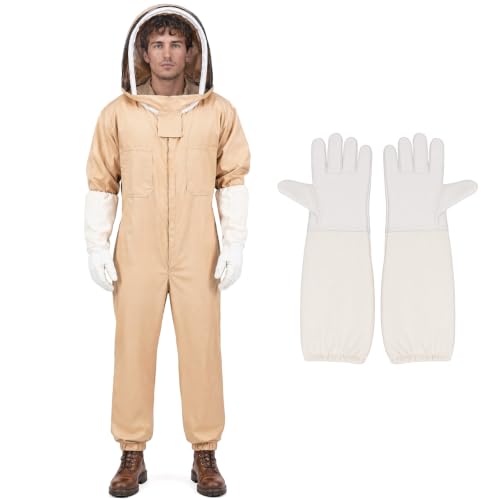
A full body suit with a detachable veil and closures at both wrists and ankles. It removes the variable of what your legs are wearing, and it lets you concentrate on reading frames instead of tracking where bees are landing.
Second Purchase Once You Know Your Colony
A jacket with an attached fencing veil that lives on a hook by the door. This is the piece that gets used for the quick look, the feeder top up, and the mid week check that you would otherwise skip.

For Hot Weather Without Giving Up Coverage
A ventilated jacket keeps the mesh where the heat and the stings concentrate. Paired with heavy work trousers and boots it covers a surprising amount of ground for routine inspections in real summer heat.

What to Wear on Your Legs With a Jacket
If you are going to use a jacket, the legs still need thinking about. Heavy work trousers in a light color, tucked into boots or closed with an ankle strap, cover most of what a suit would. Thin leggings, shorts, and anything dark and fuzzy are the combinations that turn a routine check into a bad afternoon.
Boots matter more than trousers. Bees walk upward and find the gap at the top of a low shoe first, so a boot that the trouser leg tucks into removes the most likely entry point. That single habit closes most of the gap between a jacket and a full suit for standing work.
Frequently Asked Questions
Is a beekeeping jacket safe enough for a beginner? It can be, but the full suit is the better first purchase. New keepers move more, take longer over each frame, and have not yet learned how their colony behaves, and all three of those push the balance toward full coverage.
Do experienced beekeepers wear jackets or suits? Both, depending on the task. A jacket for routine looks and a suit for brood inspections, harvest, and any colony with a reputation is the pattern most backyard keepers settle into after a season or two.
Can you wear a jacket for a honey harvest? It is the situation where a jacket most often gets regretted. Robbing behavior around a harvest means bees in the air well away from the hive, and you are carrying boxes with both hands and cannot brush anything off.
Are jackets cooler than full suits? On the legs, yes. On the upper body, no, because the veil and the torso are where the heat builds. If heat is your main problem, ventilated construction changes more than sleeve length does.
What about a half suit? A longer smock or half suit is a reasonable middle ground for standing work, provided the hem closes with elastic or a drawcord. Without that closure it billows when you bend, which is the failure mode to check for.
Do I need different gloves with a jacket? No, glove choice is independent of what you wear on your torso. What matters is that the glove cuff overlaps the jacket sleeve rather than meeting it edge to edge. Our glove guide covers cuff length in detail.
The Bottom Line
Buy the suit first and the jacket second. The suit sets your floor for the days that go wrong, and the jacket lowers the effort of the routine visits that keep a colony healthy, which is worth real money in avoided problems. If you only ever own one piece, own the coverall, wear boots with it, and accept the extra two minutes of getting dressed. Next, our bee suit buying guide covers fabrics and closures, and our veil comparison settles the hood question either way.