Last updated: August 21, 2026
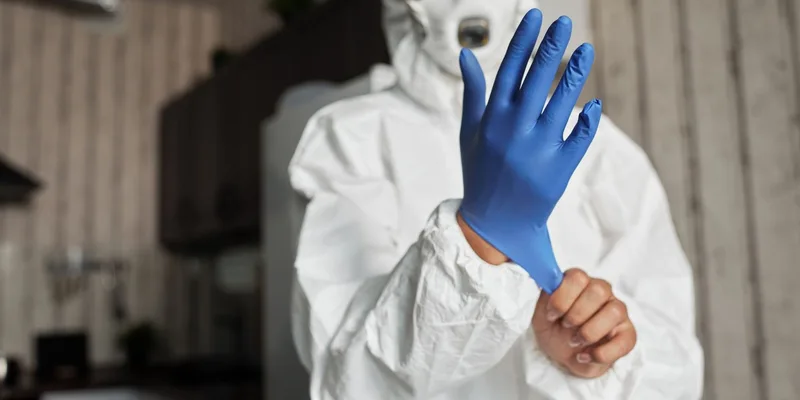
Watch an experienced backyard keeper open a hive and there is a good chance their hands are in blue nitrile rather than leather. It looks reckless the first time you see it. Then you notice how little they fumble, how gently frames go back into the box, and how few bees get rolled between the comb and the wall, and the logic starts to make sense.
Nitrile is the thinnest thing most beekeepers will put between their hands and a colony. It is not a leather substitute in the protection sense, and pretending otherwise does nobody any favors. This guide covers what nitrile actually stops, what thickness in mils means in practice, how keepers close the gap at the wrist, and when leather is still the right call.
This article contains affiliate links. If you buy through them, we may earn a commission at no extra cost to you. Learn more.
Quick Answer
Can you use nitrile gloves for beekeeping?
- Yes, and many experienced keepers prefer them, because the dexterity means fewer crushed bees and a calmer inspection.
- They are not sting-resistant the way leather is. A determined bee gets through thin nitrile, so this is a confidence choice, not a protection upgrade.
- Thickness is measured in mils. The thin exam gloves from a supermarket tear on a hive tool; the heavier industrial grades hold up.
- The wrist is the weak point. Nitrile ends at the forearm, so it needs a sleeve or a cuff over it.
Bottom line: nitrile trades sting protection for feel, which pays off once your handling is already calm.
What Nitrile Does and Does Not Stop
Nitrile stops the things you touch: propolis, honey, wax, and the sticky film that makes a hive tool slide out of your hand. It also stops venom left on the outside of equipment from ending up on your skin, which matters more than people expect when you are handling frames from a colony that stung someone earlier.
What it does not do is hold a stinger away from skin. Protection in beekeeping comes mostly from standoff, and nitrile has none by definition since it is molded to your hand. A bee that decides to sting your knuckle will get through, and you will feel it exactly as much as you would bare handed.
Why Keepers Accept That Trade
Because most inspection stings on the hands are not deliberate attacks; they are bees getting pinched between a frame and a box, or between a finger and a hive tool. Thin gloves reduce those events because you feel resistance before you apply force. Fewer crushed bees means less alarm pheromone, and less alarm pheromone means fewer bees interested in your hands in the first place.
Thickness: What Mils Actually Mean
Nitrile thickness is quoted in mils, where one mil is a thousandth of an inch. Thin exam gloves sit at the low end of the range and are built for medical work, not for wrestling a propolized box apart. Industrial and mechanic grade nitrile runs noticeably thicker, with more resistance to punctures from splinters, staples, and the corner of a hive tool.
For hive work, the useful rule is to buy the thickest nitrile you can still feel a frame through. Too thin and you will tear a glove halfway through the first box, then spend the rest of the inspection with a flapping finger. Too thick and you have given up the dexterity that was the entire point of leaving the leather in the shed.
Sizing and the Double Glove Habit
Nitrile should fit close without stretching pale across the back of your hand. A glove that is too large bunches at the fingertips and undoes the feel; one that is too small tears at the web between thumb and forefinger, which is where the stress goes when you twist a frame loose.
Doubling up is a common habit. Two thinner gloves give a little more puncture resistance than one, and if the outer one tears you are not standing over an open hive with bare skin. It also makes the sticky outer layer easy to strip off before you touch your phone or the truck door.
Closing the Gap at the Wrist
Nitrile ends a few inches above the wrist, which leaves a seam where the suit sleeve stops and the glove begins. Bees find that seam. The fix is to pull the glove cuff over the suit sleeve rather than tucking the sleeve into the glove, so the overlap runs downhill and nothing can walk up into it.
Some keepers add an elastic band, a scrunchie, or a sleeve protector over the join. Others use a suit with thumb loops, which keeps the sleeve from riding up when you reach overhead and removes the problem at the source. Our bee suit guide covers which closures actually seal.
Nitrile Options by Situation
Best General Choice for Hive Inspections
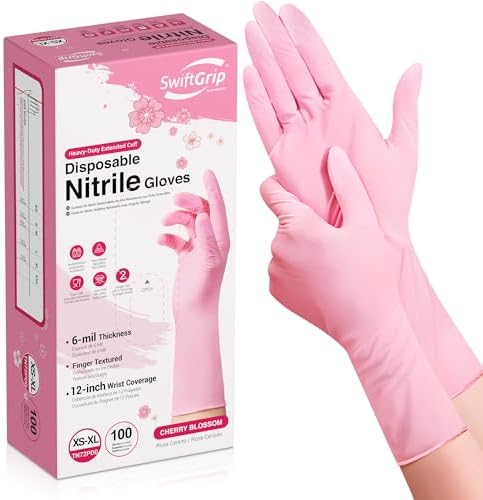
A heavier industrial grade nitrile in a box of a hundred is the workhorse. Thick enough to survive a full inspection without tearing, thin enough that you can still tell when a frame is stuck to the box below.

Best When You Want Extra Grip on Sticky Frames
Diamond or raised texture on the palm and fingers gives noticeably more purchase on frames slick with honey, which is the situation where a smooth glove slips and you compensate by squeezing harder.

Best for Extraction Day and Sticky Work
Longer cuff nitrile that reaches partway up the forearm keeps honey off your sleeves during uncapping and extracting, and it removes the wrist gap problem entirely for indoor work where you are not wearing a suit at all.
Best Leather Backup to Keep in the Bucket
Nitrile is not the glove for a defensive colony or a cutout. A goatskin pair with a long sleeve stays in the same bucket for the days when the plan changes. Our beekeeping gloves guide covers what to look for.

Nitrile Compared With Leather
| Property | Nitrile disposable | Goatskin leather | Why it matters |
|---|---|---|---|
| Feel for the frame | Close to bare hand | Good but reduced | Fewer crushed bees, calmer colony |
| Sting resistance | Minimal, no standoff | Real but not absolute | Defensive colonies and removals |
| Wrist coverage | Ends above the wrist | Sleeve to forearm or elbow | Where bees walk in |
| Lifespan | One to a few inspections | Multiple seasons | Restocking versus caring for a pair |
When to Keep the Leather On
There are days when nitrile is the wrong tool. A colony that has already met you at the entrance, a swarm removal from a wall or a shed, moving hives after dark, and any job where you are lifting rough equipment rather than reading frames all favor leather with a proper sleeve.
Requeening and any work close to the brood nest of an unfamiliar colony sit in a grey area. The dexterity helps, and so does the extra protection, so most keepers choose based on what that particular hive did last time. A planned inspection routine makes that call easier, because you already know what you are going in to do.
Frequently Asked Questions
Can bees sting through nitrile gloves? Yes. Nitrile is thin and molded to your hand, so there is no gap for a stinger to cross. It is a barrier against propolis, honey, and venom residue rather than a sting-resistant layer, and that is the honest way to describe it.
What thickness of nitrile glove is best for beekeeping? Thicker than a medical exam glove and thin enough to still feel a frame. Industrial and mechanic grade boxes state the mil rating on the label, and that number is the one to compare between products.
Why do experienced beekeepers use thin gloves? Dexterity. Handling frames gently causes fewer crushed bees, which means less alarm pheromone and a calmer colony. That effect outweighs the thinner barrier for keepers whose handling is already unhurried.
Should I wear two pairs of nitrile gloves? Many keepers do. Two thin layers resist punctures a little better than one, and stripping the sticky outer pair off before touching anything else is genuinely convenient on a honey covered day.
Do nitrile gloves work over leather gloves? The reverse is more common: nitrile underneath leather keeps venom and propolis off your skin while leather does the protecting. Nitrile stretched over leather tears almost immediately.
What about latex instead of nitrile? Nitrile is the usual recommendation because latex allergy is common enough to matter when other people help at your hives, and nitrile resists punctures better than latex of a similar thickness.
The Bottom Line
Nitrile gloves are a legitimate beekeeping choice and a poor first one. They give you the feel that keeps handling gentle, they cost you the standoff that keeps stings out, and they need a deliberate overlap at the wrist to work at all. Buy an industrial grade box rather than exam gloves, keep a leather pair in the bucket for the days that turn, and let your confidence rather than your budget decide which pair goes on. Read the full glove guide next, or our bee suit buying guide if the sleeve overlap is your weak point.