
Last updated: August 21, 2026
Ask which ventilated suit to buy in any backyard beekeeping group and the Ultra Breeze comes up within the first three replies, usually from someone who has owned theirs for years. It is one of the older names in three layer mesh, it is made in the United States, and it has a reputation built almost entirely on longevity rather than on marketing.
That reputation deserves a closer look rather than a nod. This guide covers what the Ultra Breeze actually is, how the suit and the jacket differ, which details owners keep bringing up, and who is better served by a different ventilated suit. It is written from the published specifications and from what owners report, not from a staged test.
This article contains affiliate links. If you buy through them, we may earn a commission at no extra cost to you. Learn more.
Quick Answer
Is the Ultra Breeze bee suit worth buying?
- It is a three layer ventilated mesh suit made in the United States, sold as a full suit and as a jacket, both with a detachable hood.
- The build details owners cite most are the two way brass zippers, the leg zippers that run to the knee, and a hood roomy enough to keep the veil off your face.
- It is a premium option in a category that now has cheaper competitors doing the same three layer trick.
- Buy it for durability and for the hood. Look elsewhere if you want two veil styles included or a very wide size range.
Bottom line: the Ultra Breeze is the long haul choice among ventilated suits, not the value choice.
What the Ultra Breeze Actually Is
The Ultra Breeze is a ventilated beekeeping garment built from three layers of mesh fabric. The outer and inner layers are finely woven, and the layer between them holds them apart so that air moves through the sandwich while the outer surface stays off your skin. That standoff is what gives a mesh suit its sting resistance.
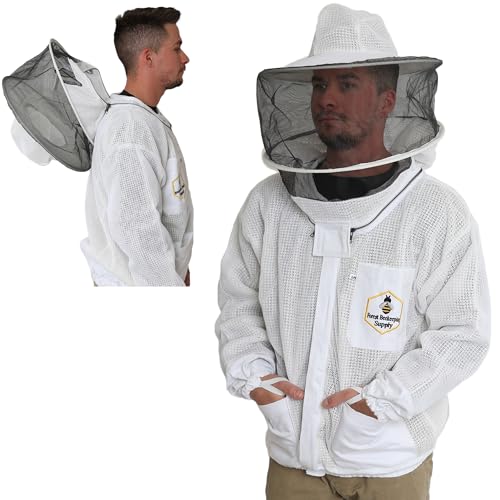
It is sold in two formats. The full suit covers head to ankle with a detachable hood, and the jacket covers the upper body with the same hood arrangement. Both are described by the maker as machine washable, with the hood washed by hand so the veil mesh keeps its shape.
The Details Owners Keep Mentioning
Three construction choices come up repeatedly. The zippers are two way brass on both the suit and the jacket, which matters because a stuck zipper on a garment you are already inside is the failure mode that ends an inspection. The leg zippers run up to the knee, so the suit goes on over boots rather than requiring you to take them off.
The third is the hood. It is detachable and cut roomy specifically so the veil stays away from your face, which is the complaint people most often have about cheaper hoods that collapse inward when you look down at a frame. Pockets are plentiful, which sounds trivial until you are holding a frame in one hand and need somewhere for the hive tool.
Made in the United States
Ultra Breeze states that the suits are made in America using its own materials and workmanship. For most buyers this matters less as a principle than as a proxy: it usually correlates with consistent stitching and with replacement parts staying available, and both of those show up in how long owners keep these suits going.
Suit or Jacket
The jacket is the version many owners reach for on a normal week. It goes over work clothes in under a minute, it carries the same hood, and it puts the mesh where the heat concentrates. For adding a super, topping up a feeder, or a short look in the top box, that is genuinely enough.
The full suit earns its place at harvest, during brood nest inspections, and any time you kneel. Legs at bee height with ordinary trousers pressed against skin is the situation a jacket cannot cover, and it is the one most new keepers underestimate. Our suit versus jacket comparison works through that decision in full.
Ultra Breeze Compared With Other Ventilated Suits
| Option | Veils included | Notable build details | Best suited to |
|---|---|---|---|
| Ultra Breeze suit | One detachable hood | Two way brass zippers, leg zips to knee | Long term use, hood comfort |
| Ultra Breeze jacket | One detachable hood | Same hood and zipper approach | Routine inspections, hot days |
| Oz Armour ventilated | Fencing plus round brim | Very wide size range, eight pockets | Choosing your veil style later |
| Budget ventilated suits | Usually two | Thinner zippers, variable stitching | Trying mesh without committing |
Where the Ultra Breeze Is Not the Answer
It ships with one hood style rather than two, so if you are undecided between a fencing veil and a round brim you will be buying that decision rather than trying both. It is also a premium product in a category where competitors now sell three layer mesh at a fraction of the outlay, and the construction gap is smaller than it was a decade ago.
Size range is the other consideration. Brands like Oz Armour publish an unusually wide range including stout cuts, and keepers who fall outside a standard chart often have better luck there. If either point applies to you, our Oz Armour guide is the direct comparison.
Sizing and Ordering
Ultra Breeze suits and jackets are sold in the usual lettered sizes, and like all ventilated garments they are cut generously because the bonded layers do not drape. That means the instinct to order a size up, which works for a woven cotton coverall, often produces a mesh suit with stiff excess folds that catch on hive corners.
Measure your chest over the layer you plan to wear underneath and check your height against the brand’s range before ordering. If the two point at different sizes, follow the chest for a jacket and the height for a full suit, since torso length is what determines whether the sleeves and legs stay put. Our bee suit sizing guide covers the in between cases.
Care and Longevity
Ultra Breeze lists the suits and jackets as machine washable and the hood as hand wash. As with any bonded mesh garment, keep it away from a hot dryer, because heat is what distorts the middle layer that creates the standoff. Air drying costs you an afternoon and preserves the property you bought the suit for.
The mesh itself is the wear point rather than the seams. Snags at the knees and at the cuffs from rough woodenware are normal after a few seasons, and a patch keeps the suit in service. Owners commonly describe these suits lasting well past the point where the white has gone permanently propolis stained.
If You Are Buying an Ultra Breeze
The Full Suit for Harvest and Brood Inspections
Head to ankle ventilated coverage with the detachable hood is the format to buy if this is the only bee garment you will own. It handles the days that go wrong as well as the routine ones.

The Jacket for Everything Else
Same mesh and same hood, upper body only, on and off in seconds. If you already own a full suit, this is the piece that ends up hanging by the door.
Gloves to Pair With It
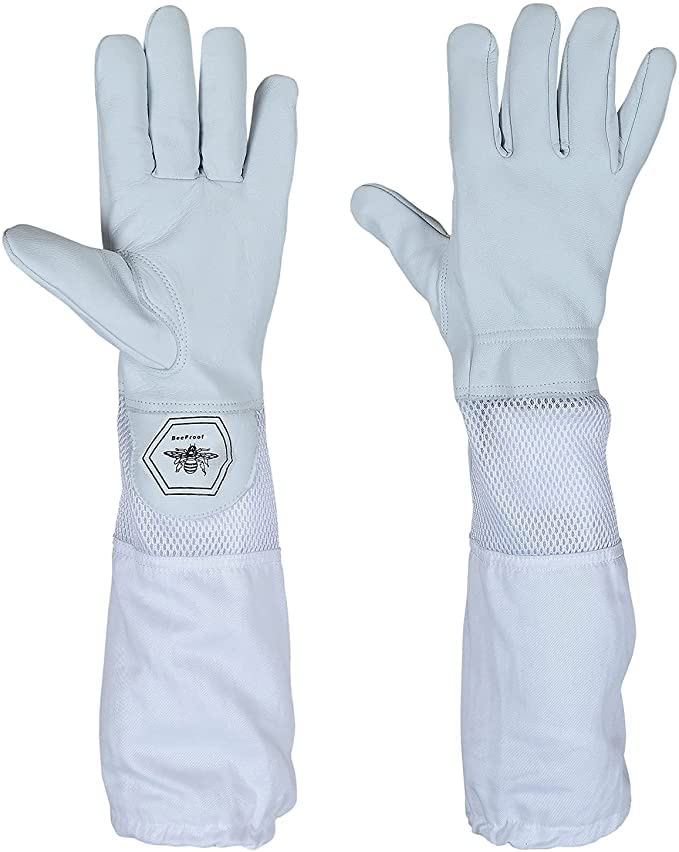
Ventilated suits rarely include gloves, so plan for a pair separately. Goatskin with a ventilated cuff matches the airflow logic of the suit rather than undoing it at the forearm.
Frequently Asked Questions
Can bees sting through an Ultra Breeze suit? Wherever the layers get compressed, such as under a strap or where you kneel hard. The three layer build reduces that a great deal compared with a single woven layer, which is why mesh suits are described as sting-resistant rather than anything absolute.
Is the Ultra Breeze hood a fencing or a round veil? It is a detachable hood cut roomy enough to hold the veil away from your face. Unlike some competing ventilated suits, it does not ship with a second veil style, so check the listing for what is included before ordering.
Can you put an Ultra Breeze in the dryer? The suits and jackets are described as machine washable, with the hood hand washed. Skip the dryer regardless, since heat can distort the bonded middle layer that creates the standoff.
Ultra Breeze or Oz Armour? Ultra Breeze for build longevity and hood comfort, Oz Armour if you want both veil styles included and a wider size range. Both use three layer mesh, so the airflow argument is similar.
Does a ventilated suit work in cool weather? It is noticeably cooler in spring and fall, which is a drawback rather than a feature in April. Many keepers hold on to a woven jacket for early season work.
Do I still need gloves with a ventilated suit? Yes. Suits and gloves are separate decisions, and most ventilated suits do not include a pair. Our glove guide covers what to pair with mesh.
The Bottom Line
The Ultra Breeze is the ventilated suit people buy once and keep, and the details behind that are unglamorous: brass two way zippers, leg zips that clear a boot, a hood roomy enough to stay off your face, and American manufacturing that keeps the stitching consistent. What it does not give you is a second veil style in the box or a bargain entry into mesh, and both of those are real reasons to compare before you commit. Read our ventilated bee suit guide for the category as a whole, or the general bee suit buying guide if you are still deciding between mesh and cotton.