Last updated: August 21, 2026
A bee suit that has done a season smells like a hive, and that is not a compliment. Alarm pheromone from every sting the fabric has taken accumulates in the weave, along with propolis, smoke and honey, and a colony reads all of it before you have the lid off. Suits get washed for the same reason hive tools get scraped: because dirty equipment makes the bees harder to work with.
The problem is that the most fragile part of the garment is attached to the sturdiest part. The cotton or poly body survives a machine cycle without complaint; the veil does not. This guide covers how to get a suit clean without turning the veil into a bent, cloudy mesh that no longer stands off your face.
This article contains affiliate links. If you buy through them, we may earn a commission at no extra cost to you. Learn more.
Quick Answer
How do you wash a bee suit?
- Detach the veil and hand wash it separately. Suppliers including Betterbee and Dadant publish the same instruction, and it is the step people skip.
- Wash the body of the suit alone, on a gentle cycle, in warm rather than hot water.
- Use a small amount of mild, low-fragrance detergent. No bleach, no fabric softener.
- Air dry with the zippers open. Keep the suit out of a hot dryer.
Bottom line: the veil comes off first and goes in a sink, not a machine. That single habit is what keeps a suit usable for years.
Why a Dirty Suit Costs You
Alarm pheromone is the practical reason to wash. When a bee stings fabric, she leaves a chemical marker that tells other bees where to aim, and a suit carrying a season of those markers walks into the apiary already flagged. Beekeepers who wash regularly consistently describe calmer inspections afterward.
The second reason is the fabric itself. Propolis and honey stiffen a suit and hold grit, which abrades the weave and works zippers loose. A suit is protective equipment, and a garment worn thin at the knees and elbows is thin exactly where you kneel at a hive stand.
Take the Veil Off First
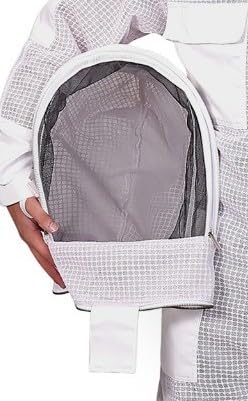
Almost every veil is designed to detach, whether it zips off at the collar or unclips from a hat ring, and the published care guidance from beekeeping suppliers is consistent: hand wash the veil, do not put it through a machine. A washer bends the stiffened mesh, crushes the shape that holds it off your face, and scuffs the visibility out of the panel you look through.
Wash it in a sink with warm water and a small amount of mild detergent, working gently over the mesh rather than scrubbing it. Rinse thoroughly, then hang it to dry in its natural shape rather than folding it over a line, which sets a crease straight through the viewing panel.
If Your Veil Is Already Damaged
Mesh that has gone cloudy, mesh that no longer stands away from your face, and any hole anywhere in the veil are all reasons to replace it rather than patch it. This is the one component where a defect is directly a face and eye issue, and most suits sell a replacement veil separately.
Washing the Body of the Suit
Wash the suit on its own rather than with a household load, since it will shed propolis flakes and smoke residue onto everything else. Close the hook-and-loop tabs so they do not attach themselves to the fabric, zip the main zipper most of the way, and turn the suit inside out if the knees and elbows are the dirty part.
Use a gentle cycle and warm water rather than hot, with a modest amount of low-fragrance detergent. Skip bleach, which weakens the fibers on a garment whose job is to stay intact, and skip fabric softener, which leaves a coating on the weave and a scent in the apiary you did not choose. A zippered mesh bag keeps loose straps and tabs from tangling around the agitator.

Propolis, Honey and Smoke Stains
Propolis is the stain that defeats normal washing, because it is a resin rather than a soil. The standard trick is to make it brittle first: put the affected part in the freezer, then flake the hardened propolis off with a fingernail or a dull edge before the suit goes anywhere near water.
What remains usually responds to a pre-treatment with rubbing alcohol on a cloth, dabbed rather than rubbed, and tested on an inside seam before you touch a visible panel. Accept that a working suit stains. Some brown shadowing at the cuffs and knees is normal on a garment that has been used, and chasing it with harsh chemicals costs more fabric life than it saves.
Drying and Storage
Air dry, always. Heat is what warps veil components, shrinks cotton and softens the plastic in zips and clips, so a hot dryer is the fastest way to shorten a suit’s life. Hang the suit with the main zipper open and the cuffs loose so air moves through it, and let it dry completely before it goes away.
Store it somewhere dry and dark rather than folded in a shed corner. A suit put away damp mildews, and one left in sunlight fades and weakens. If mice and moths get into your outbuilding, a sealed bin is worth more than a hook.
Care by Component
Different parts of the same garment want different treatment, which is the whole reason suits get ruined in the wash.
| Component | Method | Avoid | How often |
|---|---|---|---|
| Veil and hood | Hand wash, mild detergent | Machine wash, folding creases | Whenever the suit is washed |
| Suit body | Gentle cycle, warm water | Bleach, softener, hot water | Several times a season |
| Leather gloves | Per maker instructions | Hot water, machine drying | When stiff or pheromone heavy |
| Ventilated mesh suits | Gentle cycle, air dry flat | Dryer heat, wringing | Several times a season |
Ventilated Suits Are Not the Same Garment
Three layer mesh suits behave differently in the wash. The spacer layer between the outer and inner mesh is what holds the fabric away from your skin, and crushing or wringing it flattens the loft that does the work. Wash gently, do not wring, and dry flat or on a wide hanger rather than balled over a rail.
Check the maker’s own care label first, because construction differs between ventilated models more than it does between cotton coveralls. Our ventilated suit guide covers how those layers are built and why the loft matters for both heat and protection.
Frequently Asked Questions
Can I put a bee suit in the washing machine? The body of the suit yes, on a gentle cycle in warm water with mild detergent. The veil no, which is why supplier care guidance from Betterbee and Dadant says to detach and hand wash it.
How often should I wash my bee suit? Several times a season, and sooner after a day with a lot of stings, because alarm pheromone in the fabric makes the next inspection harder than it needs to be.
Can I use bleach on a bee suit? No. Bleach weakens the fibers of a garment whose only job is to stay intact, and it will not remove propolis anyway. Fabric softener is also best avoided, since it coats the weave and adds fragrance.
How do I get propolis out of a bee suit? Freeze the area first so the resin turns brittle, flake it off, then dab the remainder with rubbing alcohol on a cloth, testing an inside seam before touching a visible panel.
Can I tumble dry a bee suit? Air drying is the safe option. Heat warps veil components, softens zips and clips, and shrinks cotton, so the dryer costs you more than the time it saves.
When should I replace a veil instead of washing it? Any hole, any tear, mesh that has gone cloudy enough to affect vision, or mesh that no longer stands away from your face. Most suits sell a replacement veil on its own.
The Bottom Line
Detach the veil and hand wash it, run the suit alone on a gentle warm cycle with mild detergent, skip bleach and softener, and air dry everything with the zippers open. Freeze propolis before you attack it. Do that a few times a season and a suit lasts years instead of one summer. For choosing the suit in the first place, see our bee suit buying guide, and for the veil itself, round, fencing and square hood veils.