Last updated: August 21, 2026
It is a fair question, and it gets asked in two very different tones. Sometimes it comes from someone considering keeping bees and wondering whether the hobby sits right with them. Sometimes it comes from someone who has already decided that taking honey is theft. Either way it deserves a straight answer rather than a defensive one.
The short version is that harvesting surplus honey does not harm a healthy colony, and that harvesting badly absolutely can. The difference is entirely in how much you take, when you take it, and what you leave behind. This is a look at where the real risks to the bees actually sit, including the ones beekeepers do not always like to talk about.
This article contains affiliate links. If you buy through them, we may earn a commission at no extra cost to you. Learn more.
Quick Answer
Does harvesting honey hurt the bees?
- Taking genuine surplus from a healthy colony does not harm it. Bees store far more than they need in a good year, which is why surplus exists at all.
- Taking too much does harm it, and that is the real risk: a colony stripped in the fall goes into winter short.
- Harvesting kills very few bees directly. The clearing methods used at harvest move bees down rather than killing them.
- The colony’s winter stores come first, every year, and how much that is depends on your climate.
Bottom line: harvest surplus, not stores, and the answer to this question stays no.
Why Surplus Honey Exists in the First Place
A honey bee colony does not store to a target and then stop. It stores as long as there is nectar and space, because in a wild nest the size of the cavity is the limit. In a managed hive, adding supers gives the colony more room, and in a good flow it will fill that room well beyond what it needs to survive winter.
That surplus is the honey a beekeeper takes. Nothing about the colony’s plan for winter depends on it, provided the brood boxes below are left alone and the bees go into cold weather with their own stores intact.
Where Harvesting Does Cause Harm
The genuine harm is over harvesting. A beekeeper who takes honey out of the brood boxes, or strips the supers late in the season and assumes sugar syrup will make up the difference, has taken the colony’s food and replaced it with something less complete. Colonies do die that way, usually in late winter.
Timing compounds it. Honey taken in July can often be replaced by the bees during a later flow. Honey taken in October cannot, because the flowers are gone and the cluster is forming. Harvest early enough that the colony still has season left to work with.
The First Year Rule
A first year colony has usually not built any surplus at all, which is why the honest advice for a first season is to take nothing. Our piece on how much honey a hive produces covers why that is normal rather than a sign anything went wrong.
Are Bees Killed During a Harvest?
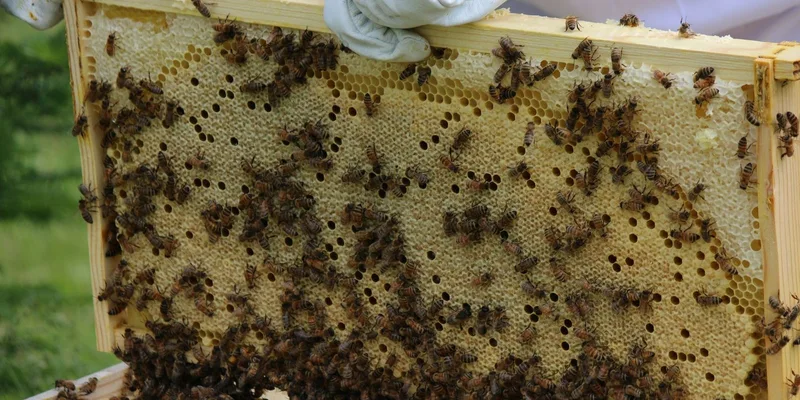
Very few, and not by the harvesting itself. Clearing a super with an escape board simply lets bees walk down into the hive over a day. A fume board drives them down with a smell they dislike. Brushing frames moves them off. None of those methods is designed to kill bees, and a careful harvest kills almost none.
The bees that do die during ordinary beekeeping mostly die from crushing: a box set down on stragglers, a frame pushed back into place too quickly, a lid dropped. Slow hands and a bit of smoke to move bees out of the way prevent most of it, which is one of the practical arguments for using a smoker properly rather than skipping it.
What Responsible Harvesting Looks Like
| Practice | Effect on the colony | Why it happens | Better version |
|---|---|---|---|
| Taking supers only | None on a healthy hive | Standard backyard practice | Leave brood boxes untouched |
| Harvesting late | Colony cannot replace it | Waiting for one more flow | Harvest while the season still runs |
| Stripping and feeding syrup | Real risk over winter | Maximizing the take | Leave stores, feed only if short |
| Crush and strain every year | Colony rebuilds comb each time | No extractor | Return drawn comb where you can |
The Sugar Syrup Question
Feeding is not automatically wrong. A colony that is genuinely short going into winter, or a new package with nothing stored, benefits from being fed, and beekeepers do it every year for good reasons. What is wrong is planning to harvest heavily and to feed the difference back, because syrup is not a full substitute for honey and stores.
Used the other way around, feeding is a rescue rather than a business model. Our guide to winter feeding covers what that looks like when a colony is short, and when to leave a well provisioned hive alone.
Returning Comb Is the Underrated Kindness
Extracted frames handed back to the colony are drawn comb, which represents a large amount of the colony’s work. A hive that gets its comb back can refill it; a hive whose comb is crushed each year rebuilds from scratch every season. If you plan to harvest yearly, an extractor is as much a welfare decision as an economic one.
The Wider Objection
Some people object to keeping bees at all, on the grounds that a managed colony is livestock and honey is not ours to take. That is a values position rather than a factual one, and it does not have a technical rebuttal. What can be said honestly is that a well kept colony is not a suffering one, and that backyard beekeeping is a very different activity from large scale commercial pollination work.
There is a real ecological point in the neighborhood of that objection, though. Honey bees are managed livestock and can compete with wild bees for forage in areas that are already short of it. If your interest is in supporting native pollinators specifically, keeping honey bees is not the most direct way to do it, and a bee house for solitary bees plus more flowering plants often does more.
Frequently Asked Questions
Does harvesting honey kill bees? Not as part of the process. Escape boards, fume boards and brushing all move bees rather than killing them. The bees that die during normal beekeeping are usually crushed by boxes and frames, which careful handling largely prevents.
Do bees starve if you take their honey? They can, if you take the wrong honey. Surplus in the supers is fair game; stores in the brood boxes are the colony’s winter food. Take supers, leave stores, and harvest early enough that the bees can still replace what they need.
Is it cruel to smoke bees? Smoke masks alarm signals and prompts bees to move, and it is not known to injure them at the levels used in an inspection. Cool, thin smoke is the standard; hot smoke or flames from a badly fueled smoker are a different matter.
Do bees make more honey than they need on purpose? They store as long as nectar and space allow rather than to a fixed target, which is why a good year produces far more than the colony will use. That behavior is the entire basis of honey harvesting.
Is it better for bees to leave all the honey? For a first year colony or a weak hive, yes, take nothing. For a strong colony with full supers in a good year, leaving everything on can crowd the brood nest and encourage swarming, so harvesting surplus is not automatically the less kind option.
Should I keep bees to help pollinators? Honey bees are managed livestock, not a wild species in need of rescue. Planting forage and hosting solitary bees supports native pollinators more directly, and both can happily sit alongside a hive in the same yard.
The Bottom Line
Harvesting surplus honey from a healthy colony does not hurt the bees, and the practices that do hurt them are all versions of taking too much, too late, and expecting sugar to cover the gap. Leave the brood boxes alone, harvest while the season can still replace what you take, give the comb back, and take nothing at all in the first year. For the readiness check see when to harvest honey, and for what a hive realistically yields see our piece on annual production.