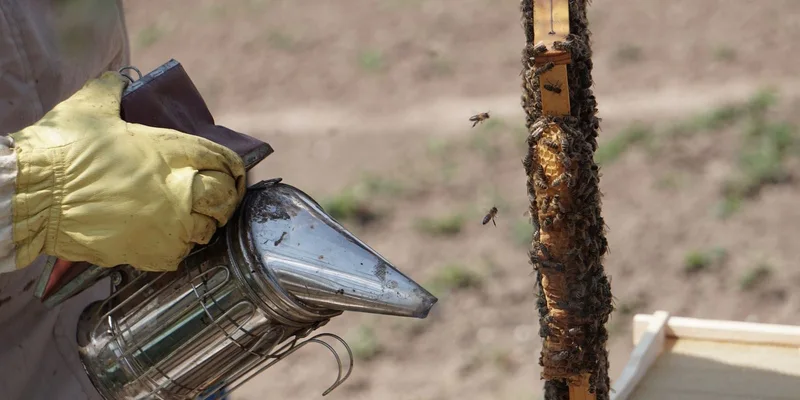
Last updated: August 21, 2026
The smoker is the one piece of gear that decides how an inspection feels. When it is packed right and drawing well, you puff twice at the entrance, wait, crack the lid, and the bees stay where they are. When it goes out halfway through the second box, you are standing over an open hive with a dead smoker in one hand, frames you have not looked at yet, and a colony that is getting less patient by the minute.
Almost every smoker on the market looks the same from the outside: a stainless steel barrel, a hinged cone lid, a bellows on the back. The differences that actually matter are the ones you cannot see in a product photo, and they are the reason two smokers at the same size behave completely differently in the yard. This guide walks through what to look at before you buy, and which type suits a backyard setup of one to four hives.
This article contains affiliate links. If you buy through them, we may earn a commission at no extra cost to you. Learn more.
Quick Answer
What should you look for in a bee smoker?
- A heat shield or guard cage around the barrel, so you can hold it and set it down without scorching yourself or the grass.
- A bellows that pushes real air, with a spring that returns fast and a hinge that is riveted rather than stapled.
- A barrel wide enough to hold a full charge of fuel, because most smokers go out from being underpacked, not from a bad design.
- A removable inner liner or grate, which keeps air moving under the fuel and makes cleaning out ash far less of a chore.
Bottom line: buy the larger stainless barrel with a guard and a decent bellows, then spend your attention on how you pack it.
What a Bee Smoker Actually Does
Smoke does two things at once. It masks the alarm pheromone that guard bees release when a hive is opened, so the alarm does not spread through the colony, and it prompts bees to move down onto the comb and start taking up honey. A colony busy filling itself is a colony that mostly ignores you.
That is why cool, steady smoke matters more than a lot of smoke. A smoker that spits sparks or blows hot, harsh smoke drives bees up between the frames instead of down into them, which is the opposite of what you want when you are about to lift a box. The whole design of the tool, the fuel chamber, the airflow, the length of the cone, exists to deliver white smoke that is already cool by the time it reaches the bees.
The Parts That Decide Whether It Stays Lit
Four parts do the work: the barrel that holds fuel, the grate or liner that keeps that fuel off the floor so air can pass underneath, the bellows that pushes that air, and the cone lid that cools and directs the smoke. A smoker fails at whichever of those four is weakest, and on cheap units it is almost always the bellows.
Look at how the bellows is attached. Rivets or screws through a metal plate hold up; staples through thin vinyl work loose after a season of being squeezed with a gloved hand. The bellows material itself is usually leather, vinyl or a synthetic composite, and while leather ages nicely, the more important question is whether the spring inside snaps the halves back open quickly. A lazy spring means you are pumping air at half the rate you think you are.
The Guard, and Why It Is Not Optional
The barrel of a running smoker gets genuinely hot. A heat shield, sometimes sold as a guard or a protective cage, is a perforated metal sleeve that stands off the barrel so your hand, your suit sleeve and the dry grass you set it down on never touch the hot metal directly. Suits are not cheap, and a smoker burn mark on the thigh of a fresh one is a lesson people only need once.
The hook on the side is the other small feature worth checking. It lets the smoker hang off the edge of an open hive body or off a frame perch instead of tipping over in the grass, which matters more in a backyard with a fence line and dry mulch than most listings suggest.
Bee Smokers by Situation
Best All Around Choice for a Backyard Apiary
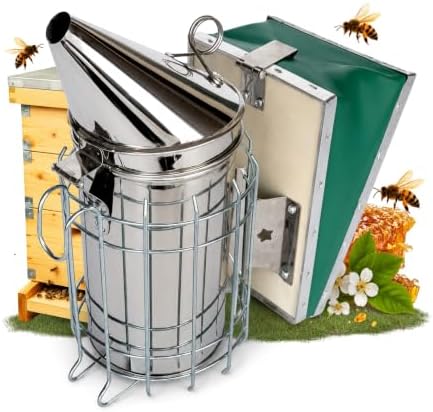
For one to four hives, the standard large stainless barrel with a full heat shield is the default, and there is very little reason to buy under it. The wider barrel holds enough fuel for a long inspection, and stainless resists the rust that eats through cheaper galvanized bodies once creosote and rain get involved.
When You Want the Bellows to Outlast the Barrel
If you have already burned through one smoker where the bellows tore at the hinge, the upgrade to look for is a leather or heavy composite bellows on a riveted plate. It is the part that fails first on most units and the part that is hardest to fix in the middle of a Saturday inspection.

Starting From Nothing at All
If the smoker is going in the cart alongside your first hive tool and brush, a combined tool set usually costs less than the same pieces bought one at a time, and it gets the whole bucket sorted in one order. Check that the smoker in the set has a guard, since that is the piece budget bundles drop first.

Small Hands, Small Yard, One Hive
A smaller barrel is easier to hold one handed and takes less fuel to fill, which suits a single hive on a small lot. The trade is runtime: a small smoker needs repacking sooner, so it works best for short, focused inspections rather than a full afternoon in the yard.

If Cleaning Out Ash Is What You Hate
Some smokers ship with a removable inner liner, a second cylinder that lifts out with the ash and the burned fuel still in it. It also keeps the fuel raised off the base so air can get underneath, which is the single biggest factor in whether the thing stays lit.

Comparing the Main Choices
Most of the buying decision comes down to three variables: how big the barrel is, what the bellows is made of, and whether there is a guard. Here is how the common combinations behave in a backyard yard.
| Type | Runtime per fill | Bellows | Best suited to |
|---|---|---|---|
| Large stainless, guarded | Longest, one fill covers a multi hive session | Usually leather or heavy vinyl | Two to four hives, the default pick |
| Small stainless, guarded | Shorter, expect a repack on a long day | Vinyl or composite | One hive, smaller hands, tight storage |
| Budget unguarded barrel | Similar to size, but hot to handle | Thin vinyl, often stapled | Backup only, not a first smoker |
| Smoker in a starter set | Varies with the barrel included | Whatever the set ships with | First order, buying tools together |
Size, and Why Bigger Usually Wins
Smokers are sold by barrel diameter and height, and the larger of the two common sizes is the one experienced keepers steer beginners toward. A bigger chamber holds a deeper bed of fuel, and a deeper bed smolders longer without needing air pumped into it every thirty seconds while your hands are busy holding a frame.
The counterargument is weight and storage, and it is a fair one if you keep a single hive on a balcony sized lot. But underfilling a large smoker still works, while a small smoker cannot be made bigger, so the larger barrel gives you the option in both directions.
What Goes Wrong With Cheap Bodies
Galvanized or thin plated steel bodies rust from the inside out, because burned fuel leaves an acidic residue and the barrel spends its life going from hot to damp. Stainless takes the same abuse and keeps its shape, and the lid hinge stays aligned instead of gapping open and letting smoke escape sideways.
Common Mistakes When Buying a Smoker
The most common one is buying on price alone and ending up with an unguarded barrel and a stapled bellows, then replacing it within a year. The second is assuming the smoker is the problem when the fuel is. A well built smoker packed with damp fuel and no air gap underneath will still die on you.
The third is skipping the hook and the guard because they read like extras in the bullet list. They are the two features you notice every single inspection, and neither can be added later. If you are choosing between two otherwise identical listings, choose the one with the cage.
Frequently Asked Questions
What is the best bee smoker for a beginner? A large stainless barrel with a full heat shield and a hook. Size and the guard matter more than brand at this level, and the larger barrel is more forgiving while you are still learning to pack fuel properly.
How much smoke should I actually use? Less than most beginners think. Two or three puffs at the entrance, a pause, then a light puff under the lid as you crack it. Heavy smoking drives bees up into the frames and makes the inspection harder, not easier.
Why does my smoker keep going out? Usually because the fuel is packed too tightly, sits directly on the floor with no air gap, or was not burning properly before you filled the chamber. Our guide on lighting a smoker that stays lit walks through the packing order.
Do I need a smoker at all for one hive? Most keepers say yes. Even calm colonies get defensive during a dearth, after a queen loss, or when you are moving boxes, and a smoker sitting lit beside you is worth having whether or not you use it much.
Is a stainless smoker worth it over a plated one? Yes, for anything you intend to keep. Plated bodies corrode from the residue inside and the weather outside, and a warped lid or a rusted seam leaks smoke where you do not want it.
How do I put a smoker out safely? Plug the spout with a cork or a wad of grass to starve it of air, then let it cool somewhere with nothing flammable underneath it. Never dump hot ash into dry grass or a plastic bin at the end of an inspection.
The Bottom Line
A bee smoker is a simple tool with a short list of things worth paying for: a stainless barrel in the larger size, a heat shield with a hook, and a bellows attached with rivets rather than staples. Everything else is preference. Once you have one, the difference between a smoker that stays lit and one that dies at the worst moment comes down to fuel and packing, which is covered in our smoker fuel guide and in the tool kit checklist.