Last updated: August 21, 2026
Bees glue their hive together. Propolis, the sticky resin they collect and pack into every gap, cements frames to rests, boxes to boxes and inner covers to rims until a hive that went together loosely in April needs a genuine pry to open in July. That is the whole reason the hive tool exists, and it is why it is the one piece of gear you will pick up more often than anything else you own.
It is also the tool people buy carelessly, because at a glance every hive tool looks like a flat piece of steel with a bend at one end. The differences between the standard flat bar, the J hook and the multi function versions change how you lift a frame, how much you bruise bees, and how sore your hands are afterward. This guide covers which shape does what, and which one belongs in a backyard bucket.
This article contains affiliate links. If you buy through them, we may earn a commission at no extra cost to you. Learn more.
Quick Answer
Which hive tool should you buy?
- The J hook is the most useful single tool for a backyard hive, because the hooked end levers frames up from below instead of prying them sideways.
- The standard flat tool is better for scraping burr comb, separating boxes and general demolition work, and it is the classic every supplier stocks.
- Stainless steel resists the propolis and moisture that pit cheaper plated steel, and it cleans up with a scrape rather than a scrub.
- Buy two, in a color you can see in the grass, because losing one mid inspection is not an if.
Bottom line: a stainless J hook as the main tool, a flat standard as the second, and both bright enough to find again.
What a Hive Tool Is For
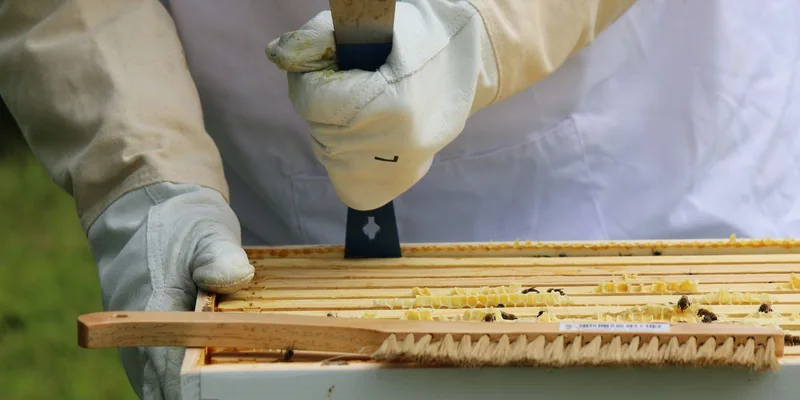
A hive tool does four jobs on every inspection: it breaks the propolis seal between boxes, it lifts the first frame out of a tightly packed box, it scrapes burr comb off the top bars and the box rims, and it packs down the fuel in your smoker. Nothing else in the kit does all four, which is why it never leaves your hand.
Because it lives in your grip while you are also holding a frame covered in bees, the shape matters more than the steel does. A tool that requires you to twist your wrist to lift a frame is a tool that will eventually drop one, and dropping a frame full of brood is a bad afternoon for everyone involved.
The Main Shapes and What They Do Well
There are three families. The standard flat tool is a straight bar with a scraper on one end and a bent, sometimes hooked lip on the other. The J hook adds a right angled hook that reaches under a frame ear. The multi function tools combine a frame grip, a nail puller or a frame lifter into the same piece of steel.
None of them is wrong, and most keepers eventually own all three. The question is which one you reach for first, and for a backyard hive with frames that have been in place all season, that is usually the J hook.
Length and Grip
Longer tools give more leverage on stuck boxes but are clumsier for delicate frame work, and shorter ones are the reverse. Some models add a rubberized or powder coated grip section, which helps if you work in nitrile gloves and the steel gets slick with propolis and honey. If you have hand or wrist issues, the grip section is worth more than any other feature on the tool.
Hive Tools by Situation
The One Tool Most Backyard Keepers Should Start With
A stainless J hook covers the widest range of tasks in a small apiary. The hook lifts frame ears cleanly, the flat end scrapes and pries, and the shape means you can pop a frame loose with a downward push rather than a sideways wrench that crushes bees on the neighboring comb.

Scraping, Prying and Heavy Work
The classic flat hive tool is still the better bar for separating a stuck super from a brood box, chiseling propolis off box rims and cleaning up an old deadout. It is the tool that takes the abuse so the J hook stays straight.

When You Want Frame Lifting Built In
Multi function tools add a frame lifter or a grip jaw to the bar, which lets you raise a frame with one hand and keep the other free for the smoker. It is more tool than a single hive needs, but it earns its place if you inspect alone and find lifting the first frame awkward.

Because You Will Lose One
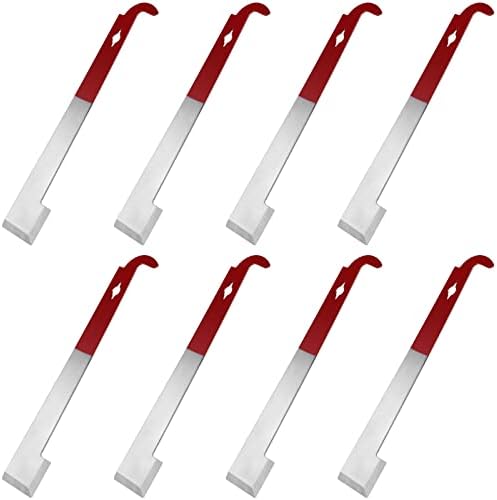
Hive tools get set down on a box, forgotten, and then discovered in the lawn in November. Buying a two pack means the inspection continues while the first one is missing, and keeping a spare in the truck means a forgotten tool does not end the visit.
Keeping It Where You Can Reach It
A holster or belt clip keeps the tool on your hip instead of balanced on the edge of an open hive, which is where most of them fall from. It is a small thing that quietly removes one of the most common minor annoyances of an inspection.

Comparing the Three Types
The practical differences show up in the first two minutes of an inspection: how you get the lid off, how you break the first frame free and how much comb you damage doing it.
| Type | Frame lifting | Scraping and prying | Best for |
|---|---|---|---|
| J hook | Best, hooks under the frame ear | Good on the flat end | Routine inspections, most backyard keepers |
| Standard flat | Workable, needs a sideways pry | Best, takes real force | Cleanup, stuck boxes, deadout work |
| Multi function | Very good, built in lifter or grip | Varies by model | Working alone, awkward first frames |
| Frame grip (separate) | Excellent, two handed control | Not applicable | Hand strength issues, heavy honey frames |
Materials, Coatings and Rust
Stainless steel is the sensible default. A hive tool spends its life covered in propolis, honey and moisture, gets left outdoors more often than anyone admits, and gets scraped clean rather than polished. Stainless takes that without pitting, and it does not shed flakes of plating into a hive.
Powder coated and painted tools look good on day one and chip along the working edge, which is precisely where you do not want a coating breaking down. If a tool is coated, prefer coating on the grip and bare steel on the blade.
Color, Which Is Not Cosmetic
Bright red, orange or yellow tools are the ones you find again. A bare steel tool dropped in grass beside a hive stand is effectively invisible, and enough keepers have lost tools that way that high visibility colors and even reflective tape are common suggestions in local clubs.
Keeping the Tool Clean Between Hives
Propolis builds on the blade until the tool stops sliding cleanly into a joint, and the same blade goes from one colony into the next. Scraping the tool down between hives is standard practice, and many keepers keep a container of washing soda solution or a scorching pass with the smoker flame as part of the routine, particularly if any colony in the yard is under observation.
If you suspect a notifiable brood disease in any colony, stop and contact your state apiarist before moving equipment, frames or tools between hives. Recognition is something you can learn from photographs; what happens next is a regulatory matter and is handled through the state, not through a cleaning routine you found online.
Frequently Asked Questions
What is the best hive tool for beginners? A stainless J hook in a bright color. It handles frame lifting more gently than a flat bar, which is exactly where beginners crush the most bees, and the flat end still covers scraping and prying.
Do I need more than one hive tool? Practically, yes. Most keepers carry a J hook for frame work and a flat standard for heavy scraping, and a spare of either saves an inspection when one disappears into the grass.
Can I use a paint scraper or a screwdriver instead? You can pry with almost anything, but a screwdriver concentrates force in one spot and splits frame ears, and a paint scraper has no hook. The purpose built shapes exist because generic tools damage woodenware.
How do I clean propolis off a hive tool? Scrape the bulk off with another tool or a box edge while it is still warm from your hand, and finish with hot soapy water or a washing soda solution. Freezing the tool also makes propolis brittle enough to flake off.
Is a J hook better than a standard hive tool? For lifting frames, yes, and that is most of what a routine inspection involves. For heavy prying and scraping, the flat standard still wins. The full comparison is in our J hook guide.
What else belongs in the bucket with it? A smoker, fuel, a bee brush, a frame grip if you have hand strength issues, and something to hold frames while boxes are apart. The tool kit guide lists the full set in the order you actually use it.
The Bottom Line
Buy a stainless J hook as your main hive tool, add a flat standard for scraping and heavy prying, choose a color you can spot in the grass, and accept that you will eventually own more than two. The shape you reach for first is the one that decides how gently you can lift a frame, which is the whole argument for the hook. See our J hook comparison for the detail, and the full tool kit list for what goes in the bucket beside it.