Last updated: August 21, 2026
Honey that ferments in the jar is one of the more demoralizing things that can happen to a backyard harvest. The frames looked capped, the jars looked beautiful on the shelf, and three months later the lids are bulging and the honey smells like cider. The cause is almost always the same: too much water went into the jar to begin with.
A honey refractometer is the small instrument that stops that from happening. It reads how much water is in a drop of your honey and turns the shake test and the guesswork into a number. It is the cheapest insurance in the whole harvest chain, and it is the one tool that matters most if you plan to give jars away or sell them.
This article contains affiliate links. If you buy through them, we may earn a commission at no extra cost to you. Learn more.
Quick Answer
Do you need a honey refractometer before bottling?
- If you bottle honey to keep, give away or sell, yes. It is the only way to know the water content rather than guess it.
- Look for a honey scale rather than a general Brix scale, automatic temperature compensation, and a calibration kit in the box.
- The USDA grade standards for extracted honey set the moisture ceiling for Grade A at 18.6 percent, which is the number most keepers work to.
- Test a blended sample from the bucket, not a single cell, because moisture varies from frame to frame.
Bottom line: buy one with a honey scale and temperature compensation, calibrate it before every harvest, and test the bucket rather than the frame.
What a Honey Refractometer Measures
A refractometer reads how much light bends as it passes through a sample. The more dissolved sugar there is, the more the light bends, and the instrument converts that into a scale. On a honey refractometer that scale is printed as water content, alongside Brix and Baume readings that measure the same thing from the sugar side.
The practical output is one number: the percentage of water in your honey. Everything else on the scale is a different way of expressing it. That number tells you whether the honey is stable enough to store or whether it needs more time on the hive.
Why Water Content Decides Whether Honey Keeps
Honey resists spoiling because it is so concentrated that yeasts cannot grow in it. Add water and that protection weakens. Yeasts naturally present in honey begin to work, and the result is fermentation: bubbles, a sour smell and a taste closer to mead than to honey. The higher the water content, the greater the risk.
The USDA United States Standards for Grades of Extracted Honey put the moisture limit for Grade A at 18.6 percent, and that figure is why most beekeepers treat it as the working ceiling. Honey comfortably below it stores well; honey above it is a gamble that depends on temperature, storage and luck.
Bees Cap When It Is Ready, Mostly
Capping is the colony’s own signal that the honey is finished, which is why reading capped frames is the first check. It is a good signal but not a perfect one, because you can pull a frame with uncapped edges, or blend a wet frame into a bucket of dry honey and never know. The refractometer catches what the eye cannot.
What to Look For When Buying
Three things separate a usable instrument from a frustrating one: a scale meant for honey rather than fruit juice, automatic temperature compensation so a reading taken in a warm kitchen matches one taken in a cool shed, and a calibration kit so you can check it before you trust it. Everything else is packaging.
Typical honey refractometers on the market read roughly 58 to 90 percent Brix, 12 to 27 percent water and 38 to 43 Baume on the same eyepiece, which covers any honey a backyard hive will produce. A general purpose Brix refractometer aimed at winemaking does not cover the honey range properly, so check the scale before buying on price.
Refractometers by Situation
The Standard Choice for a Backyard Harvest
A handheld optical refractometer with a honey scale, automatic temperature compensation and a calibration kit in the box covers everything a few hives will ever need. There is no battery to die on harvest day, and the whole thing lives in a hard case in the same box as the uncapping tools.

If You Struggle to Read the Line
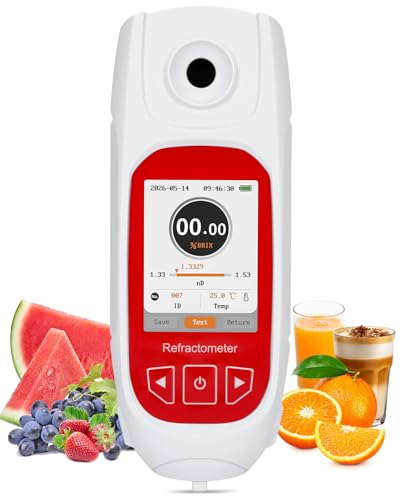
Optical models are read by eye through an eyepiece, and the boundary between light and dark can be hard to judge in poor light or with tired eyes. A digital honey moisture meter puts the reading on a screen instead. It needs a battery and costs more, but the number is unambiguous.
Calibration Is Not Optional
A refractometer drifts, and one that has been in a hot shed all summer will drift more. Calibration oil of a known refractive index, or distilled water depending on the model, is what you check it against before each harvest. Many kits include a small bottle and a calibration block; if yours did not, buy one.
What the Reading Feeds Into
The number only matters if it changes what you do next. Honey that reads dry goes into the settling bucket and then into jars; honey that reads wet goes back on the hive or gets kept separately for your own use. A bottling bucket with a gate is what turns that decision into filled jars without a mess.

How to Take a Reading That Means Something
Calibrate first, with the instrument at room temperature and the calibration fluid the manufacturer specifies. Then wipe the prism dry, put a small drop of honey on it, close the daylight plate so the honey spreads into a thin even film without air bubbles, and give it a moment to settle to the same temperature as the prism before you read the line.
Sample from the bucket after straining, not from a single cell. Frames differ, and the whole point of a reading is to describe what is going into your jars. If the honey has started to crystallize, warm it gently until it is liquid again before testing, because solid crystals give a meaningless reading.
Reading the Scales Against Each Other
| Feature | Optical with ATC | Digital meter | General Brix model |
|---|---|---|---|
| Honey water scale | Yes, printed on the eyepiece | Yes, on screen | Often missing |
| Power | None needed | Battery | Usually none |
| Reading in poor light | Harder | Easy | Harder |
| Best for | Most backyard keepers | Difficult eyesight, frequent use | Fruit and wine, not honey |
What to Do With Honey That Reads Too Wet
The best fix is the hive. Putting the super back on a strong colony lets the bees carry on drying it, which they do better than any equipment you own. That works while the season is still running and the colony is active, which is why testing early rather than at bottling time gives you options.
If the season is over, keep that honey separate, refrigerate or freeze it, and use it first rather than storing it on a shelf for a year. Do not mix wet honey into a bucket of dry honey hoping it averages out, because you have then put the whole batch at risk instead of one jar.
Where Water Sneaks In
Honey is hygroscopic, meaning it draws moisture from humid air. Buckets left uncovered in a damp shed, jars filled in high humidity and equipment that was not properly dried all add water after the fact. Keep containers covered, dry everything before it touches honey, and do not leave the settling bucket open overnight.
Frequently Asked Questions
What moisture level should honey be for bottling? The USDA grade standards for extracted honey set the Grade A moisture ceiling at 18.6 percent, and most beekeepers aim comfortably below it. Higher water content raises the risk of fermentation in the jar.
Can I use a regular Brix refractometer? Only if its scale covers the honey range. Many general purpose models made for fruit or wine stop well short of it, so check the printed range before buying rather than assuming.
How often should I calibrate? Before each harvest session at minimum, and again if the instrument has been stored somewhere hot or cold. Calibration takes a minute and is the difference between a reading you can act on and a number you cannot trust.
Do I need one for a single hive? If everything you harvest gets eaten within a few months, you can get by on capped frames and the shake test. If you bottle for gifts, storage or sale, the instrument pays for itself the first time it stops a fermenting batch.
Why do two frames from the same super read differently? Bees ripen honey frame by frame, and edge frames often lag behind the center. That is exactly why you test a blended sample from the strained bucket rather than a single cell.
Does temperature affect the reading? Yes, which is what automatic temperature compensation is for. Even with ATC, let the instrument and the sample sit at the same temperature for a moment before reading.
The Bottom Line
A honey refractometer turns the most consequential unknown in a backyard harvest into a number you can act on before the jars are filled. Buy one with a honey scale, automatic temperature compensation and a calibration kit, check it before every harvest, and sample from the strained bucket rather than the frame. Then move straight on to the straining and bottling guide, and see when to harvest honey for the hive side of the same question.