Last updated: August 21, 2026
Wax moths do not kill hives. They arrive after something else already has, or they find the stack of supers you meant to deal with in October and did not. Either way the result is the same: frames webbed over, tunnels chewed through the midrib, and drawn comb that took a colony a whole season to build reduced to something you scrape into a bucket.
That is why this is a storage guide more than a treatment guide. Once larvae are working through a frame there is not much to salvage, and the useful decisions all happen before the supers come off the hive. Here is what actually protects stored comb over winter, what the products on the shelf do, and which parts of the job belong to a label rather than to a website.
This article contains affiliate links. If you buy through them, we may earn a commission at no extra cost to you. Learn more.
Quick Answer
How do you stop wax moths in stored comb?
- Wax moths attack unguarded comb, so the first defense is a strong colony covering its frames.
- For stored frames, cold and light and airflow are your allies. Moths struggle in a cold, bright, ventilated space and thrive in a warm dark stack.
- Freezing frames before storage resets any eggs already in the wax, which is the simplest reliable step for a backyard-sized number of supers.
- Both common products, a Bt-based spray and paradichlorobenzene crystals, are registered pesticides. The label sets the amount, the stack size and the airing period.
Bottom line: protect drawn comb by storing it cold, bright and ventilated, and use a registered product only as directed on its own label.
What Wax Moths Actually Do
Two species matter to beekeepers, the greater and the lesser wax moth. The adults are drab and easy to overlook. The damage comes from the larvae, which tunnel through comb eating the residue left behind by brood rearing, spinning silk as they go and leaving frames webbed and full of frass.
Because they feed on brood residue rather than on beeswax alone, dark brood comb is far more attractive to them than clean new honey comb. A super that has never had brood in it is a much lower risk than the deep frames that came out of a colony that died in August.
They Are a Symptom, Not the Cause
If you open a hive and find webbing across the frames, the question to ask is what happened before the moths arrived. A queenless colony, a mite collapse, an absconded swarm or a summer deadout all leave comb undefended. Working out which of those it was matters more than the moths, and our guide to reading a deadout walks through the evidence.
Prevention Starts on the Hive
A colony strong enough to patrol every frame simply does not have a wax moth problem. Bees find and remove larvae and eggs as part of normal housekeeping, which is why the pest is invisible in a healthy hive and catastrophic in a weak one. Colony strength is the whole prevention strategy while the comb is still in use.
The practical corollary is to stop giving colonies more space than they can cover. Supering a small hive early in the hope it will grow into the box, or leaving a shallow on through a dearth, creates exactly the unpatrolled comb moths need. Match box count to bee count, and take boxes off when the bees contract.
Storing Drawn Comb Over Winter
Drawn comb is the most valuable thing you own as a beekeeper, because a colony given drawn frames in spring is weeks ahead of one that has to build. Protecting it over winter is worth more effort than most people give it, and the good news is that the cheapest methods are also the most reliable.
The principle is simple: wax moth larvae want warmth, darkness and still air. An unheated shed in a cold climate will do most of the work for you. If you can stack supers with a spacer between boxes so light and air move through, and set them somewhere that gets genuinely cold, you have solved the problem without buying anything.
The Freezer Reset
Freezing frames before they go into storage kills eggs and larvae already present in the wax, which is why so many backyard keepers cycle supers through a chest freezer for a spell before stacking them. Ask your extension service for the holding time they recommend rather than guessing, since it depends on how cold your freezer actually runs. NC State Extension publishes a stored-equipment guide that covers this in detail.
Bagging and Sealing
Sealed storage works, but only in combination with a reset. Bagging frames that already contain eggs simply gives the larvae a private room. Freeze first, then seal, and inspect the stack once mid-winter so a failure does not go unnoticed until April.

The Products on the Shelf
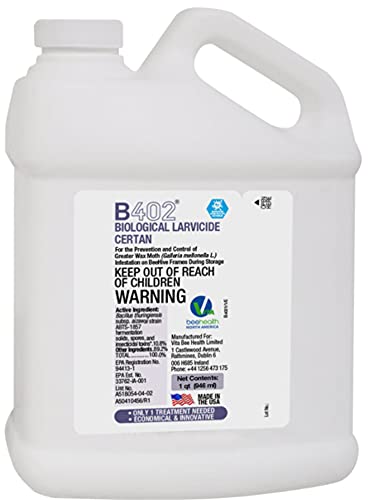
Two things dominate the beekeeping catalogs. The first is a Bacillus thuringiensis spray sold to beekeepers under the Certan name, applied to clean dry frames before storage, which targets moth larvae specifically and leaves no residue in wax. The second is paradichlorobenzene crystals, a fumigant used in a sealed stack.
Both are registered pesticide products, and this is where we stop describing method. The label sets the dilution or the amount, the stack configuration and the airing-out period before frames go back on a colony, and it is the only source for those numbers. Read it before you buy rather than after.

What Not to Reach For
Household mothballs are the mistake people make here. Ordinary naphthalene mothballs are not a registered treatment for beekeeping equipment, and using them puts a substance into wax that does not belong in a food-producing hive. If a product is not labeled for use on stored comb, it is not an option, whatever it smells like.
Traps and What They Are Good For
Bottle-style wax moth traps hung near an apiary catch adult moths using a fermenting bait, and they are genuinely satisfying to check. What they will not do is protect a stack of comb in the shed, because the moths that matter are the ones already inside the boxes, and a trap on a fence post does not reach them.
Where traps earn their keep is monitoring. They tell you when moth pressure in your area is climbing, which is useful information in a warm autumn when you are deciding how urgently to deal with the supers. Treat them as a gauge rather than as a defense.
Comparing the Storage Methods
Most backyard keepers end up combining two of these: a freezer pass plus cold ventilated storage, or a freezer pass plus sealed bags. The commercial fumigant route makes more sense when you have more comb than freezer, and the Bt spray suits people who want a preventive step at pack-away time.
| Method | What it does | Needs | Suits |
|---|---|---|---|
| Cold ventilated stacking | Denies warmth and darkness | An unheated shed, spacers between boxes | Cold-winter climates, any hive count |
| Freezer pass | Resets eggs and larvae in the wax | Freezer space, then sealed or cold storage | One to four hives |
| Bt spray for beekeeping | Targets moth larvae on stored frames | Clean dry frames, application per label | Preventive pack-away routine |
| Registered fumigant crystals | Protects a sealed stack over winter | Sealed stack, airing period per label | More comb than freezer space |
Frames You Cannot Save
A frame that has been tunneled through the midrib and webbed over is finished. Scrape it back to the frame, replace the foundation, and treat the wax as rendering stock rather than as comb. Trying to give a badly damaged frame back to a colony wastes their time and yours.
Frames with light surface webbing and no structural damage often clean up fine, especially if a strong colony gets them in spring. Freeze them, brush off the debris, and put them on the outside of a busy brood box where the bees will deal with them. Our guide to beehive frames covers when replacing foundation is the better call.
Frequently Asked Questions
Will wax moths kill a healthy hive? No. A colony strong enough to cover its frames removes moth eggs and larvae as part of normal housekeeping. Webbing inside a live hive means the colony was already weak, queenless or collapsing from something else.
Can I use mothballs on stored comb? No. Household naphthalene mothballs are not registered for use on beekeeping equipment. Only a product labeled for stored comb is an option, and its label sets how it is used.
Does freezing frames work? Freezing is the standard reset for eggs and larvae already in the wax, and it is the simplest method at backyard scale. Ask your extension service for the holding time, since it depends on the temperature your freezer actually holds.
Do wax moths go for new white comb? Much less. Larvae feed on the residue left by brood rearing, so dark brood comb is the target and clean honey comb from a super that never held brood is far lower risk.
Can I put webbed frames straight back on a colony? Lightly affected frames can go back after freezing and a brush down, placed where a strong colony will clean them. Frames tunneled through the midrib should be scraped and refoundationed instead.
Is a Bt product safe around bees? The Bt strain sold to beekeepers for this purpose targets moth larvae and is applied to stored frames rather than to a live colony. As with any registered product, the label defines what is permitted, including any interval before frames return to a hive.
The Bottom Line
Wax moth control is really comb management. Keep colonies strong and matched to their box count while the comb is in use, then store drawn frames cold, bright and ventilated with a freezer pass first. Products help at the margins and every number that makes them safe is on the label, not in an article. If you found webbing inside a live hive, the moths are the last chapter rather than the first, so read our guide to reading a deadout next, and small hive beetle traps for the other pest that finds unguarded comb.