Last updated: August 21, 2026
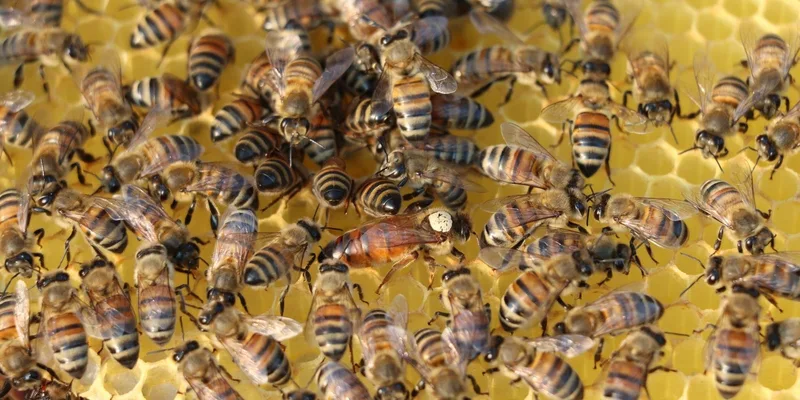
There is a specific moment that convinces a backyard beekeeper to buy a queen catcher. You have finally spotted her, she is walking across a frame you are holding at arm’s length, and you have about four seconds to decide what to do before she disappears down between the combs again. Fingers are too clumsy, the marking pen is in the truck, and setting the frame down means starting over.
A queen catcher solves that four second problem. It is a small, cheap tool that lets you contain the queen safely while you mark her, cage her for a split, or simply keep her out of the way while you finish an inspection. This guide covers the styles that exist, which one suits which job, and the handling rules that keep her uninjured.
This article contains affiliate links. If you buy through them, we may earn a commission at no extra cost to you. Learn more.
Quick Answer
Which queen catcher should you buy?
- The spring loaded plastic clip is the default: cheap, one handed, and slotted so workers can pass through while the queen cannot.
- A plunger style marking cage is the better choice if your main job is marking, because it holds her still against the comb.
- A push in cage is what you want for releasing a new queen onto comb rather than for catching one.
- Buy more than one. They are small, they cost almost nothing, and the one you need is always in the other jacket.
Bottom line: a clip for catching and carrying, a plunger cage for marking, and gentle hands for both.
What a Queen Catcher Does
A queen catcher is a small cage that closes around the queen and holds her without crushing her. Every design shares one feature: slots or mesh sized so that worker bees can walk in and out to feed and tend her, while the larger queen stays put. That is what makes it safe to leave her caged for a short while.
Beekeepers reach for one in four situations: marking her with a paint pen, caging her during a split or a swarm control manipulation, isolating her briefly while working a defensive colony, and moving her from one box to another. None of those are advanced techniques, which is why the tool ends up in most inspection buckets eventually.
The Spring Loaded Clip
This is the tool most people mean by queen catcher: a clear plastic clamshell with slotted sides and a light spring, opened and closed with one hand like a large hair clip. You bring it down over the queen where she stands on the comb, let it close, and she is contained with a few attendants that walked in with her.
The clear body is the point, because you can confirm you actually have her and that she is unharmed before you move anything. The light spring is the other point: you want it to close under its own tension, not to need a squeeze that could pinch a leg. Look for a clip that opens smoothly with one hand, since your other hand is holding a frame.

Why Multi Packs Make Sense
These clips are sold in packs of five or ten for good reason. They get dropped in the grass, left on a hive lid, and carried off in a jacket pocket. Keeping one in the bucket, one in the truck and one in the jacket costs almost nothing and removes the most common reason people give up on marking their queens.

The Plunger Marking Cage
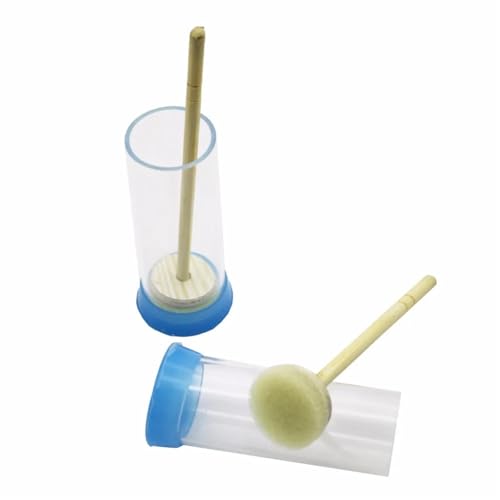
A plunger cage, sometimes sold as a queen marking tube, is a short tube with a mesh or slotted end and a soft plunger inside. You place the open end over the queen on the comb, then push the plunger gently forward until she is held against the mesh with her thorax accessible through the openings. The paint pen goes through the mesh.
The advantage over a clip is control. She cannot turn around or walk while you are applying paint, which makes the mark cleaner and the whole operation shorter. The risk is the plunger itself: it must be soft and it must be advanced slowly, because that is the part of the process where an impatient beekeeper does damage. Marking colors and the international year code are covered in our queen marking kit guide.
Push In Cages and Introduction Cages
A push in cage is a square of mesh with sharp edges that you press into the face of a comb, trapping a queen on a patch of emerging brood and stores. It is used for introducing a new queen, not for catching an existing one, because the bees around her accept her through the mesh over several days while she lays in the protected patch.
Introduction cages that come with a mailed queen do a similar job with a candy plug that the workers eat through. Both are worth knowing about because the search term overlaps with queen catcher, and beekeepers regularly buy the wrong one. If your job is requeening rather than marking, this is the shape you want.

Catching Her Without Damaging Her
The queen is the one bee in the colony you cannot replace on a Saturday afternoon, so the handling rules are worth taking seriously. Work over the open hive so a dropped queen falls back onto the frames rather than into the grass. Move slowly, because a queen that starts running is far harder to catch than one that is walking.
Never trap her by an abdomen or a leg in the closing edge of a clip. Bring the clip down over her from above so she is entirely inside the footprint before it closes, and if she is against the frame edge, wait until she walks back into open comb. A queen with a damaged leg or a bent wing is a queen the colony will supersede.
Gloves, Weather and Timing
Thin gloves or bare hands give you the feel this job needs, which is one of the arguments for nitrile over leather during routine inspections; our beekeeping gloves guide covers that trade. Pick a calm, warm afternoon when the field bees are out, keep smoke light so she does not run, and have the pen open and the clip in your hand before you lift the frame she is on.
Which Tool for Which Job
These four tools overlap enough to confuse a first-time buyer and are different enough that the wrong one makes the job harder. The table below maps each to the job it is actually built for.
| Tool | How it holds her | Best job | Watch out for |
|---|---|---|---|
| Spring loaded clip | Slotted clamshell, workers pass through | Catching, carrying, brief caging | Closing it on a leg or wing |
| Plunger marking cage | Pressed gently against mesh | Marking with a paint pen | Advancing the plunger too fast |
| Push in cage | Mesh pressed into the comb face | Introducing a new queen | Choosing a frame without emerging brood |
| Shipping or candy cage | Sealed cage with a candy plug | Requeening from a mailed queen | Releasing her too early |
Finding Her in the First Place
The catcher only helps once you have located the queen, and that is the harder skill. Work through the brood nest frame by frame in order, look for the pattern of eggs and young larvae rather than for the queen herself, and check the frames adjacent to the ones with the youngest brood first, since that is usually where she is working.
A marked queen is dramatically easier to find in subsequent inspections, which is the strongest argument for using a catcher at all. If you cannot find her, the presence of eggs standing upright in the bottom of cells tells you she was there recently, which is often all you need. Our hive inspection checklist covers the working order that makes her easier to spot.
Frequently Asked Questions
What is a queen catcher used for? Holding the queen safely while you mark her, move her, or keep her contained during a split or a swarm control manipulation. The slots let workers tend her while she is inside.
Will a queen catcher hurt the queen? Not if it is closed over her from above and never onto a leg or wing. The damage that does happen comes from rushing: closing a clip on a limb, or pressing a plunger cage too hard.
How long can a queen stay in a catcher? Treat it as minutes, not hours. It is a working tool for the length of an inspection, and she goes back onto the comb as soon as the job is done.
Is a queen catcher the same as a queen clip? Yes, the terms are used interchangeably for the spring loaded slotted clamshell. Marking cages, push in cages and shipping cages are different tools with different jobs.
Do you need a queen catcher to mark a queen? Not strictly, some keepers mark her freehand on the comb, but a catcher or a plunger cage makes the mark cleaner and the risk of a slip much lower.
Can you use a queen catcher for swarm control? It is used as part of some swarm control methods where the queen is temporarily contained. The method itself is a separate decision, and caging her is only one step of it.
The Bottom Line
A queen catcher is one of the cheapest tools in beekeeping and one of the few that turns a stressful moment into a routine one. Buy a multipack of slotted clips for catching and carrying, add a plunger cage if you intend to mark, and keep them where your hands already are during an inspection. Read our queen marking kit guide next for the color code and pen choice, and the queen excluder guide for keeping her where you want her the rest of the season.