Last updated: August 21, 2026
Ask ten backyard beekeepers whether to run plastic or wooden frames and you will get ten confident answers and at least three arguments. The disagreement is real, but it is narrower than it looks: almost everyone agrees plastic is tougher and faster to set up, and almost everyone agrees bees draw a waxed wooden frame more willingly when the nectar flow is thin. What separates the camps is which of those two facts matters more in their yard.
This comparison sorts the choice by what the bees actually do with each option, what each one costs you in labor rather than money, and where each one fails. There are really four options on the table, not two, because the middle ground of a wooden frame with plastic foundation is what most beekeepers end up running.
This article contains affiliate links. If you buy through them, we may earn a commission at no extra cost to you. Learn more.
Quick Answer
Should you use plastic or wooden frames in a beehive?
- Bees draw waxed wooden frames more readily on a weak flow; plastic needs a strong flow or a heavy wax coat to get started.
- One piece plastic frames are the most durable and the fastest to deploy, and they survive an extractor and a scraping without complaint.
- Wooden frames with waxed plastic foundation are the common middle ground and the easiest to repair.
- Foundationless wooden frames give natural comb and more drone brood, and they need level hives and gentle handling.
Bottom line: run plastic where durability matters and wax where you need the bees to build fast, and keep one frame type per box.
What Bees Actually Draw
Given a strong nectar flow, a healthy colony will draw comb on almost anything you put in front of it, including bare plastic. Given a weak flow or a small colony, bees show a clear preference for beeswax, and a plastic sheet with a thin factory coating is where new keepers most often find a chewed, half-drawn mess in the middle of an otherwise full box.
The fix is more wax, not a different frame. Beekeepers who run plastic foundation routinely add an extra coat of melted beeswax with a paint roller or a brush before the frames go in, and acceptance changes noticeably. Suppliers sell heavy-waxed versions for the same reason, which is a good sign that the problem is real and the solution is understood.
The Ladder Problem
Bees also build across a gap rather than onto a surface they dislike. Put one plastic frame in the middle of nine drawn wooden ones and it will often stay empty while they build burr comb around it. Give a new box a full set of the same frame type and they build in the order you want, which is the practical reason to keep frame types uniform per box.
One Piece Plastic Frames
A one piece plastic frame is molded as a single unit, foundation and frame together, usually in black for brood so that eggs and small larvae show up against the background. There is nothing to assemble, nothing to nail, no wire to embed and no wax sheet to crack in cold weather. You unbox them and they go in.
They are also the frame that survives the most abuse. They tolerate a radial extractor, they can be scraped clean with a hive tool, and stored comb on a plastic core does not lose its structure the way a wax sheet in a wooden frame can. The trade is acceptance on a weak flow and the fact that a damaged one piece frame is replaced rather than repaired.

Wooden Frames With Plastic Foundation
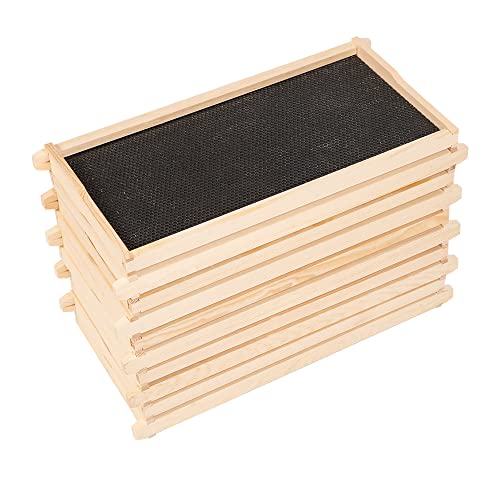
This is the setup most backyard hives end up running, and it is the sensible default. A wooden frame gives you a repairable, familiar structure with a top bar you can grip and a bottom bar you can wedge, and a waxed plastic foundation sheet gives you a surface that will not blow out in an extractor or sag in a hot super.
Assembly is the cost. Unassembled frames arrive as sticks and need glue, nails or staples, and a rainy weekend. Preassembled frames with the foundation already in are sold too and remove the whole job, which is worth it for anyone building more than a couple of boxes at once. When the comb needs replacing, you pop the old foundation out and slide a new sheet in without buying a new frame.
Wooden Frames With Beeswax Foundation
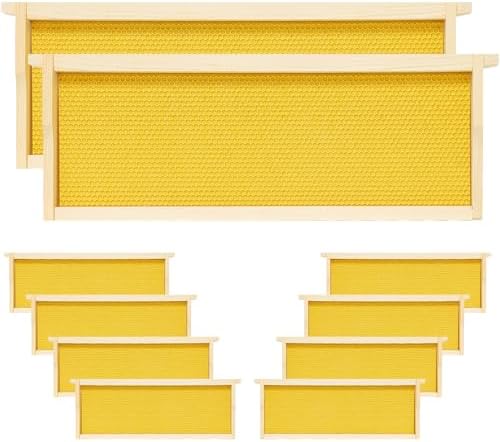
Wax foundation is the traditional option and still the best at one thing: bees accept it immediately, even when the flow is poor and the colony is small. If you are installing a package onto undrawn equipment in early spring, that acceptance is the difference between a colony that builds and one that sits.
The weaknesses are physical. Wax sheets are brittle when cold, they can sag in heat if the support wires are not properly embedded, and comb built on them is more likely to blow out of a tangential extractor if you spin too hard on the first side. Handle wax foundation warm, wire it properly, and treat the first extraction of new comb gently.
Foundationless Frames
Foundationless means a wooden frame with a starter strip or a wedge guiding the bees, and comb they build entirely themselves at their own cell size. The comb is beautiful, wax renders cleanly out of it, and there is no foundation cost at all. It also produces more drone comb, which some keepers use deliberately as part of mite monitoring.
The price is handling. Fresh, unwired natural comb full of nectar is heavy and unsupported, so frames must stay vertical when you lift them and the hive needs to be level or the comb will be built crooked. Most foundationless keepers extract carefully or skip the extractor and crush and strain instead.
The Four Options Side by Side
The honest summary is that no option wins on every axis. Plastic wins on durability and setup time, wax wins on acceptance, foundationless wins on comb quality and cost, and the wood plus plastic foundation combination is the one with the fewest bad days.
| Frame | Acceptance on a weak flow | Setup work | Best use |
|---|---|---|---|
| One piece plastic | Lowest, needs extra wax | None, ready to use | Honey supers, high-turnover boxes |
| Wood plus plastic foundation | Good when heavily waxed | Assembly unless preassembled | The general purpose default |
| Wood plus wax foundation | Best | Assembly plus wiring | New packages, early spring builds |
| Foundationless | Good, bees build their own | Assembly, level hive needed | Natural comb, wax rendering, drone comb |
Storage, Moths and Replacement
Whatever you run, stored comb is a target. Wax moth larvae tunnel through comb and will ruin drawn frames left in a warm shed, and they do not care whether the core is plastic or wax. Plastic frames survive an infestation better because the frame itself remains usable after you scrape it back, while a chewed wax sheet in a wooden frame usually means replacing the sheet.
Old brood comb goes dark and eventually gets rotated out regardless of type, so a system that makes replacement easy is worth something. Our guide to wax moths in stored comb covers prevention, which is where that battle is actually won, and the wider beehive frames guide covers what to stock for a new hive.
Frequently Asked Questions
Do bees prefer plastic or wooden frames? Bees respond to the surface, not the frame. They take waxed surfaces readily and are slower on bare or lightly coated plastic, which is why an extra coat of beeswax on plastic foundation makes such a visible difference.
Can you mix plastic and wooden frames in one box? You can, but bees tend to skip the less attractive frame and build burr comb around it. Keep one frame type per box and you avoid the problem entirely.
Is plastic foundation better for extracting? It is more forgiving. Comb on plastic foundation holds up to spinning better than comb on wax foundation, especially new comb in its first season.
Should beginners use foundationless frames? They work, but they demand a level hive, careful lifting and gentler extraction. Most beginners are better served starting on foundation and trying a foundationless frame or two once inspections feel routine.
How often do you replace brood comb? Beekeepers rotate out the darkest brood frames over time rather than on a fixed schedule, marking the year on the top bar so the oldest ones are easy to find and pull.
Does black or white foundation matter? Only for your eyes. Black is used in brood boxes because eggs and young larvae are far easier to see against it, and white is common in honey supers where you are judging capping instead.
The Bottom Line
Plastic frames buy durability and time, wax buys acceptance, and the wooden frame with waxed plastic foundation buys most of both, which is why it is what most backyard hives end up holding. Pick one type per box, add extra wax to any plastic surface you want drawn quickly, and store the drawn comb somewhere the moths cannot get at it. Read our beehive frames guide next for what to stock, and the Langstroth hive explained box by box for where each frame goes.