Last updated: August 21, 2026
A hive feeder is one of the few pieces of beekeeping equipment where the homemade version is genuinely as good as the bought one. The working principle is a container of syrup inverted over small holes, held in place by nothing more complicated than air pressure. A jar and a lid do that as well as anything on a shelf.
What separates a good homemade feeder from a bad one is not craftsmanship. It is choosing a container that is safe to put food in, making the holes small enough that the vacuum holds, and testing the thing over a sink before you trust it above a colony. This guide walks through the jar version, the bucket version, and the mistakes that flood a hive.
This article contains affiliate links. If you buy through them, we may earn a commission at no extra cost to you. Learn more.
Quick Answer
How do you make a DIY bee feeder?
- Take a food-safe jar or bucket, punch a cluster of very small holes in the lid, fill it with syrup and invert it over the inner cover hole.
- Put an empty hive body or a deep shim around it so the outer cover still closes.
- Holes must be small enough that vacuum holds the liquid in. Test it over a sink first, every time.
- Never use a container that held anything other than food, and never feed honey from an outside source.
Bottom line: a mason jar with pin-sized holes in the lid, set over the inner cover inside an empty box, is a feeder that works as well as most things you can buy.
Why the Inverted Container Works
Invert a sealed container with a few tiny holes and the liquid does not pour out. Air cannot get in past the surface tension at each small hole, so a partial vacuum forms above the syrup and holds it. Bees put their tongues to the holes, take what they want, and the level drops slowly as air trickles in to replace it.
Everything else in a DIY feeder is packaging around that principle. Get the holes right and the feeder works; get them wrong and you have either a dry lid the bees cannot use or a bucket that empties into the brood nest.
The Jar Feeder, Step by Step
Take a wide mouth canning jar with a two-piece metal lid. Punch a tight cluster of very small holes in the center of the flat lid from the outside in, so the burrs point inward and the bees have a smooth surface to work on. Fill the jar with syrup, screw the lid down firmly, and invert it over a sink until the dripping stops.
Set the jar upside down over the hole in the inner cover, place an empty hive body or a shim around it, and put the outer cover back on. That is the whole build. Most keepers make several at once so a refill is a swap rather than a job.
Getting the Holes Right
Use the smallest nail or the finest drill bit you have, and make more small holes rather than a few large ones. If the syrup keeps dripping after a minute of inversion over the sink, the holes are too big and that jar becomes a spare. A jar that seals properly will hold for a moment, then settle and stop.
Best for Making a Set of Jar Feeders at Once
Wide mouth canning jars with flat metal lids are the standard base, and having several ready means refills take seconds.

The Bucket Feeder for More Volume
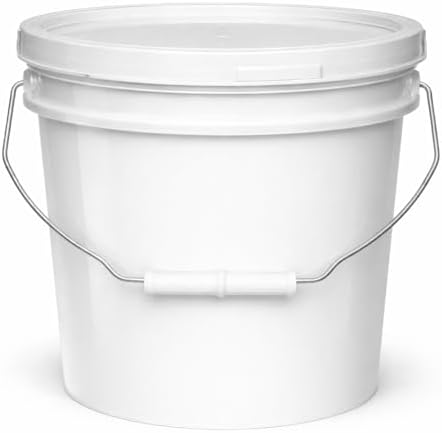
Scale the same idea up and you get the bucket feeder. A food-safe pail with a tight snap lid, a ring of pinholes near the center of the lid, filled with syrup and inverted over the inner cover inside an empty deep. The volume difference over a jar is substantial, which matters when a package is drawing comb.
Two things to check. The lid has to seal genuinely tight, because a bucket that breaks vacuum dumps far more syrup than a jar does. And the empty box around it has to be deep enough that the outer cover closes flat, which usually means a full hive body rather than a shim.
Best for Feeding a Colony Through Comb Building
A food-grade bucket with a sealing lid gives you real capacity, and the same pinhole trick that works on a jar works here.
Which Containers Are Safe, and Which Are Not
Use containers that were made to hold food and have only ever held food. Buckets that carried detergent, paint, driveway sealant or agricultural chemicals are not candidates no matter how well they have been rinsed, because residues persist in plastic and you are feeding this to a colony that will store it.
Second rule: never feed honey from an outside source, including store-bought honey or honey from a friend. Honey can carry spores of American foulbrood, which is a reportable disease in most states. If you suspect foulbrood in a colony, the contact is your state apiarist, not a home remedy.
Making Space Above the Frames
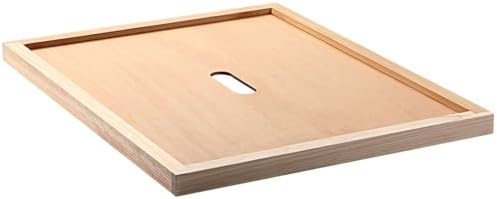
Any top-mounted feeder needs vertical room. The standard solutions are an empty hive body, which suits a bucket, or a wooden shim or eke, which suits a jar and doubles later in the year as the space for winter fondant or dry sugar.
Whichever you use, close the gap properly. An empty box with a hole in the side, or a shim that leaves the outer cover sitting proud, gives robbers a direct route to a container of syrup, which defeats the point of feeding inside the hive at all.
Best for a Jar Feeder Setup
A wooden shim gives just enough height for an inverted jar and gets used again for solid feed in the winter.
Comparing the Homemade Options
All three of these are in wide use. Choose by how much syrup the colony will actually get through before it starts to ferment.
| Build | What you need | Best for | Main risk |
|---|---|---|---|
| Inverted jar over the inner cover | Canning jar, punched lid, shim | Small colonies, nucs, quick top-ups | Holes punched too large |
| Bucket over the inner cover | Food-safe pail, sealing lid, empty deep | Packages drawing comb, fall feeding | A broken seal dumps a lot of syrup |
| Jar in an entrance feeder base | Jar plus a bought base | Spring, single-hive yards | Attracts robbing in a dearth |
| Open pan or dish in the hive | Not recommended | Nothing | Drowns bees in quantity |
Test It Over a Sink, Every Time
This is the step people skip once and then never skip again. Fill the container, seal it, invert it over a sink and watch. A correct feeder drips for a few seconds while the vacuum establishes and then holds. A bad one keeps running, and if you had put that on a hive you would have flooded the brood nest and started a robbing frenzy at the same time.
Test again after any lid change, because a lid that has been punched, washed and refitted does not always seal the same way twice. It takes fifteen seconds and it is the difference between a working feeder and a bad afternoon.
What Not to Improvise
Open containers of syrup inside a hive drown bees in numbers that surprise people. So do buckets set out in the yard for open feeding, which additionally invite every colony within range and can spread disease between apiaries. If you want an in-hive reservoir, buy or build one with a proper ladder, as covered in our frame feeder guide.
Also leave the recipe alone. Plain white granulated sugar and water is what colonies handle; brown sugar, molasses, raw sugars and sweeteners are a different matter, and the ratios that suit each season are covered in our syrup guide.
Frequently Asked Questions
What size holes should I punch in a jar lid feeder? Small enough that the vacuum holds. Use the finest nail or bit you have and make a tight cluster of them rather than a few big ones, then confirm by inverting the filled jar over a sink. If it keeps dripping, the holes are too large.
Can I use any plastic bucket? Only food-grade containers that have never held anything but food. Buckets that carried cleaning products, paint or agricultural chemicals keep residues in the plastic and are not safe for bee feed.
Do I need an empty box over a homemade feeder? Yes, an empty hive body for a bucket or a shim for a jar, so the outer cover closes flat. An exposed feeder is both a weather problem and an open invitation to robbers.
Can I feed bees honey instead of syrup? Not from an outside source. Honey can carry American foulbrood spores, a reportable disease in most states. Your colony’s own honey is a different case, but bought honey should never go into a feeder.
Is a homemade feeder as good as a bought one? For jar and bucket designs, yes, since the mechanism is identical. Where bought equipment wins is in the more complex formats such as top feeders with screened cages and frame feeders with molded ladders.
Why is my DIY feeder leaking into the hive? Either the holes are too large or the lid is not sealing. Both break the vacuum. Pull the feeder, test it over a sink, and start over with a new lid and finer holes.
The Bottom Line
A DIY bee feeder is a food-safe jar or bucket, a lid with very small holes, and an empty box or shim so the outer cover closes over it. Test the vacuum over a sink before it ever goes near a colony, keep the container strictly food-grade, and never feed honey you did not harvest yourself. Read next: our comparison of the four bought feeder types, and the top feeder guide if you would rather buy capacity than build it.