Last updated: August 21, 2026
Every spring, colonies within a few miles of your yard split and send out swarms looking for a new home. Those scouts are running a checklist, and it is a surprisingly specific one. A swarm trap is nothing more than a box that scores well on that checklist, hung somewhere the scouts will find it, with something inside that smells like a place bees have lived before.
Done properly it is the cheapest way to add colonies, and the bees you catch are local stock that already survived a winter in your climate. Done casually it is an empty box in a tree all summer. The difference comes down to four variables: volume, entrance, height and lure.
This article contains affiliate links. If you buy through them, we may earn a commission at no extra cost to you. Learn more.
Quick Answer
What makes a swarm trap work?
- Cavity volume in the range Cornell biologist Thomas Seeley identified as preferred, around forty liters, with catch rates falling off well below or well above that.
- A small entrance of a couple of square inches, low on the box rather than centered.
- Height above ground, balanced against what you can safely retrieve.
- A frame of old dark brood comb inside, with a lemongrass-based lure as a supplement.
Bottom line: build to the volume and entrance the scouts are looking for, then bait it with something that already smells like a hive.
What Scout Bees Are Shopping For
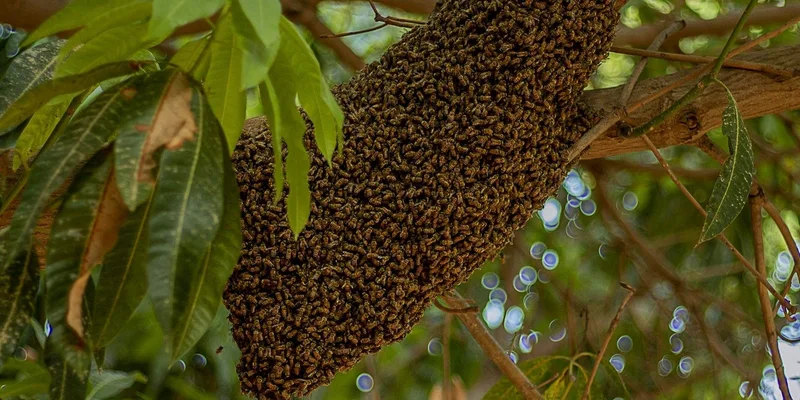
When a colony swarms, the cluster hangs somewhere temporary while scouts fan out and inspect cavities. They measure volume by walking the interior, they assess the entrance for size and position, and they weigh height, exposure and whether bees have lived there before. The swarm then reaches a collective decision about which site wins.
That decision process is the most studied part of honey bee behavior in the backyard beekeeper’s toolkit, and Thomas Seeley’s nest site preference research at Cornell is the reference everyone builds from. A swarm trap is simply an artificial cavity engineered to score well against those criteria.
Volume: The Number Most Traps Get Wrong
Seeley’s work points at a cavity of roughly forty liters as the sweet spot, with interest dropping off sharply for cavities much smaller than twenty liters and for very large ones. Within a moderate band around forty, the exact figure makes little difference, which is good news for anyone building from scrap.
In practical terms that rules out a single five frame nuc box, which is well under the target, and it explains why the most popular build is a box sized to take eight medium frames or the equivalent. That size also doubles as working equipment once the swarm is in it, so nothing sits idle. Our nuc box guide covers the smaller boxes and where they genuinely fit, which is transport and splits rather than trapping.
Entrance Size and Position
Scouts prefer a small entrance rather than a wide open front, on the order of a couple of square inches, which is far smaller than the full-width entrance on a working hive. A small hole is defensible against robbers and easier for a new colony to guard, and the bees appear to weigh that in the decision.
Position matters alongside size. An entrance low on the box, near the floor, matches how bees occupy a natural cavity: they build comb from the top down and keep the entrance below the nest. A hole drilled in the middle of the front panel is a common homemade compromise that costs you nothing much, but low beats centered if you have the choice.
Height and Placement
Seeley’s research found a clear preference for entrances well above ground level, higher than most people are willing to hang a box. That leaves every trapper making the same compromise: high enough to interest the scouts, low enough that you can get a box full of bees down again without an incident.
The practical answer most people land on is a height they can reach from a stepladder, on a tree trunk, a post or a shed wall, with the entrance facing out into open flight space rather than into foliage. Partial shade beats full sun, since a box in the afternoon sun bakes, and a sheltered spot beats an exposed one for the same reason a real cavity would.
Where Not to Hang One
Keep traps off other people’s property and away from places where a caught swarm becomes somebody else’s problem: over a footpath, next to a neighbor’s patio, above a play area. Whether you may keep the colony you catch, and where, is governed by state and county rules and possibly an HOA covenant, so ask your state apiarist and your county office rather than assuming a caught swarm is automatically yours to keep at home.
Also think about retrieval before you hang it. A box you can only reach with a borrowed extension ladder is a box you will leave up too long, and a colony that has been in a trap for six weeks is heavy, cross-combed and much harder to move than one collected promptly.
Bait: Old Comb First, Lure Second
The strongest attractant is a frame of old dark brood comb, because it tells the scouts that bees have lived and reared brood in this cavity. A commercial swarm lure based on lemongrass oil, which mimics the Nasonov pheromone bees use to call each other to a site, adds to that rather than replacing it.
Trappers who use both generally report better results than those using either alone. Do not fill the box with comb; one or two frames of drawn or dark comb plus foundationless frames or empty frames gives the scouts the smell they want and leaves the volume the measurement wants.
The Four Variables at a Glance
Everything above condenses into four decisions. Get these roughly right and the box is competitive with the hollow tree down the road.
| Variable | What the research points at | Practical build | Common mistake |
|---|---|---|---|
| Volume | Around forty liters | Eight medium frame box or equivalent | Using a five frame nuc |
| Entrance | Small, a couple of square inches | Round hole or narrow slot | Full-width open front |
| Height | Preference for well above ground | Ladder height, facing open space | Hung where you cannot retrieve it |
| Bait | Old dark comb, plus lemongrass lure | One or two comb frames | Lure alone in an empty box |
After the Catch
Check traps regularly through swarm season and move a caught swarm into permanent equipment promptly, ideally within days rather than weeks. Move it in the evening when flying bees are home, block the entrance for the trip, and open it up at the new location. Wear your gear: a swarm that has been settled for a week is a colony with comb and stores to defend, not the docile cluster people describe.
Treat every caught swarm as unknown stock. It comes with an unknown queen, an unknown mite load and an unknown disease history, so it goes through the same monitoring and inspection routine as any other colony from day one. Our inspection checklist covers what to look at, and the bee suit guide covers the gear you want on for a hive-out.
Frequently Asked Questions
How big should a swarm trap be? Around forty liters of internal volume, the range Thomas Seeley’s nest site preference research identifies as preferred. Boxes much smaller than twenty liters attract far less interest.
How high should I hang a swarm trap? Higher is generally more attractive, but retrieval safety sets the real limit. Most backyard trappers settle on a height they can reach from a stepladder with a heavy box in hand.
Does lemongrass oil work as a swarm lure? It is the basis of most commercial lures because it resembles the Nasonov pheromone bees use to signal a site. It performs best alongside a frame of old dark comb rather than on its own.
When should traps go out? Before your local swarm season starts, which varies by region and by year. Your state apiarist, extension office or local club can tell you when swarms typically start moving in your area.
Is a caught swarm safe to keep? It is unknown stock with an unknown queen and mite load, so it goes into your normal monitoring routine immediately. Some keepers requeen caught swarms as a matter of course.
Can I trap a swarm instead of buying bees? Many people do, but it is unpredictable. If you need a colony on a schedule for your first season, buy bees and treat trapping as a bonus. Our comparison of packages and nucs covers that decision.
The Bottom Line
A swarm trap is a forty liter box with a small low entrance, hung as high as you can safely retrieve it, baited with old dark comb and a lemongrass lure. Check it often, move the swarm promptly, and treat it as unknown stock. If you would rather start with bees you ordered, our comparison of packages and nucs covers that route, and the starter kit guide covers the equipment either path needs waiting.