Last updated: August 21, 2026
Almost every new beekeeper hits the same fork within a week of getting interested. There is the standard stack of boxes everyone in the local club uses, there is the long horizontal hive that looks kinder on your back, there is the tall narrow one with a pitched roof from a French monastery, and there is the one with a tap on the side that appears in every social media video. They are all real hives, and they all keep bees alive.
What separates them is not which one the bees prefer. It is how you inspect, how you harvest, how heavy the lifting gets, and how easy it is to buy a replacement part in April when you need it. This comparison lines the four common hive types up against those four questions rather than against tradition.
This article contains affiliate links. If you buy through them, we may earn a commission at no extra cost to you. Learn more.
Quick Answer
Which beehive type should you choose?
- Langstroth: the vertical stack of standard boxes, the default in the United States, and the one every part and every mentor assumes.
- Top bar: a long horizontal box you work one bar at a time, easy on the back, but harvesting means cutting comb rather than spinning it.
- Warre: a tall vertical stack worked from the bottom, low intervention by design, thin on ready made parts.
- Flow: a Langstroth style hive with special harvest frames, a very different harvest, the same beekeeping everywhere else.
Bottom line: pick the hive that matches how you want to inspect and harvest, then check that you can buy parts for it locally.
The Four Types You Will Actually Be Choosing Between
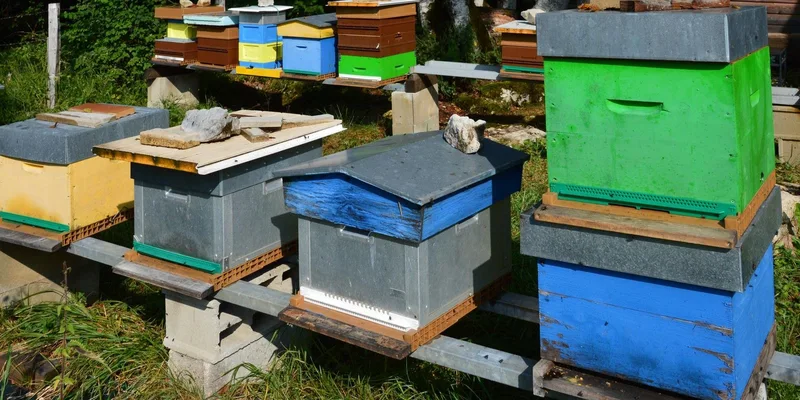
Dozens of hive designs exist, but backyard keepers in the United States realistically choose between four. Langstroth and Flow are vertical, frame based and harvested with the comb intact. Top bar hives are horizontal and harvested by cutting comb. Warre hives are vertical but worked from underneath. Everything else is a variation on one of those ideas.
The bees themselves are not particularly opinionated. A colony will build a nest in a hollow tree, a compost bin or a wall cavity. The design question is entirely about the beekeeper: your back, your harvest, your budget for spare parts, and whether you want to open the hive often or rarely.
Langstroth: The Standard, and Why That Matters
The Langstroth hive is a vertical stack of open boxes holding removable frames, and it is the standard in the United States by a wide margin. That standardization is its real advantage. Frames, feeders, excluders, mite gear, extractors and secondhand boxes are all built to fit it, and every mentor you meet already knows it.
The cost is weight. A deep box packed with honey is heavy enough that many keepers cannot handle one alone, which is why so many people end up running all medium boxes. If you want the whole layout explained layer by layer, our Langstroth walkthrough covers the stack from the bottom board up, and the beginner hive guide covers what to order first.
Top Bar: Comfortable to Work, Different to Harvest
A top bar hive is a single long horizontal cavity with wooden bars laid across the top. Bees hang comb from each bar with no frame around it and no foundation underneath. You work one bar at a time at waist height, which means no lifting of heavy boxes at all, ever.
The trade is at harvest. Unframed comb is fragile and will not survive an extractor, so you crush and strain it, which destroys the comb the bees spent weeks building. That costs the colony energy and it usually costs you total yield across a season. Our top bar hive guide goes into who that trade suits.
Warre: Low Intervention by Design
A Warre hive is a vertical stack of small square boxes with a quilt box and a pitched roof, designed to be nadired, meaning new boxes go underneath rather than on top. The philosophy behind it is minimal disturbance: you inspect rarely and let the colony build downward the way it would in a hollow tree.
The practical catch in a backyard is threefold. Parts are far harder to source than Langstroth gear, the low intervention approach makes routine mite monitoring awkward, and lifting an entire stack to slide a box underneath is its own kind of heavy work. It is a design for keepers who have already done a few seasons.
Flow: A Langstroth With a Different Harvest
A Flow Hive is a Langstroth style hive whose honey super holds special plastic frames that split internally when you turn a key, letting honey drain out through a tube. Below the super, it is an ordinary hive: same brood nest, same inspections, same mite monitoring, same winter preparation.
It genuinely removes the extraction day, which for a one hive backyard keeper is not nothing. What it does not remove is beekeeping. The most common disappointment is buying it as a hands off honey machine and discovering the colony still needs everything else. Our Flow Hive review and the Flow versus Langstroth comparison go through that in detail.
The Four Side by Side
Here is the short version of the decision. Read the harvest column first, because that is where the four designs differ most, and the parts column second, because that is what you will feel in your second season when something needs replacing in the middle of the flow.
| Hive type | How you work it | How you harvest | Parts and support |
|---|---|---|---|
| Langstroth | Lift boxes off a vertical stack | Uncap and spin frames in an extractor | Universal, every supplier and every mentor |
| Top bar | One bar at a time at waist height | Crush and strain, comb is destroyed | Limited, often built rather than bought |
| Warre | Add boxes underneath, inspect rarely | Crush and strain whole boxes | Thin, mostly specialist suppliers |
| Flow | Standard Langstroth inspections | Turn a key, honey drains into a jar | Hive sold direct, brood gear is standard |
Which One Fits Your Backyard
If you want the shortest path to a living colony and a jar of honey, take a Langstroth in whatever box depth your back can handle, and buy from a supplier your local club also uses. That is the choice with the most help behind it, and help is worth more in year one than any design advantage.
If lifting is the constraint that decides everything, a top bar hive removes it completely and you accept crush and strain harvesting in exchange. If you are drawn to Warre, keep a Langstroth alongside it for your first seasons so you learn on standard gear. And whichever you pick, budget for the equipment that sits outside the hive: a bee suit, a smoker and a hive tool are needed on day one regardless of design.
Frequently Asked Questions
Which hive type is best for beginners? Langstroth, mostly for non design reasons: parts are everywhere, secondhand gear fits, and any mentor or club can help you troubleshoot without translating between systems.
Do bees produce more honey in one hive type than another? The colony, the forage and the season decide yield far more than the box does. Frame based hives usually return more usable honey per season simply because extracted comb goes back for the bees to refill.
Can you use an extractor with a top bar hive? Not with normal comb, because there is no frame supporting it. Top bar harvesting is crush and strain, and that is a design feature rather than a flaw.
Is a horizontal Langstroth a separate hive type? It is a hybrid: standard Langstroth frames laid out in one long box instead of a stack. You get standard parts and extractable frames without lifting boxes, at the cost of a large footprint.
Can you switch hive types later? Yes, but frames do not transfer between systems, so switching usually means moving the colony rather than the equipment. Most keepers who switch run both for a season.
Does hive type change how you handle mites? The monitoring and the product label rules are the same regardless of hive. What changes is access, since designs meant for rare inspection make routine mite counts less convenient.
The Bottom Line
Hive type is a decision about your body and your harvest day, not about what the bees want. Langstroth wins on parts and support, top bar wins on lifting, Warre suits a low intervention philosophy with fewer suppliers behind it, and Flow changes only the harvest step of a Langstroth. Read also our box by box Langstroth explainer and, once the hive is chosen, the starter kit guide for everything that goes around it.