Last updated: August 21, 2026
New beekeepers plant flowers for their bees with the best intentions and slightly wrong expectations. A honey bee colony forages over a radius measured in miles, visiting whatever is blooming in a very large area, so a flower bed next to the hive is a rounding error in the colony’s total intake.
That does not make planting pointless. It changes what planting is for: filling the gaps in the local bloom calendar, giving foragers something close by when nothing else is open, and supporting the native bees that share your yard. Planted with that goal, a backyard is genuinely useful. Planted as a food supply, it will disappoint.
This article contains affiliate links. If you buy through them, we may earn a commission at no extra cost to you. Learn more.
Quick Answer
What should you plant near a beehive?
- Plant for the gaps in your local bloom calendar, especially the midsummer dearth and late fall.
- Trees and shrubs deliver far more bloom per square foot than any flower bed.
- Choose single flowered varieties over doubles, since heavily bred blooms often hide or lack accessible nectar.
- Skip anything treated with systemic insecticide, and check with the nursery before buying.
Bottom line: a backyard planting will not feed a colony, but it fills the dearth and supports every other pollinator in the yard.
What Planting Can and Cannot Do
A single colony contains tens of thousands of foragers working a wide area, so its diet is set by the regional landscape rather than by your yard. Farm fields, roadsides, woodlots and neighborhood trees do the heavy lifting, and a home planting adds a small fraction of that.
What a home planting can do is cover moments. When the main flow ends and nothing local is blooming, a bed of late season perennials near the hive gives foragers somewhere to go. It also makes the apiary visibly a garden rather than an installation, which helps more with neighbors than most beekeepers expect.
The Dearth Is the Real Target
Most regions have a dearth, a stretch in mid to late summer when the spring flow has finished and fall bloom has not started. Colonies burn through stores during it, robbing behavior increases, and beekeepers who feed usually feed then. That gap is where planting has the most leverage.
Identifying your local dearth matters more than any plant list. A club, a state extension service or an older beekeeper down the road can tell you when the flow ends locally, and that date tells you what to plant. If a dearth turns into a real shortage, feeding is the answer rather than gardening, and our guide to choosing a hive feeder covers that side.
Early Spring: Pollen More Than Nectar
Early spring bloom matters because colonies need pollen to raise brood, not because they need nectar to store. Willow, maple, and early fruit trees are the classic sources in much of the country, along with dandelion and other early lawn flowers that many people are in a hurry to remove.
Crocus, snowdrops and other early bulbs are the small scale version and easy to add. If pollen is genuinely short in early spring, a protein supplement is the standard response, and our guide to when pollen patties help and when they backfire covers the tradeoffs, including the reasons not to feed them too early.
Summer: Filling the Gap
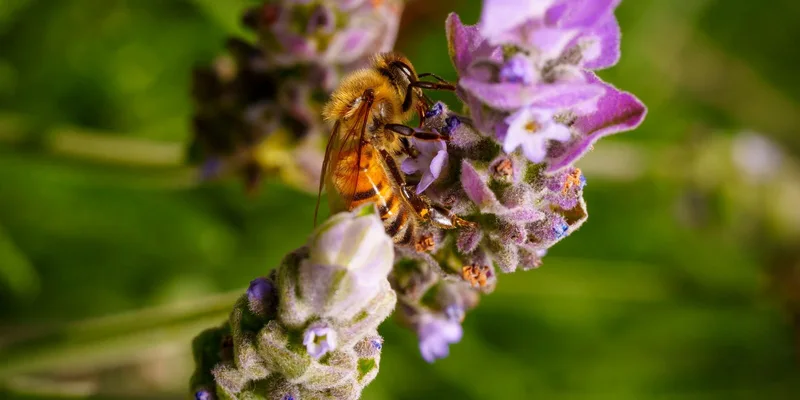
Midsummer is where a deliberate planting pays. Perennials that bloom through the heat, such as bee balm, catmint, borage, lavender, oregano allowed to flower, sunflowers and mountain mint, keep something open through the weeks when the landscape has gone quiet.
Herbs Are the Easiest Win
Culinary herbs left to bolt are among the most reliably visited plants in a backyard. Oregano, thyme, mint, sage and basil all flower heavily if you stop harvesting them, and they need very little attention. The only cost is accepting a herb bed that looks less tidy than it could.
Clover in the lawn belongs in the same category. Letting a lawn flower, or overseeding it with white clover and mowing less often, produces more forage than most planted beds and takes less work than either.
Seed Mixes for a Larger Patch
If you have a corner to convert, a regional wildflower mix is the low effort route to a long bloom window. Look for a mix labeled for your region rather than a generic national blend, since the point is plants that thrive locally and flower when your landscape does not.

Fall: The Last Flow Before Winter
Late season bloom builds the stores that carry a colony into cluster, which makes it disproportionately important. Goldenrod and asters dominate the fall flow across much of the United States, along with sedum, Japanese knotweed where it grows and late blooming mints.
Goldenrod in particular is worth leaving alone where it appears, since it is a major fall source and is often pulled out of yards by mistake. What comes in during fall is also what you are deciding whether to leave on the hive, which our guide to reading capped frames before harvest covers.
A Planting Plan by Season
The table sorts common backyard options by when they bloom and what they mainly provide. Regional variation is large, so treat it as a framework to check against a local extension service plant list rather than a shopping order.
| Season | Typical sources | Mainly provides | Why it matters |
|---|---|---|---|
| Early spring | Willow, maple, fruit trees, dandelion, crocus | Pollen | Fuels early brood rearing |
| Late spring | Clover, fruit bloom, black locust, brambles | Nectar and pollen | The main flow in many regions |
| Midsummer | Bee balm, borage, mountain mint, sunflowers, herbs | Nectar | Covers the dearth |
| Fall | Goldenrod, asters, sedum | Nectar and pollen | Builds winter stores |
| Any season | Unmowed lawn with clover | Nectar | Most forage per unit of effort |
Trees Beat Flower Beds
A mature flowering tree carries more bloom than an entire perennial border, which is why beekeepers who think seriously about forage plant trees. Linden, black locust, tulip poplar, maple, willow and fruit trees are all significant sources in the regions where they grow well.
Trees also solve a second problem at the same time. A hedge, a row of shrubs or a young tree line placed in front of the hive entrance lifts the flight path above head height, which is exactly what a backyard apiary wants for neighbor relations. Our guide to siting a hive in a backyard covers that layout.
What to Avoid Planting or Buying
Two things are worth active avoidance. Heavily bred double flowered ornamentals often have their reproductive parts replaced with extra petals, which leaves little or nothing accessible for a forager. Single flowered forms of the same species are usually a far better choice.
The second is nursery stock treated with systemic insecticides, which move through the plant into pollen and nectar. Ask the nursery directly what their plants have been treated with, and prefer suppliers who can answer. The same caution applies to lawn and garden products used anywhere near the hive.
Frequently Asked Questions
What flowers do honey bees like best? The ones blooming in quantity nearby. Across much of the country that means clover, fruit bloom, black locust and brambles in spring, and goldenrod and asters in fall. Backyard favorites like bee balm, borage and flowering herbs matter most during the summer dearth.
Can I plant enough flowers to feed my hive? Not realistically. A colony forages over a wide radius and takes most of its intake from the surrounding landscape. Planting improves the gaps and supports other pollinators, but it does not replace the regional flow or a feeder when stores run low.
How far do honey bees travel to forage? Considerably further than a garden. Foragers work a large area around the hive and concentrate wherever bloom is dense, which is why what your neighbors and the nearest farmland grow matters more than your own beds.
Should I let dandelions and clover grow? They are among the most useful things in a suburban yard for bees, particularly dandelion in early spring. Mowing less often, or leaving part of the lawn unmowed through bloom, is the simplest thing most beekeepers can do.
Are wildflower seed mixes worth buying? Regional mixes are, since they are matched to local conditions and usually give a long bloom window with little maintenance. Generic national mixes are less reliable and sometimes include species that do poorly or spread aggressively in your area.
Do I need to plant differently for native bees? Somewhat. Native bees often favor native plants and need nesting habitat as well as bloom, meaning bare ground, hollow stems and undisturbed corners. A yard planted for honey bees usually helps them too, but leaving some mess helps more.
The Bottom Line
Plant for the calendar gaps rather than for the colony’s total diet: early pollen, something open through the summer dearth, and a strong fall bloom left standing. Trees and an unmowed lawn do more than any flower bed, and single flowered varieties from a nursery that knows its treatments beat showy doubles. Next, read how to site a hive in a backyard and when pollen patties help.