Last updated: August 21, 2026
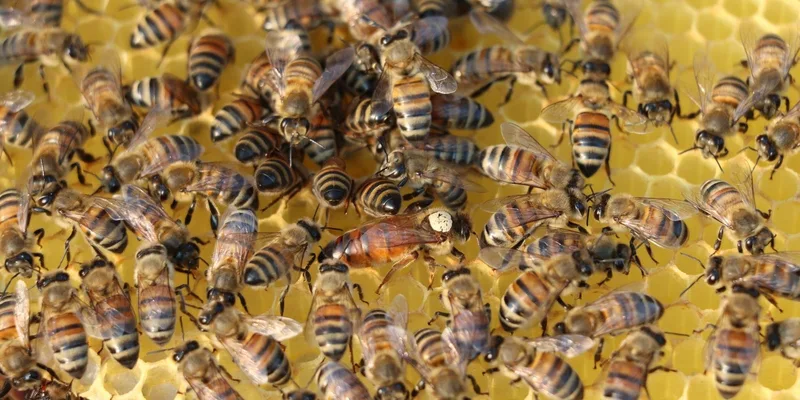
Finding the queen on a frame covered in eight thousand of her daughters is a skill that takes most beginners a full season to develop, and even then a routine inspection can turn into twenty minutes of squinting. A marked queen changes that. A single dot of paint on her thorax turns her into the one thing on the comb that does not belong, and the search that used to eat half the inspection takes seconds.
Marking also tells you something a spotted queen cannot: how old she is, and whether the queen in there now is the one you put in. A colony that quietly superseded in July looks identical from the outside, and the missing paint dot is often the first clue. This guide covers the kit, the color code and what a backyard keeper actually needs to do the job without hurting her.
This article contains affiliate links. If you buy through them, we may earn a commission at no extra cost to you. Learn more.
Quick Answer
What do you need in a queen marking kit?
- A water based paint marker in the right color, with a medium tip that leaves a dot rather than a smear.
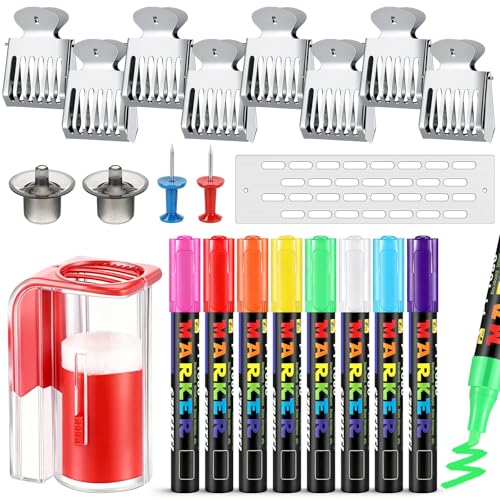
- A marking cage, either the plunger tube type or the mesh crown that presses gently over her on the comb.
- The international color code, so the mark records the year rather than just making her visible.
- A calm colony, a warm day and no rush, because the mark is easy and the handling is the part that goes wrong.
Bottom line: a five color pen set and a plunger cage covers a backyard apiary for years.
Why Mark a Queen at All
Two reasons, and the second is the one people underrate. The obvious benefit is speed: a marked queen is found in seconds instead of minutes, which shortens every inspection and means less time with the hive open in cool weather. The colony is disturbed less, and so are you.
The second benefit is record keeping. Because the mark color follows a fixed year code, the dot tells you how old she is without checking your notes. And if you open a hive expecting a green queen and find an unmarked one laying, you know the colony superseded or swarmed, which is information you would otherwise get weeks later when something else went wrong.
The Argument Against
Some keepers do not mark, on the grounds that handling a queen carries a small risk and that a colony sometimes reacts to the scent of paint on her. Both are real, both are small, and both shrink with practice. Buying queens already marked from the breeder sidesteps the handling question entirely.
The International Color Code
Queen marking follows a five color cycle tied to the last digit of the year she was born, and it repeats every five years. The standard mnemonic is Will You Raise Good Bees, which gives white, yellow, red, green, blue in order. Breeders and suppliers worldwide use the same sequence, so a marked queen bought from anywhere is readable.
| Color | Years ending in | Mnemonic word | Visibility on comb |
|---|---|---|---|
| White | 1 and 6 | Will | Excellent on dark comb, poor on fresh wax |
| Yellow | 2 and 7 | You | Good, can blend with pollen and light wax |
| Red | 3 and 8 | Raise | Very good, stands out on brood comb |
| Green | 4 and 9 | Good | Excellent, nothing else in the hive is green |
| Blue | 5 and 0 | Bees | Excellent, the easiest to spot in low light |
Nothing forces a backyard keeper to follow the code. If you keep one or two hives and simply want her findable, any single color works and many people use white or a bright color year round. The code only earns its keep once you have several colonies of different ages, or once you start buying queens from breeders who use it.
What Goes in the Kit
The Pens
Water based paint markers with a medium tip are the standard, and the POSCA line is the one most beekeeping suppliers repackage and sell as queen marking pens. Water based matters: solvent markers and model paints carry fumes and drying behavior that have no place on a live insect. Sets sold for beekeeping typically include all five code colors.

The Plunger Cage
The plunger style marking cage is a clear tube with a soft foam plunger inside. The queen walks or is coaxed into the tube, the plunger presses her gently against the clear end, and you mark her through the opening. It is the easiest method for someone who is nervous about picking her up, because your fingers never touch her.

The Crown Cage
The mesh crown, sometimes called a crown of thorns cage, is a ring of pins with a mesh top that presses down over the queen where she stands on the comb. You mark her through the mesh and lift it off. It is quicker than a tube once you are used to it, and it is popular with keepers who do not want to move her at all.

Buying It All at Once
Combined kits pair the pen set with a cage and sometimes a queen clip, which is the sensible way to buy if you own none of it. Check that the pens included are water based paint markers rather than generic craft pens, since that is where budget kits cut the corner.
Marking Her Without Hurting Her
The principles matter more than any step by step. Work on a warm, calm day when the colony is settled, take your time, and never mark a queen you have had to chase across three frames of agitated bees. The mark itself is a single small dot on the thorax, the smooth plate between her wings, never on the abdomen, the head or the wings.
Let the pen dry before you release her, because wet paint transfers onto workers and onto comb, and a queen returned dripping is more likely to be balled by her own colony. Most keepers hold her caged for a short while, watch the dot go matte, and then let her walk back onto a brood frame rather than dropping her onto the top bars.
Common Mistakes
Too much paint is the big one. A blob spreads over the wing bases and can interfere with her movement, and it takes far longer to dry. Pressing too hard with a crown cage on uneven comb is the other, which is why many keepers prefer a plunger tube on frames that are not perfectly flat. And test the pen on a scrap of paper first, because a marker that has been in the shed all winter often floods on the first stroke.
When to Mark and When to Leave Her Alone
The best time is when the colony is calm and the queen is easy to find, which for most backyard hives means a warm afternoon in late spring or early summer after the colony has settled from installation. Marking a newly introduced queen too soon risks disrupting an acceptance that is still in progress.
Skip marking entirely during a dearth, during robbing pressure, in cold weather, or when the colony is already agitated. A queen is a slower moving, less replaceable insect than a worker, and every extra minute of handling in bad conditions raises the chance of a mistake you cannot undo.
Frequently Asked Questions
What color should I mark my queen this year? Follow the five year code: white for years ending in 1 or 6, yellow for 2 or 7, red for 3 or 8, green for 4 or 9, blue for 5 or 0. The mnemonic Will You Raise Good Bees keeps the order straight.
Can I use a regular paint marker or nail polish? Use only water based paint markers sold for the purpose. Solvent based markers, model paints and nail polish carry fumes and drying characteristics that are not appropriate for a live queen, and the dot needs to dry fast and thin.
Does marking hurt the queen? A correctly placed dot on the thorax does not injure her. The risk in the process is handling, not paint, which is why cages exist and why calm conditions and unhurried work matter more than the equipment you use.
Will the colony reject a marked queen? It is uncommon when the paint is fully dry before release. Returning her while the mark is still wet is the main scenario keepers warn about, since fresh paint transfers to workers and changes how she smells to the colony.
Do I have to mark her at all? No. Plenty of keepers never do, and queens can be bought pre marked from breeders. Marking mainly buys you speed during inspections and an easy way to notice a supersedure you would otherwise miss.
How long does the mark last? Usually the life of the queen, though marks do wear, particularly on a queen that is heavily groomed or handled. A queen you expect to be marked and find bare is worth a second look at the brood pattern, since she may not be the same queen.
The Bottom Line
A queen marking kit is a pen set, a cage and five minutes of care. The color code turns the dot into a record of her age, and the cage means you never have to pick her up if you would rather not. Buy water based markers, mark on a warm calm day, let the paint dry before she goes back, and your next inspection will be noticeably shorter. Our inspection checklist covers where finding her fits in the routine, and the tool kit guide covers what else rides in the bucket.