Last updated: August 21, 2026
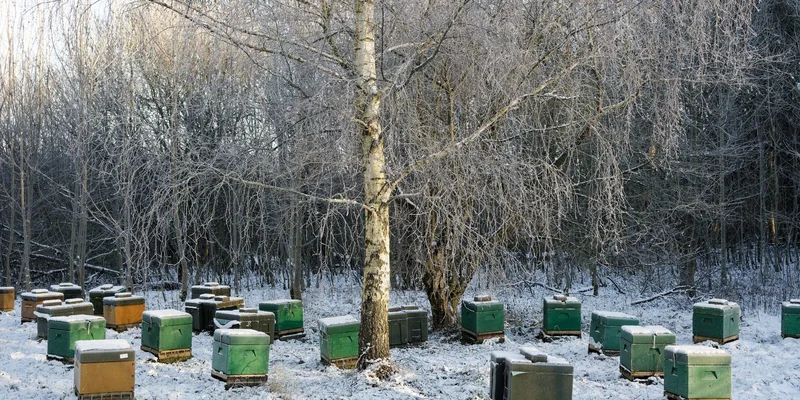
The first winter with bees is mostly waiting. The entrance is quiet, the yard is white, and the only evidence that anything is alive is a faint hum when you put an ear against the side. New beekeepers spend that winter inventing worst cases, and most of those worries come from expecting the colony to behave the way it did in July.
It does not. A wintering colony is not a smaller summer colony, it is a different organism with a different job. Understanding what goes on inside the box turns a nerve-wracking three months into something you can read from outside, and it explains why almost every piece of winter advice is really about moisture, food position and leaving the lid alone.
This article contains affiliate links. If you buy through them, we may earn a commission at no extra cost to you. Learn more.
Quick Answer
What happens inside a beehive in winter?
- Honey bees do not hibernate. They form a cluster and shiver their flight muscles to keep the center of that ball warm.
- The cluster heats itself, not the hive, and slowly eats its way upward through the comb as stores are consumed.
- The bees doing this are winter bees, raised in late summer with the physiology to live for months rather than weeks.
- Drones are evicted in fall, the queen usually pauses laying for a stretch, and brood rearing restarts well before spring looks like spring.
Bottom line: the colony is awake, warm at the core, and eating; your job is to keep it dry and to make sure food sits where the cluster is heading.
Bees Do Not Hibernate
Hibernation means shutting down. Honey bees do the opposite: they stay active all winter, burning stored honey as fuel to make heat. Bees on the outside of the cluster form an insulating shell, bees inside shiver their flight muscles without moving their wings, and individuals rotate so nobody stays on the cold edge.
This is why a colony can survive a hard freeze in a thin pine box. It is not keeping the box warm. It is keeping a ball of bees warm, and everything outside that ball can be as cold as the weather makes it.
The Cluster and How It Moves
The cluster forms as temperatures drop and tightens as they drop further, expanding again on milder days. It sits on comb rather than beside it, with bees filling the empty cells and covering the faces, and it consumes the honey it is touching. As that honey runs out, the whole cluster shifts, and it almost always shifts upward.
That upward habit is the single most useful fact of winter beekeeping. It explains why food gets placed above the frames rather than at the entrance, and why a colony can starve with full frames of honey two inches to the side. In a hard cold snap the bees will not break cluster to cross that gap.
Why a Deadout Can Be Surrounded by Honey
Open a starved colony in March and you often find a small cluster head-first in empty cells directly beneath capped honey. It looks like carelessness. It is usually geometry plus a long cold spell that never gave the bees a warm enough day to move.
Keeping stores in the right place, and topping up with solid feed above the top bars when a hive gets light, is the practical answer. Our winter feeding guide covers how to put it there without chilling the colony.
Winter Bees Are a Different Bee
A summer worker lives a matter of weeks and works herself out. Bees raised in late summer and early fall are physiologically different: they carry heavier fat body reserves, forage far less, and are built to last through months of clustering and then raise the first brood of spring.
That is why colony health in August decides what happens in January. Anything that damages the bees raised in that window, varroa above all, shows up months later as a cluster that shrinks through midwinter for no visible reason. Thresholds and treatment details belong to the EPA-registered label of the product you use and to extension services such as Penn State Extension or the University of Minnesota Bee Lab.
Drones, the Queen and the Winter Brood Break
Drones get evicted in fall. They do not forage, cannot easily feed themselves and contribute nothing to a wintering colony, so workers stop feeding them and push them out. Dead drones on the landing board in October mean the colony is behaving normally, not that something is wrong.
The queen usually slows or stops laying for a stretch of the winter, then restarts earlier than most beginners expect, often while there is still snow on the ground. Once brood is present the cluster has to hold a much narrower temperature range around it, which raises food consumption sharply. That is exactly why late winter is the riskiest stretch for starvation.
Cleansing Flights and Other Signs of Life
Bees do not defecate in the hive if they can avoid it. On a mild, still afternoon they pour out for a few minutes, fly a short loop and return, leaving yellow spots on the snow and on anything parked nearby. That is a cleansing flight, it is a healthy sign, and it is one reason keepers value a hive that catches winter sun.
Other outside signs: dead bees around the entrance mean the housekeepers are working, a quiet hive on a cold day means nothing, and a hive that stays silent on a warm afternoon while its neighbor flies is the one to worry about.
The Winter Timeline From the Colony’s Side
Timing shifts by climate, so read the seasons rather than the months. What stays constant is the sequence: contraction, cluster, brood break, restart, then the hungriest stretch of the whole year.
| Phase | Inside the hive | What you see outside | What you do |
|---|---|---|---|
| Late fall | Drones evicted, population contracts, winter bees take over | Dead drones on the landing board, less traffic | Finish prep, close the entrance down, secure the lid |
| Early winter | Cluster forms and tightens, stores consumed from the middle outward | Quiet entrance, occasional flights on mild days | Heft for weight, leave the boxes closed |
| Midwinter | Cluster moves upward, queen often paused | Cleansing flights on warm afternoons | Check weight, add solid feed above the frames if light |
| Late winter | Brood rearing restarts, temperature held tighter, consumption climbs | Pollen coming in on the earliest warm days | The highest-risk stretch for starvation, keep checking |
| Early spring | Population climbs, cluster breaks, forage returns | Steady traffic, bees carrying pollen | First real inspection on a calm warm day |
What Actually Kills Backyard Colonies Over Winter
Rarely the cold on its own. The recurring causes are a mite load that damaged the winter bees in August, starvation because stores were light or in the wrong place, and moisture dripping from a cold inner cover. Mice in a bottom box and robbing during the fall dearth round out the list.
Each one has a preventive step that happens before winter, not during it. Moisture is handled by insulating above the cluster and giving vapor somewhere to go, wind by wrapping the sides in exposed yards, and rodents by fitting a mouse guard before the nights turn cold.
Should You Open the Hive in Winter?
Only briefly, and only for a reason. Every time the boxes come apart, the colony loses heat it has to rebuild with honey it may not have to spare. Lifting the outer cover to slide feed over the top bars takes seconds and is worth it; pulling frames in February is not.
Almost everything you want is available without opening anything: weight by hefting, life by listening, activity by watching the entrance on a mild afternoon. Save the real inspection for a calm sunny spring day.
Frequently Asked Questions
Do bees hibernate in winter? No. They cluster and shiver to generate heat, staying active the whole time and eating stored honey as fuel. A wintering colony is awake, warm at the core and consuming food continuously, which is why stores matter so much more than air temperature.
How cold is too cold for a beehive? Healthy colonies with adequate stores overwinter in climates far colder than most people expect, because they heat the cluster rather than the hive. Wind, damp and lack of food do far more damage than low temperature alone.
Why are there dead bees outside my hive in winter? Bees die continuously and the workers carry the bodies out when they can. A scattering of dead bees on the landing board or in the snow usually means the colony is alive and doing its housekeeping.
Does the queen lay eggs in winter? Usually she slows or stops for a stretch, then restarts well before spring arrives outside. Once brood is present the colony holds a tighter temperature and consumes far more stores, which makes late winter the most dangerous stretch for starvation.
Why do bees fly on a warm winter day? Those are cleansing flights. Bees avoid defecating inside the hive, so they take advantage of any mild, still afternoon to fly a short loop and return. Yellow spots on the snow are a good sign.
How do I know my colony is still alive without opening it? Put an ear or a stethoscope against the side of the box on a cold day and listen for the hum, heft the back for weight, and watch the entrance on the first mild afternoon. A silent hive while neighbors are flying is the one to investigate.
The Bottom Line
Inside a winter hive there is a cluster of long-lived winter bees shivering to hold a warm core, eating upward through the comb, evicting drones in fall and restarting brood before the snow clears. Nothing about that process needs your help; what it needs is a dry ceiling, food in the right place and a lid that stays on. Read next: the order of operations for winterizing, and where the moisture really goes when you insulate.