Last updated: August 21, 2026
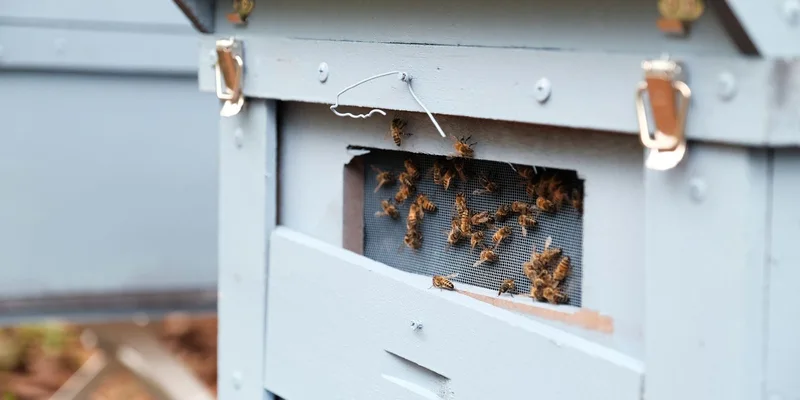
Robbing looks wrong before you can name it. The traffic at the entrance is frantic rather than purposeful, bees are wrestling on the landing board, and there are wax flakes on the ground below the hive. By the time it is obvious, a small colony can be stripped in a day, and the mood in the whole apiary turns for a week.
A robbing screen is the piece of equipment that prevents this, and an entrance reducer is the piece that people reach for instead and then wonder why it did not help. They do different jobs. This guide covers what each one actually does, when it goes on, and how to handle a robbing event that has already started.
This article contains affiliate links. If you buy through them, we may earn a commission at no extra cost to you. Learn more.
Quick Answer
Do you need a robbing screen or an entrance reducer?
- An entrance reducer shrinks the doorway so fewer guards can defend more of it. Useful, but robbers still find the hole.
- A robbing screen works by deception: the scent comes out at the old entrance while the real doorway is moved to the side, which the residents learn and the raiders do not.
- Screens go on before a dearth or before you feed a weak colony, not after robbing has started.
- A robbing event in progress is an emergency, and the fix is closing things down and cooling the situation, not adding gear at that moment.
Bottom line: reducers help a colony defend, screens confuse the attackers, and small or newly fed colonies need the screen.
Why Robbing Starts
Robbing is normal bee behavior, not aggression. When nectar stops coming in, foragers switch to looking for stored honey wherever it can be found, and a hive that cannot defend its entrance is simply another source. The trigger is almost always a dearth, that stretch in mid to late summer when the flow ends and the landscape has nothing left.
Beekeepers cause a fair share of it too. Syrup spilled at the entrance, a super left open on the ground, a long inspection in the middle of a dearth, or feeding a weak colony where its neighbors can smell it are all invitations. The scent of open honey travels, and once scouts have found it the pressure builds fast.
The Signs Worth Learning
Fighting on the landing board, bees tumbling in pairs, a wavering hovering pattern in front of the hive instead of direct flight, wax cappings scattered on the ground, and bees trying to get in at cracks and corners rather than at the door. Dead bees at the entrance the next morning confirm it. Our inspection checklist covers what else to watch.
What an Entrance Reducer Does
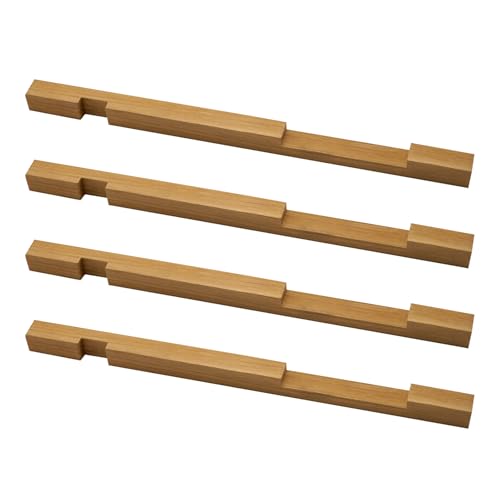
An entrance reducer is a strip of wood or plastic that narrows the opening in the bottom board, usually with two notch sizes. A smaller doorway means fewer guards can cover the whole thing, which matters most for a nuc, a package just installed, or any colony that has been knocked back.
It is the right tool for a small colony holding its own, and it does other jobs at the same time: it keeps drafts down in fall and it is the mounting point for a mouse guard once the weather turns. What it does not do is hide the entrance, so a determined robbing front will still queue at the notch.
Plastic Gates and Adjustable Versions
Adjustable plastic entrance gates do the same job with a sliding shutter, which means you can dial the opening down without swapping parts or lifting the box. They suit keepers who adjust often through the season, and they stay put better than a loose wooden reducer that gets pushed out during an inspection.
How a Robbing Screen Works
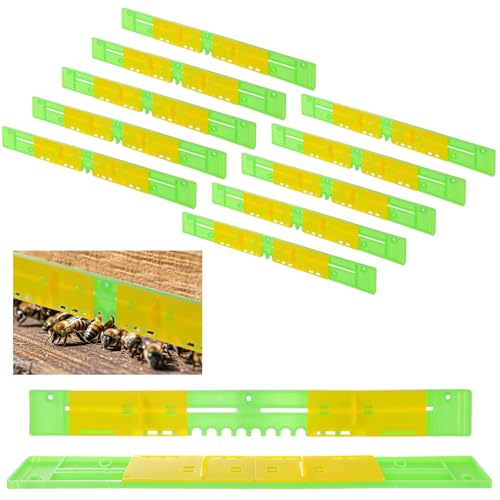
A robbing screen covers the entrance with mesh and provides a real opening somewhere off to the side, usually at the top or the end of the screen. Hive scent pours out through the mesh at the old entrance, so robbers home in on a wall they cannot pass. The residents, arriving repeatedly, learn the actual route within a day.
That asymmetry is the whole trick. Robbers make one confused pass and move on, while foragers who live there adapt. It is far more effective than any amount of narrowing, and it is the reason robbing screens are standard equipment for anyone running nucs or making late-season splits.

Fit and Frame Count
Screens are sized to the hive body, so an eight frame box needs an eight frame screen. Check how it mounts as well, because some clip over the entrance and some are screwed to the front, and a screen that falls off in a wind is worse than none at all. Measure before ordering rather than assuming your boxes are standard.

When to Put Them On
Timing is the part people get wrong. A robbing screen installed while a robbing frenzy is underway confuses the residents at the exact moment they need to get back inside, and it does not confuse the robbers who have already learned the entrance. Screens go on ahead of trouble, not during it.
The natural moments are the start of the summer dearth, the day you install a nuc or a package, the day you make a split, and any time you start feeding a colony that is smaller than its neighbors. Feeding and robbing are closely linked, which is why our comparison of entrance feeders and pail feeders treats robbing risk as the deciding factor.
Stopping a Robbing Event in Progress
If it is already happening, the priority is to end it today rather than to install equipment. Close the entrance down to a single bee width, stop feeding immediately, and clean up any spilled syrup or exposed comb in the apiary. Some keepers drape a wet sheet over the hive, which lets residents crawl in underneath while breaking the flight pattern robbers rely on.
Then leave the apiary alone. Every additional inspection while robbing pressure is high makes it worse, and the colony needs the afternoon to settle. Put the screen on the following morning, before flight builds, and keep it there for the rest of the dearth.
If the Colony Loses
A stripped colony usually cannot recover on its own in late summer, and a queenless one certainly cannot. Combining it with a strong neighbor is often the honest call. If it survives on paper but has no stores going into fall, that gap has to be closed deliberately, which is what winter feeding is for.
Comparing the Options
Most backyard setups end up with a reducer on every hive as a matter of routine and a screen on any colony that is small, newly installed or being fed. Mouse guards join the rotation once nights turn cold, mounted in the same slot the reducer occupied.
| Device | What it does | Goes on when | Limitation |
|---|---|---|---|
| Entrance reducer | Narrows the doorway so guards cover it | Nucs, packages, fall, all winter | Robbers still find the opening |
| Adjustable plastic gate | Same, with a sliding opening | Whenever you adjust often | Not a defense against a robbing front |
| Robbing screen | Moves the real entrance away from the scent | Before a dearth, before feeding | Confuses residents if fitted mid-event |
| Mouse guard | Blocks rodents while bees pass | Once nights turn cold | Does nothing against robbing |
For the winter half of that list, see our guide to mouse guards, which mount in the same place and often replace the reducer in October.
Frequently Asked Questions
Does an entrance reducer stop robbing? It helps a small colony defend a smaller doorway, which is worth doing, but it does not hide the entrance from robbers. Once a robbing front has formed, a reducer alone rarely turns it around.
When should a robbing screen go on? Before the pressure starts: at the beginning of a summer dearth, when you install a nuc or a package, when you make a split, and whenever you feed a colony weaker than its neighbors.
Can I leave a robbing screen on all season? Many keepers leave them on nucs permanently and on production hives through the dearth. The main reason to take one off is a heavy flow, when maximum traffic matters more than defense.
How do I know it is robbing and not orientation flights? Orientation flights are calm, happen on warm afternoons, and the bees face the hive while hovering. Robbing is frantic, involves fighting on the landing board, and leaves wax cappings and dead bees on the ground.
Will a robbing screen work on a top bar hive? Screens are made for Langstroth entrances, so a top bar hive usually needs a homemade version built on the same principle: block the scent-bearing entrance with mesh and provide a real opening to the side.
Does feeding always cause robbing? No, but open feeding and entrance feeders raise the risk considerably during a dearth because the syrup smell is available outside the hive. In-hive feeders keep the scent contained, which is the main argument for them.
The Bottom Line
Entrance reducers and robbing screens solve different halves of the same problem. Keep a reducer on anything small or newly installed, and fit a screen before the dearth on any colony you would not want to lose in a day. If robbing is already underway, close the entrance down, stop feeding, clean up the apiary and wait until the next morning to add equipment. Next, read our comparison of entrance feeders and pail feeders, since feeding is the most common trigger, and mouse guards for the version of this job that starts in October.