Last updated: August 21, 2026
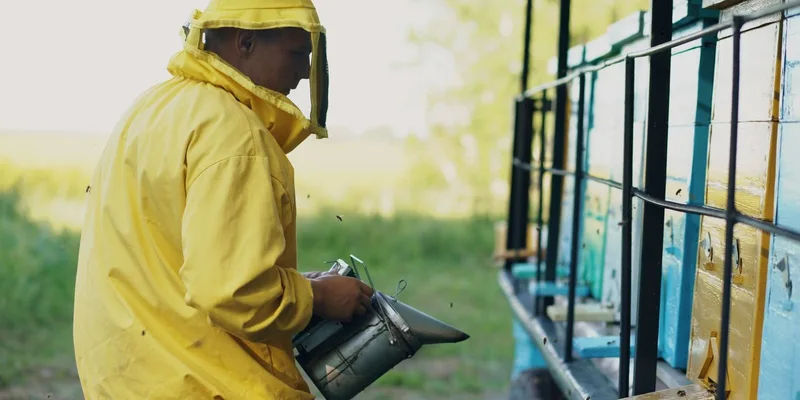
A smoker is the only thing in a beekeeping bucket that is on fire. Everybody knows that in the abstract, and then sets a lit one down in dry August grass while both hands are busy with a full super, and spends the next thirty seconds stamping. The gear is not dangerous, the routine around it is where things go wrong.
This is the practical safety list: where to put a lit smoker down, how to put one out properly, what happens if it travels in a vehicle before it is cold, and how to keep sparks and ash from becoming a fire in your own yard or somebody else’s. None of it is complicated, and all of it is habit.
This article contains affiliate links. If you buy through them, we may earn a commission at no extra cost to you. Learn more.
Quick Answer
How do you use a bee smoker safely?
- Set a lit smoker on bare ground, a paver or a metal tray, never in grass, mulch or leaf litter.
- Put it out by plugging the spout and letting it starve, then let it go fully cold before it goes anywhere.
- A smoker that is still warm does not belong in a vehicle, a shed or a plastic tote.
- Burn only clean, untreated fuel, and check local fire restrictions during dry spells before you light anything.
Bottom line: the two habits that prevent almost every smoker incident are where you set it down and how long you let it cool.
Where You Set It Down
Most smoker fires start on the ground rather than in the hive. A lit smoker radiates heat from the firebox, drops the occasional ember from the spout, and gets knocked over when you are moving boxes. Dry grass, wood mulch, leaf litter and hay all catch from any of those.
Fix it once and stop thinking about it: put a paver, a metal tray or a patch of gravel beside the hive stand and make that the smoker’s spot. Keepers who work more than one hive often carry a small metal toolbox or ammo can and stand the smoker in it between hives, which solves the setting down problem and the transport problem in one object.
Handling It Without Burning Yourself
The firebox of a working smoker is hot enough to burn skin instantly, and the spout stays hot long after the smoke thins. A full heat shield is what lets you pick the thing up and move it, which is why it is the feature worth paying for on any smoker you buy.
Carry it by the shield or the bellows and never by the lid, keep it away from a synthetic bee suit, and be aware that a hot smoker resting against a suit or veil can melt or scorch the fabric. Sleeves and gloves are the usual casualties, and a hole in a veil is a hole you have to repair before the next inspection.
Smoke in Your Own Face
Smoke is unpleasant to breathe and hot smoke can irritate eyes and throat. Work upwind where you can, keep the smoke aimed at the hive entrance and across the top bars rather than at yourself, and step out of the plume when you stop to look at a frame. If your smoke is hot enough to sting your eyes, it is too hot for the bees too.
Fuel: What to Burn and What Never To
Clean, untreated plant material and cotton are the whole list: compressed cotton fuel, untreated burlap, pine needles and straw, dry wood shavings, wood pellets. All of them need to be dry, and all of them should smolder rather than flame, because flames mean hot smoke and sparks up the spout.
What stays out of the firebox: pressure treated lumber, plywood, particleboard, painted or stained wood, printed or waxed cardboard, glossy paper, and anything with adhesive, plastic or synthetic fiber in it. Burning those puts fumes into a hive full of bees and into your face. The choices that burn cool and long are covered in our smoker fuel guide.
Putting It Out Properly
Starving the fire of air is the standard method: plug the spout with a cork, a wine cork, a wad of green grass or a purpose made stopper, close the lid, and leave it alone. With no airflow the fuel bed goes out on its own, and any unburned fuel is still there for next time.
What you should not do is dump the contents on the ground and walk away, or splash water into a hot steel firebox and assume that finished it. Embers buried in a bed of ash hold heat for a surprisingly long time. If you need it out fast and cold, tip the contents into a metal bucket, wet them thoroughly, and stir them.
The Common Ways It Goes Wrong
Nearly every smoker incident a backyard keeper has is one of four things, and all four are avoidable with a habit rather than a purchase. Here they are with the fix next to each.
| Risk | When it happens | What to do | Common mistake |
|---|---|---|---|
| Grass fire | Smoker set down while your hands are full | Keep a paver or metal tray as its spot | Standing it in dry grass beside the stand |
| Vehicle fire | Driving home from an out yard | Cool it fully, then carry it in metal | Warm smoker in a plastic tote or on a seat |
| Burns | Grabbing the firebox or spout | Use the heat shield, let the spout cool | Assuming it is cool because the smoke stopped |
| Sparks in the hive | Fuel flaming instead of smoldering | Pack fuel firmly, keep it smoldering | Loose, dry, over-lit fuel and hard pumping |
Transport and Storage
A smoker that is not stone cold does not go in a car, a truck bed with a tarp, a shed, a garage or a plastic container. This is the incident that costs people vehicles, and it happens because the smoke has stopped and the smoker looks finished while the fuel bed is still alive under the ash.
The reliable method is to plug it, let it sit while you close up the hives and pack everything else, then carry it in a metal box with a lid. Store it empty rather than full: dump the cold ash into a metal container, brush out the firebox, and put it away dry so the next inspection starts with a clean airway and no smolder risk.
Fire Restrictions and Your Neighbors
Whether you may light anything outdoors during a dry spell is decided locally, by your county, your fire district or your state forestry agency, and restrictions change through the season. Check before you work hives in dry conditions rather than assuming a smoker is exempt, because in many places it is not treated differently from any other open flame.
The neighbor dimension is worth a thought too. Smoke drifting across a fence on a still evening gets noticed, and a backyard apiary runs on goodwill. Work on a calm, warm afternoon when the field bees are out and the smoke has somewhere to go, which is also when the bees are easiest, as our inspection checklist explains.
Frequently Asked Questions
How do you safely put out a bee smoker? Plug the spout and close the lid so the fuel bed starves of air, then let it cool completely. If you need it cold quickly, tip the contents into a metal bucket and wet them thoroughly.
Can you put a smoker in your car after an inspection? Not until it is fully cold, and then only in a metal container with a lid. A warm smoker in a vehicle is the most expensive mistake in this article.
Is smoker smoke harmful to bees? Cool smoke from clean, untreated fuel is a standard beekeeping tool used lightly. Hot smoke, sparks and fumes from treated or synthetic material are a different matter, which is why fuel choice and technique matter.
What fuel should never go in a smoker? Treated or painted lumber, plywood, particleboard, printed or waxed cardboard, glossy paper, and anything containing plastic, adhesive or synthetic fiber.
Do I need a fire extinguisher at the apiary? Having water or an extinguisher within reach is sensible whenever you are lighting something outdoors, and it is worth more during a dry spell than at any other time of year.
Can I use a smoker during a burn ban? That is a question for your county or fire district, not for a beekeeping site. Restrictions differ by place and change through the season, so check locally before you light one.
The Bottom Line
Smoker safety comes down to two habits and one purchase: a designated non-flammable spot to set it down, a plug-and-cool routine before it goes anywhere, and a smoker with a full heat shield so you can actually handle it. Burn clean fuel, check local fire restrictions in dry weather, and store it empty. Our bee smoker buying guide covers the features that make this easy, and the fuel guide covers what belongs in the firebox.