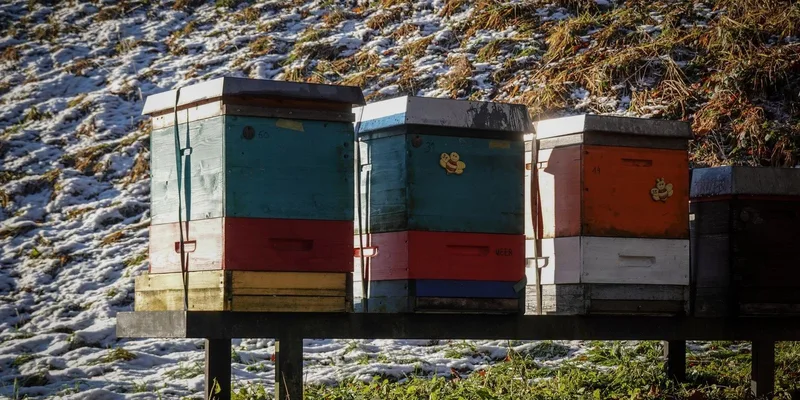
Last updated: August 21, 2026
There is a particular feeling that comes with hefting the back of a hive in January and finding it light. The colony is alive, you can hear it through the box, and nothing in the calendar says the weather will break in time. Winter feeding is what you do about that, and it is a different job from the fall syrup feeding that should have happened months earlier.
Everything about it is shaped by two facts: bees cannot evaporate syrup in the cold, and they cannot cross a cold box to find food. So winter feed has to be solid and it has to sit directly above the bees. Candy boards, fondant, sugar bricks and dry sugar are the four ways to do that.
This article contains affiliate links. If you buy through them, we may earn a commission at no extra cost to you. Learn more.
Quick Answer
How do you feed bees in winter?
- Solid feed only. Syrup adds water to a hive that is trying to stay dry and cannot be cured in the cold.
- Put the feed directly on top of the frames, above the cluster, because bees will not travel across a cold box to reach it.
- Candy boards, fondant, sugar bricks and dry sugar all work; they differ mostly in how much handling they need.
- Winter feed is emergency insurance, not a plan. The real fix is going into winter heavy.
Bottom line: solid sugar above the cluster keeps a light colony going, and the visit to install it should be short, cold weather permitting.
When Winter Feeding Is Actually the Right Call
Feed in winter when the hive is light and the colony is alive. Heft the back of the box, or hook a luggage scale under the back rail, and compare it against what a well provisioned hive on your own stand felt like in fall. A hive gone noticeably light before midwinter will usually not reach the first flow unaided.
What you should not do is feed on a schedule because it feels responsible. Opening a hive costs the cluster heat, and feed a colony does not need is one more thing above the frames collecting moisture.
Why Syrup Stops Working Once It Turns Cold
Bees process syrup the way they process nectar: they take it down, evaporate the water and cap the result. That requires warmth, activity and time. Once nights are cold and the cluster has formed, none of those are available, so syrup sits uncured in the comb or raises the humidity in a hive that already has a moisture problem.
That is the whole reason winter feed is dry. Our syrup guide covers the ratios and the seasons where liquid feed belongs, which means spring buildup and early fall, not January.
Dry Sugar: The Mountain Camp Method
The simplest winter feed is plain granulated sugar poured onto newspaper laid over the top bars, inside a shim that gives it room. Condensation from the cluster dampens the underside of the pile, the bees work it, and what they do not eat stays put. It takes about a minute to install.
The trade-offs are tidiness and control. Loose sugar spills when you lift the lid, some ends up on the bottom board, and you cannot tell at a glance how much is left. For many keepers that is acceptable for a method that works in freezing weather with the hive open for seconds.
Best for Making Room Above the Frames
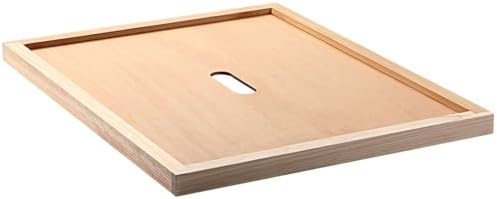
Dry sugar, fondant and patties all need vertical space between the top bars and the inner cover, and a wooden shim or eke is the part that creates it.
Candy Boards
A candy board is a rim holding a hardened slab of sugar, sitting directly above the frames so the cluster meets the feed as it moves up. Because the slab is solid it does not spill, the bees do not have to find it across the box, and it doubles as insulation and moisture absorption at the top of the hive.
You can buy them assembled for eight or ten frame equipment, or make your own. If you make your own, use a published recipe rather than improvising, since the moisture content decides whether you get a brick or a sticky mess. The Oregon State University Honey Bee Lab and several university extension services publish candy board recipes written for beekeepers.
Best for a Colony You Want to Set and Leave
An assembled candy board sized to your box footprint goes on in one motion and gives the cluster a solid slab to work up into.

Fondant and Sugar Bricks
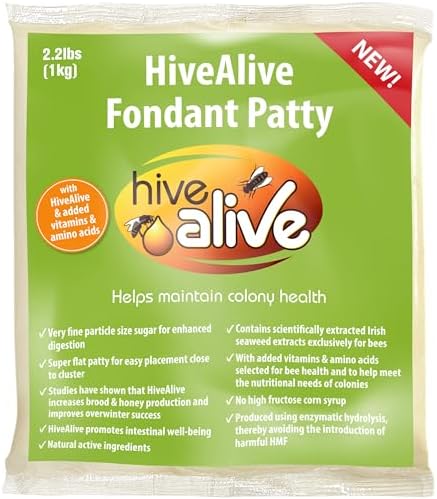
Fondant is sugar cooked with a small amount of water into a soft, pliable block; sugar bricks are the drier, harder version of the same idea. Both go straight onto the top bars, both are easy to slide in through a briefly lifted lid, and neither adds meaningful water to the hive the way syrup does.
The practical difference is handling. Fondant stays soft and is easy for the bees to work but can slump in a warm spell, while a brick holds its shape longer above a small cluster. Ready made winter feed patties save you a Sunday at the stove.
Best for a Quick Top-Up in Freezing Weather
A ready made fondant block or winter feed patty slides in over the top bars with the hive open for only a few seconds.
Comparing the Four Options
All four put sugar above the cluster. What differs is mess, cost in time, and how well each one holds up in a hive that is also fighting condensation.
| Feed type | How it goes in | Best for | Watch out for |
|---|---|---|---|
| Dry sugar on newspaper | Poured into a shim over the top bars | Cheap emergency feed in deep cold | Spills, and you cannot gauge what is left |
| Candy board | A rim with a solid slab, set above the frames | Set and leave, plus some moisture absorption | Must match eight or ten frame footprint |
| Fondant block | Laid directly on the top bars | Fast top-ups on a cold day | Can slump in a warm spell |
| Sugar bricks | Laid on the top bars or in a shim | Small clusters and long stretches between visits | Harder for a weak cluster to work |
Adding Feed Without Chilling the Colony
Treat a winter feeding visit as a pit stop. Have the feed ready before you touch the hive, pick the warmest calmest part of the day, lift only the covers, place the feed and close up. No frames come out, no smoke is needed, and the whole thing takes under a minute.
If the weather refuses to cooperate, a brief visit in the cold still beats a starved colony. What you are avoiding is a long inspection that breaks the cluster’s heat, not two seconds with the lid off.
Reading the Hive Before You Open It
Most of what you need is available from outside. Heft tells you about weight, an ear against the side tells you the colony is alive, and dead bees at the entrance on a mild day mean housekeeping is still happening. Bees flying on a warm February afternoon is a good sign, not a worrying one.
An empty looking entrance in deep cold means very little. For the fuller picture, read what a colony is actually doing in there.
Mistakes That Cost Colonies in Late Winter
The most common is feeding in the wrong place. Sugar in a feeder at the entrance, or in a box beside the cluster, might as well be in the next county, because bees in a cold hive move up rather than sideways. Directly above the top bars is the only position that reliably works.
The second is putting syrup on late because that is the feeder already on the hive. The third is stopping too early: late winter, when brood rearing restarts and stores are lowest, is when starvation most often happens. Keep hefting until the first real forage arrives.
Frequently Asked Questions
Can I feed sugar syrup to bees in winter? Generally no. Bees cannot evaporate and cap syrup in cold weather, so it adds humidity to a hive that is already dealing with condensation. Solid feed such as fondant, a candy board or dry sugar is the standard winter answer.
Where exactly should winter feed go? Directly on top of the frames, above the cluster, usually inside a shim that creates the space. A winter cluster moves upward through the comb and will not cross a cold gap sideways to reach feed placed elsewhere in the hive.
How do I know if my hive needs winter feeding? Heft the back of the hive or use a luggage scale and compare it with how the same hive felt in fall. A colony that has gone noticeably light before midwinter needs help. Local benchmarks beat any national weight figure.
Is a candy board better than dry sugar? Both work. A candy board is tidier, stays put and absorbs a little moisture above the cluster; dry sugar is cheaper and faster to improvise. Many keepers use dry sugar as emergency feed and candy boards as planned insurance.
Can I put pollen patties on in winter? Pollen substitute stimulates brood rearing, a very different goal from keeping a cluster fed, and it can attract small hive beetles. Our pollen patty guide covers when it helps and when it backfires.
Should I keep feeding into spring? Often yes. Late winter is when stores run lowest while brood rearing ramps up, so a hive that made it to February can still starve in March. Keep checking weight until forage is reliably coming in.
The Bottom Line
Winter feeding is solid sugar, placed directly above the cluster, in visits short enough not to cost the colony its heat. Dry sugar, candy boards, fondant and sugar bricks all work and differ mostly in mess and convenience. None replaces going into winter heavy. Read next: our hive feeder comparison for the syrup seasons, and the order of operations for the fall.