Last updated: August 21, 2026
Almost nobody buys their first beekeeping gear in a calm, considered way. It happens in February, after a club meeting or a long evening of reading, with bees already ordered for April and a sudden realization that the box they arrive in is not a home. A starter kit looks like the obvious answer: one order, one box on the porch, done.
Sometimes it is the right answer. Often the kit is padded with items you will replace within a season, and short on the two or three things that actually determine whether your first inspection goes well. This guide walks through what belongs in a beekeeping starter kit, what the packaging usually hides, and how to tell a genuinely useful bundle from a repackaged pile of accessories.
This article contains affiliate links. If you buy through them, we may earn a commission at no extra cost to you. Learn more.
Quick Answer
What is worth buying together in a beekeeping starter kit?
- Hive plus protective clothing plus a smoker and hive tool is the real minimum, and those four decide your first season.
- Kits that bundle a hive with a full tool tray save shipping and guesswork, but the suit inside is usually the weakest piece.
- Buy the second hive body and a feeder at the same time, because you will need both sooner than the box suggests.
- Skip the extraction gear entirely in year one; most first year colonies produce nothing to harvest.
Bottom line: buy the hive and the tools as a bundle if the price is right, and buy the suit separately in your actual size.
What a Beekeeping Starter Kit Actually Includes
Most starter kits fall into two families. Hive kits sell you the woodenware, meaning the boxes, frames, bottom board and covers, sometimes with a veil and a hive tool thrown in. Tool kits sell you everything except the hive: smoker, hive tool, bee brush, frame grip, feeder, queen clip and an assortment of small items in a carry case.
A few sellers combine both into a deluxe bundle. Little Giant, for example, sells a ten frame beginner hive kit on Amazon that pairs an assembled Langstroth hive with a smoker, gloves, veil, brush, hive tool and a feeder, which is close to the full picture for a single colony. Goodland Bee Supply builds similar bundles around their own woodenware. What varies most between them is not the hive, which is a fairly standardized object, but the quality of the soft goods that ride along with it.
The Four Things That Have to Be Right
Four items carry the whole first season: a hive that matches what your local club and supplier use, protective clothing that fits and vents, a smoker large enough to stay lit, and a hive tool you can pry with. Everything else in a kit is convenience. Get these four wrong and the season gets harder in ways you will feel weekly.
The Hive Has to Match Your Neighbors
Langstroth remains the default in the United States for a practical reason: frames, boxes, nucs and used equipment all interchange between beekeepers who run it. If the club two towns over sells you a nuc, it will be five Langstroth deep frames, and those need a Langstroth deep box waiting. Our box by box walkthrough of the Langstroth hive covers what each part does, and the hive types comparison covers when a different design makes sense.
Assembled or unassembled is the second fork. Unassembled woodenware ships cheaper and glues up in an evening with a rubber mallet and wood glue, but it needs square corners and a dry weekend. Assembled kits skip that and are worth it if February is already half gone.
The Suit Is Where Kits Cut Corners
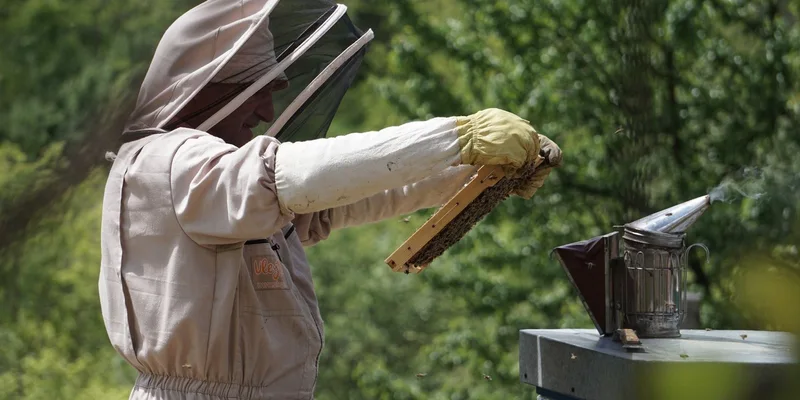
The clothing bundled into a hive kit is usually a single layer cotton or poly blend suit in one generic size, or a veil alone. That is enough to open a calm colony on a warm afternoon and not much more. A three layer ventilated suit in your measured size changes how willing you are to open the hive in July, which matters more than any tool in the box.
Order clothing on its own, from its own size chart. Our bee suit buying guide covers fabric and closure differences, and the sizing guide covers the boots and gloves overlap that trips up most first orders.
Starter Kits by Situation
There is no single best starter kit, because the right bundle depends on whether you already own woodenware, how much assembly you want, and whether your bees are already ordered. The groupings below match the four situations backyard beekeepers actually arrive in during a normal ordering season.
Starting From Absolutely Nothing
If there is no equipment in the garage at all, a combined hive and tool bundle is the least stressful route: one order, one delivery, and the parts are meant to fit together. Check that it includes a bottom board, an inner cover and a telescoping outer cover, since a surprising number of listings show a stack of boxes and stop there.
You Already Have the Hive and Need the Tools
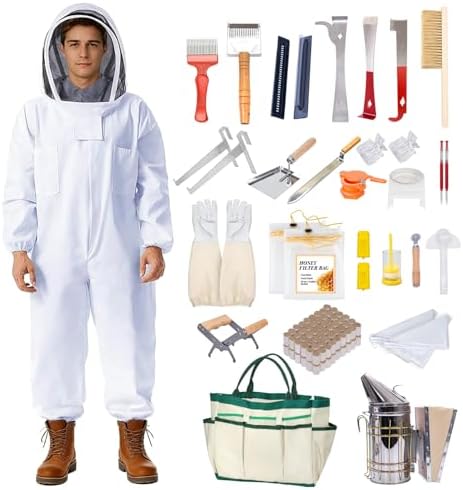
Plenty of people inherit or build the woodenware and then discover that a hive without a smoker is a hive you open once. A tool kit covers the smoker, hive tool, brush, frame grip and feeder in one go, usually in a carry case that doubles as the thing you actually walk to the hive with.

Assembled Woodenware Because Spring Is Already Here
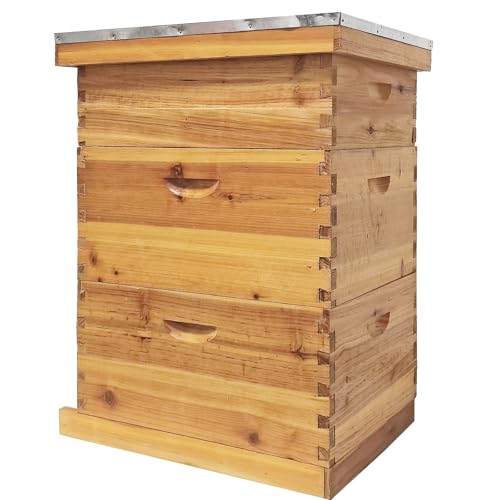
Bees arriving in three weeks and a flat pack in the hallway is a bad combination. Pre-assembled and wax coated Langstroth kits cost more per box and remove the entire assembly question, including the part where the frames need wiring or foundation fitted.
The Two Pieces to Buy Separately Regardless
Protective clothing and a real smoker are the two items worth buying on their own merits rather than accepting whatever the bundle ships. A ventilated suit sized from a chart, and a smoker with a heat shield and a bellows large enough to keep a fire alive through a full inspection, both outlast the kit they replace.


Kit Types Compared
The table below sorts the three bundle types by what they solve and what they leave you to buy. Read it as a shopping order rather than a ranking, since most beekeepers end up owning pieces of all three within two seasons.
| Kit type | What it covers | Assembly | What you still buy |
|---|---|---|---|
| Hive only kit | Boxes, frames, bottom board, covers | Often flat pack | Suit, smoker, hive tool, feeder |
| Tool only kit | Smoker, hive tool, brush, grip, small gear | None | Hive, suit, second brood box |
| Combined beginner kit | Hive plus basic tools, sometimes a veil | Assembled or flat pack | Better suit, feeder, second box |
| Extraction bundle | Extractor, uncapping tools, strainer | Some assembly | Everything else, and usually a year of patience |
What Starter Kits Usually Leave Out
Three omissions show up again and again: the second brood box, a feeder, and anything to do with mite monitoring. A colony installed in April fills one deep box faster than new beekeepers expect, and a hive with nowhere to expand is a hive preparing to swarm. Order the second box with the first.
Feeding gear is the other gap. A newly installed package or nuc on undrawn foundation needs syrup to build comb, and a feeder bought in a hurry tends to be the wrong one. Mite monitoring gear is almost never included, and a first year colony still needs it, which is why counting mites belongs on the first order rather than the third.
Where Beginners Overspend
The most common overspend is extraction equipment bought in the first order. Honey harvesting gear is genuinely satisfying to own and almost always premature, because a first year colony is usually building comb and stores rather than producing a surplus. Buying an extractor in year one means it sits in a shed for eighteen months.
Second is buying two of everything for one hive. A second colony is excellent advice, and two hives really do teach faster than one, but that means a second hive and a second feeder, not a second smoker. Our guide to what beekeeping actually costs breaks down the first year against the ones after it, and the kit versus separate pieces comparison runs the same numbers from the other direction.
Frequently Asked Questions
Is a beekeeping starter kit worth it? Usually yes for the hive and tools, and usually not for the protective clothing. A bundle removes the risk of ordering parts that do not fit together, which is a real risk for a first order. The suit inside is where kits economize, so plan to buy that separately in a measured size.
What is the minimum equipment to start beekeeping? A complete hive with frames, a veil or full suit, a smoker with fuel, a hive tool, and a feeder. Everything else can wait until you have opened the hive a few times and know what you are missing.
How many hives should a beginner start with? Two is the common recommendation, because a second colony gives you a comparison and a source of frames if one hive struggles. One is entirely workable if space, budget or local rules point that way, and local rules are worth checking first.
Do starter kits include bees? No. Bees are sold separately as a package or a nuc, usually ordered months ahead from a local supplier or club, and they ship or get picked up in spring. The package versus nuc comparison covers which suits a first colony.
Should I buy assembled or unassembled woodenware? Unassembled costs less and takes an evening with glue, a mallet and a square corner to check against. Assembled costs more and removes a task from an already busy spring. If your bees arrive within a month, buy assembled.
Will a starter kit let me harvest honey the first year? Often not. A colony starting on bare foundation spends its first season drawing comb and building stores for winter, and many first year hives produce no surplus at all. Treat a first year harvest as a bonus rather than a plan.
The Bottom Line
A beekeeping starter kit is worth buying when it saves you from mismatched woodenware, and worth ignoring when it is a pile of small tools around a thin suit. Buy the hive and core tools together, buy protective clothing on its own size chart, add a second brood box and a feeder to the same order, and leave extraction gear for a season when you actually have capped frames. Next, read our guide to choosing a first hive and the step by step start in a backyard.