Last updated: August 21, 2026
There is no good way to open a dead hive. It is quiet in a way a hive never is, the frames are cold, and the first instinct is to close the lid, put the boxes in the shed and not think about it until spring ordering opens. That instinct costs you the only useful thing the colony has left to give, which is an explanation.
A deadout is evidence. Where the cluster sat, what was in the cells around it and what is on the bottom board narrow the cause down to two or three possibilities, and knowing which one it was changes what you do next season. Here is how to work through it in an order that resolves things.
This article contains affiliate links. If you buy through them, we may earn a commission at no extra cost to you. Learn more.
Quick Answer
Why did my hive die over winter?
- Work in order: find the cluster, check for stores next to and above it, then look at the cells and the bottom board.
- A small cluster with plenty of honey nearby usually means the colony was too weak going into winter, and mites are the most common reason for that.
- Bees head first in empty cells with no honey within reach means starvation, which can happen even in a hive that has honey in another corner.
- Mold, mouse damage and robbing are usually consequences of a colony that had already died rather than the cause.
Bottom line: the size of the cluster and the distance to the nearest stores answer most deadout questions before you look at anything else.
Do the Autopsy Before You Clean Up
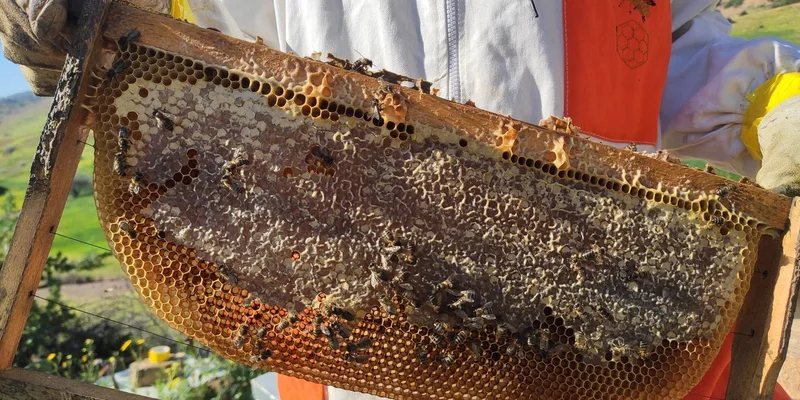
Open the hive on a dry day, take photographs as you go, and work through the boxes one at a time without shaking or scraping anything yet. Once you have brushed the bottom board out and stacked the frames, the evidence is gone. Ten minutes of looking is worth more than a season of guessing.
Keep the frames in order as you pull them, so you can see where the cluster sat relative to the stores. That spatial relationship is the single most informative thing in the whole exercise, and it disappears the moment the frames get rearranged into a storage box.
Read the Cluster First
Find where the bees ended up. A cluster the size of a softball or smaller means the colony was too small to generate heat through a cold snap, and that is a story about last August rather than about February. A cluster the size of a football or larger that still died points somewhere else, usually starvation or moisture.
A colony that went into winter strong and came out dead and small has usually been losing bees steadily, which is the classic signature of a high mite load in the fall. The bees raised in September were compromised and did not live as long as winter bees should, so the cluster shrank week by week until it could not hold temperature.
Starvation Looks Specific
Starved bees are found head first, deep in empty cells, tails out, in a tight cluster with nothing edible within reach. It is unmistakable once you have seen it. The frustrating part is that many starved colonies died with honey still in the hive, just not in the place the cluster could reach during a cold spell.
Bees move up and, to a lesser degree, sideways, and they will not cross a cold gap of empty comb to reach honey two frames over. That is why stores directly above the cluster matter more than total weight, and why a hive that felt heavy in December can still starve in February.
What Changes Next Year
Heft the hive from the back through the winter rather than trusting a fall estimate, and be ready to add emergency feed above the cluster when it gets light. Our guide to winter feeding with a candy board, fondant or dry sugar covers the options that work when it is too cold for syrup, and winterizing in the right order puts the configuration in sequence.
Look for the Mite Signature
Mites leave physical traces, and a deadout is the easiest place to find them. Look into cells around where the cluster was for white crystalline specks stuck to the upper cell walls, which is mite waste. Look at any remaining capped brood, uncap a few cells, and look for dead pupae with mites on them.
Combine that with the cluster size story and the picture usually resolves. A small cluster, mite frass in the cells, some deformed bees on the bottom board and plenty of untouched honey is the most common backyard deadout in the country, and the fix lives in the previous August rather than in a better winter wrap.
The Uncomfortable Part
Most beekeepers who lose a colony this way did treat, and treated late, or treated without counting and assumed it worked. The habit that prevents a repeat is counting before and after, every time. Our overview of varroa mite treatment options sets out the routes, and each one lives or dies on the label of the product you buy.
Moisture, Mold and Mice
Water dripping onto a cluster kills colonies that would otherwise have survived the cold. The evidence is mold on the frames, a wet inner cover, a dark waterline on the box walls, and often a cluster that died in a small tight ball despite adequate stores. Cold is survivable, cold and wet is not.
Mold on frames after the colony is already dead is normal and proves nothing, which is where people get confused. What implicates moisture is condensation damage in the upper part of the hive and a colony that had food it did not eat. If that is your picture, the answer is ventilation and a moisture strategy rather than a heavier wrap.
Rodents Are Usually a Sequel
A mouse nest in the lower box, shredded comb and droppings look dramatic, but mice generally move into a hive that has already collapsed or into one whose cluster has retreated upward. The countermeasure is cheap and worth fitting every autumn regardless, which is what our guide to mouse guards covers. For the condensation half of the problem, see beehive insulation and where the moisture goes.
The Evidence Table
Most deadouts land in one of a handful of patterns. This is the shortlist worth running through with the frames in front of you, before deciding what to change for next season.
| What you find | Most likely cause | Confirming detail | What to change |
|---|---|---|---|
| Small cluster, honey untouched | Colony too weak going in | Mite frass in cells, deformed bees | Count and act on mites in late summer |
| Bees head first in empty cells | Starvation | No stores directly above the cluster | Heft through winter, feed above the cluster |
| Mold, wet inner cover, stores left | Condensation | Waterline on box walls | Upper ventilation and moisture management |
| Almost no dead bees, comb intact | Dwindled or absconded | Very few bees anywhere in the hive | Mite counts, queen quality review |
When to Stop and Make a Phone Call
One pattern ends the autopsy immediately. If you find sunken, greasy, perforated cappings over a coffee-colored mass that ropes out when probed, or hard dark scale stuck along the lower cell walls, close the hive and stop handling the frames. That is a question for your state apiarist, not for a comment thread.
Do not move those frames into another colony, do not store the boxes with your clean equipment, and clean your hive tool before you touch anything else. Our guide to recognizing American foulbrood covers the signs in detail and the reporting step that follows.
What to Do With the Equipment
Assuming no reportable disease, drawn comb from a deadout is valuable and reusable. Freeze frames if you can, to deal with any wax moth eggs, then store them cold, bright and ventilated until spring, when a package or a nuc installed on drawn comb gets a head start no foundation can match.
Scrape the bottom board, cull the darkest frames rather than putting everything back, and check the boxes for rot while they are empty. Our guides to storing comb against wax moths and to beehive frames cover both halves of that job.
Frequently Asked Questions
Can I reuse honey left in a deadout? If there is no sign of reportable disease, yes. Frames of capped honey are the best possible resource for a new package or nuc in spring. Store them protected from wax moths and away from robbing bees.
My hive was heavy in the fall and still starved, how? Bees move up and only reluctantly sideways in cold weather. A cluster can starve with honey two frames away. Position stores directly above the cluster and heft the hive through winter rather than judging once in October.
Is mold on the frames what killed them? Usually not. Mold grows readily on comb once a colony is dead. Moisture is implicated when there is condensation damage in the upper hive and the colony died with stores it did not eat.
How do I tell if mites were the cause? Look for white crystalline mite waste on upper cell walls near the cluster, uncap remaining brood to look for mites on pupae, and weigh that against a cluster that shrank despite plenty of food.
How common is losing a colony over winter? Winter losses are a normal part of beekeeping in most of the country and losing your first colony does not mean you did everything wrong. Working out which pattern it was is what turns the loss into something useful.
The Bottom Line
A dead hive answers your questions if you open it carefully and read it in order: cluster first, stores next, cells and bottom board last. Most backyard losses come down to a colony that was too weak going into winter, usually because of mites, or to a cluster that starved with honey out of reach. Both have concrete fixes for next season, and neither is a reason to quit. Next, read winterizing a beehive in the right order and varroa mite treatment options compared.