Last updated: August 21, 2026
The bee brush is the cheapest tool in the bucket and the one most likely to make bees angry. Used badly it drags, rolls and irritates hundreds of workers at once, and a colony that was calm two minutes ago turns into a colony that follows you back to the house. Used well, and used rarely, it clears a frame in a few seconds without a fuss.
That contradiction is why experienced keepers have strong opinions about brushes, and why some of them carry a turkey feather instead. This guide covers what to look for in a brush, when brushing is the right move, when it is the wrong one, and why the answer at harvest time is often to not brush at all.
This article contains affiliate links. If you buy through them, we may earn a commission at no extra cost to you. Learn more.
Quick Answer
What makes a good bee brush?
- Long, soft, flexible bristles that bend around a bee instead of dragging her across the comb.
- A single or double row of bristles rather than a dense block, so bees are not trapped in the middle of the brush.
- Light colored bristles, since dark fuzzy objects read as a threat to guard bees.
- A handle long enough to keep your hand away from the frame face, and a brush cheap enough that you replace it when it gets sticky.
Bottom line: buy a soft, light colored brush, use it sparingly, and shake the frame first whenever you can.
What a Bee Brush Is Actually For
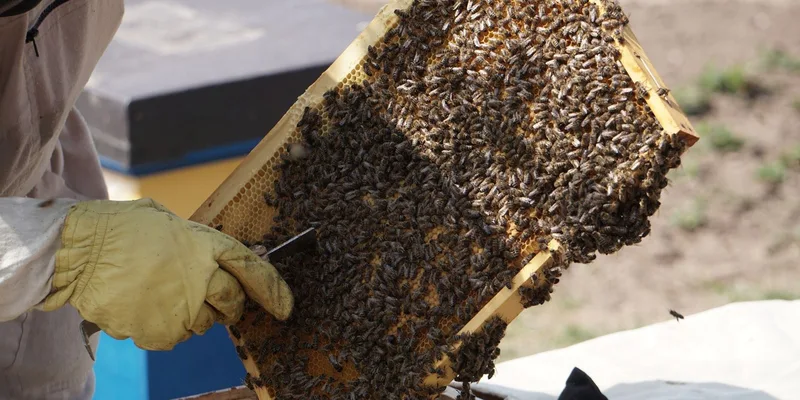
A bee brush clears bees off a surface you need clear: a frame you are about to pull for extraction, the rim of a box before you set another one down on it, a queen excluder, or the top bars before the inner cover goes back on. It is a precision tool for small numbers of bees, not a way to empty a full super.
The reason it has a reputation for irritating colonies is that most people use it for the second job. Brushing a full frame of bees at harvest sweeps hundreds of workers in one motion, rolls some of them and releases alarm pheromone across the whole face of the comb. There are better ways to clear a super, and the brush is the last of them.
Bristles, Rows and Why Soft Matters
The single most important feature is bristle softness and length. A long, flexible bristle bends when it meets a bee and flicks her off; a short, stiff one drags her across the cell openings and can catch a leg or a wing. Anything that feels like a household scrub brush is the wrong tool.
Row count matters almost as much. A single or double row lets bees fall clear immediately, while a dense multi row block traps them inside the bristles where they get squeezed on the return stroke. If you can see daylight through the brush, that is a good sign.
Color, and What Bees React To
Guard bees respond more strongly to dark, fuzzy shapes than to pale smooth ones, which is the same reason bee suits are white rather than brown. Brushes are sold in yellow, white and natural bristle for that reason, and a dark bristle brush waved across the top bars is asking for a reaction you do not need.
Bee Brushes by Situation
The Standard Backyard Brush
A long soft bristle brush with a wooden handle is the version most suppliers stock and the one that suits a hive or four. The wooden handle takes a scrape with the hive tool when it gets sticky, and the bristle length is enough to flick rather than drag.

When You Want Bristles on Both Sides
Double row brushes give you a working edge in both directions, which is handy when you are clearing a box rim in a confined space and cannot get a full sweep in one direction. They are also easier to keep clean than a dense single block.

Buying It With the Rest of the Kit
The brush is small enough that it rarely justifies its own order, and it turns up in most tool sets alongside a hive tool and an uncapping fork. If you still need the other pieces, a set is the sensible way to get the brush into the bucket.

The Alternatives Keepers Actually Use
Plenty of keepers never buy a brush at all. A large feather, usually turkey or goose, is the traditional substitute and is gentler than most bristles because it flexes along its whole length. It is also free if you know someone who keeps birds, and it is easy to replace when it gets sticky with honey.
The other alternative is not brushing. A sharp downward shake over the open hive drops the majority of bees off a frame in one motion, and the few that remain can be flicked off with the corner of the hive tool or a couple of passes with a feather. Most experienced keepers shake first and brush only what is left.
Clearing a Super Without a Brush
At harvest, the tools that actually clear a whole box are a bee escape board fitted under the super the day before, or a fume board with a repellent on top of it. Both move bees down into the brood nest on their own schedule and leave you lifting a nearly empty box, which is a very different experience from brushing frame after frame in front of a colony that is already agitated by robbing pressure.
Brush, Feather or Shake
Each option suits a different number of bees and a different level of urgency. Here is how they compare in a backyard setting.
| Method | Bees cleared | Colony reaction | Best for |
|---|---|---|---|
| Shake over the hive | Most of a frame at once | Brief, usually mild | The default first move |
| Soft bristle brush | Small numbers, precisely | Rises quickly if overused | Stragglers, rims, excluders |
| Feather | Small numbers, very gently | Lowest of the three | Delicate work, queen cells nearby |
| Escape or fume board | A whole super | Minimal, happens without you | Harvest day |
Technique That Keeps the Colony Calm
Brush upward and outward, from the bottom bar toward the top, in one light stroke rather than a scrub. Bees grip the comb with their legs pointing down into the cells, so a downward stroke works against their grip and rolls them. An upward flick lifts them off cleanly.
Keep the strokes slow and few. Two or three passes, then stop and let the remaining bees walk off on their own, which they usually do within seconds. Repeated brushing over the same patch is what turns a mildly annoyed colony into a defensive one, and it is the reason the brush is often blamed for a bad inspection it merely finished off.
When Not to Brush at All
Avoid brushing during a dearth or when robbing is already underway, because the alarm response spreads faster and the bees have less patience. Avoid brushing a frame you suspect holds the queen, since she is easier to injure than a worker and harder to replace. And avoid brushing when a shake would do, which is most of the time.
Keeping the Brush Usable
A bee brush picks up honey, propolis and wax, and a sticky brush is worse than no brush because the bristles clump and drag. Wash it in warm soapy water after any session where it touched honey, rinse it properly, and let it dry with the bristles hanging free rather than pressed flat in the bottom of a bucket.
Because it moves from colony to colony, the brush is worth cleaning between hives when any colony in the yard is under observation, along with your hive tool and gloves. If you suspect a notifiable brood disease, contact your state apiarist before moving equipment or tools between colonies.
Frequently Asked Questions
Do I really need a bee brush? Not strictly, but it is inexpensive and it earns a place for stragglers on box rims and queen excluders. What it should not be is your method for clearing a full honey super, which is a job for an escape board or a fume board.
Why does brushing make bees angry? Brushing rolls a portion of the bees against the comb, which releases alarm pheromone across the frame face and alerts the colony. Doing it repeatedly compounds the effect, which is why light, brief strokes matter more than the brush itself.
Can I use a paint brush or a household brush? Only if the bristles are genuinely long and soft, and most are not. Stiff bristles catch legs and wings, and a dense block traps bees inside the brush. A purpose made bee brush costs very little and behaves better.
Is a feather better than a brush? Many keepers think so for delicate work, because a feather flexes along its whole length and moves fewer bees per stroke. It is also easier to replace when it gets sticky. For clearing a rim quickly, a brush is faster.
Which direction should I brush? Upward and outward, against the way bees grip into the cells. Brushing downward drags them across the comb face, which is exactly what irritates them.
How do I clean honey off a bee brush? Warm soapy water, a thorough rinse, then air dry with the bristles hanging free. Replace it once the bristles stay clumped or stiff, since a stiff brush does more harm than no brush at all.
The Bottom Line
Buy a soft, long bristled, light colored brush, keep it clean, and use it as a finishing tool rather than a clearing tool. Shake first, brush the remainder, and at harvest time let an escape board or a fume board do the work instead of your wrist. The brush belongs in the bucket alongside the pieces listed in our beekeeping tool kit guide, and the timing side of harvest is covered in when to harvest honey.