Last updated: August 21, 2026
There is a particular kind of frustration that only beekeepers know: the smoker that looked fine on the tailgate, produced a satisfying cloud on the walk to the hive, and then quietly died the moment you lifted the inner cover. You pump the bellows, get a wisp of nothing, and now you are choosing between closing the hive back up or working it cold.
Almost every case of this comes down to the same three causes, and none of them is the smoker itself. It is how the fuel was packed, whether there was air underneath it, and whether the base was actually burning before the barrel got filled. Get those right and the same smoker that used to quit will still be putting out cool white smoke when you are done for the day.
This article contains affiliate links. If you buy through them, we may earn a commission at no extra cost to you. Learn more.
Quick Answer
How do you light a bee smoker so it stays lit?
- Light a small handful of fast catching fuel at the bottom and get a real ember bed before anything else goes in.
- Add fuel in layers, pumping the bellows between each one, so every layer catches before the next is added.
- Pack the top firmly enough that it smolders instead of flaming, but never so tight that air cannot pass through.
- Close the lid, give it a few slow pumps, and check that the smoke coming out is cool and white before you walk to the hive.
Bottom line: build it in layers from a hot base, pack firm at the top, and let it settle before you open a hive.
Why Smokers Go Out
A smoker is a small furnace with a hand pump, and it fails for the same reasons any fire does: not enough heat at the base, not enough air moving through the fuel, or fuel that is too damp to sustain a burn. Beekeepers usually blame the smoker, but the smoker is rarely the variable that changed.
The most common single mistake is filling the barrel with fresh fuel on top of a flame that has not yet turned into embers. The new fuel smothers the flame, you get a satisfying puff of smoke from what is already burning, and thirty seconds later there is nothing left underneath to keep it going. The second most common is packing so tightly that the bellows cannot push air through the charge at all.
What You Need Before You Start
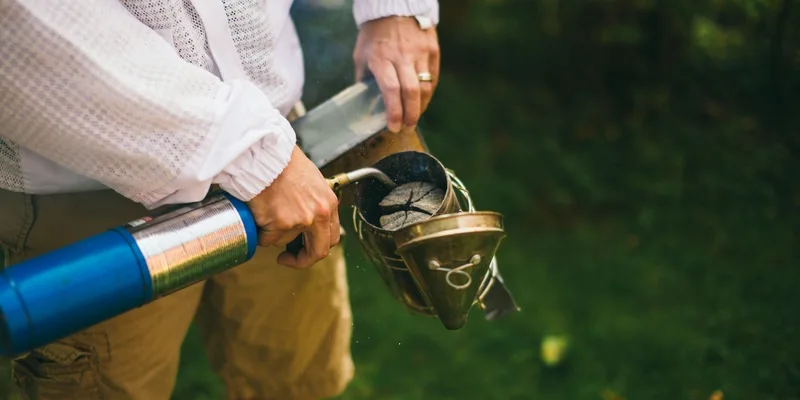
Very little. A smoker with a working bellows, dry fuel, an ignition source and somewhere safe to set the whole thing down. Most keepers use a long neck lighter rather than matches, because it reaches to the bottom of the barrel without putting your knuckles inside a metal cylinder you are about to fill with fire.
Dry fuel is doing most of the work here. Cotton fiber, burlap, dry pine needles and untreated wood pellets all behave differently, and the fuel guide covers which to pick, but the packing method below works with any of them as long as they are actually dry.
The Two Things Worth Buying
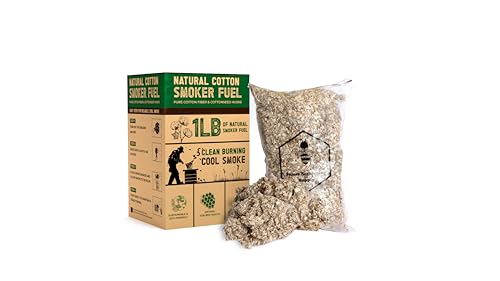
A reliable starter fuel that lights from a single flame takes most of the guesswork out of the base layer, and a long neck lighter keeps your hand out of the barrel.

The Layer Method, Step by Step
The method that works is building upward from a small, hot base rather than filling the barrel and lighting the top. Every layer should be visibly catching before the next one goes on, and the bellows does the work of pulling the heat upward through each addition.
- Check the grate. Make sure the inner grate or liner is in place and that loose ash is not blocking the air hole at the base. No air in means no fire.
- Light a small starter charge. A loose handful of cotton fiber, a twist of newspaper or a strip of burlap, lit at the bottom of the barrel. Small, not a full load.
- Pump until you have embers. Give it slow, full pumps with the lid open until the starter is glowing rather than flaming. This is the step everyone rushes.
- Add the first real layer. A loose handful of your main fuel on top of the embers, then pump again until that layer is visibly catching and smoke turns thick.
- Repeat upward. Keep adding and pumping until the barrel is full, layer by layer. The bottom should stay glowing the entire time.
- Pack the top down. Press the top layer down firmly with the hive tool, not with your fingers, to starve the top of oxygen so it smolders instead of flaming.
- Close the lid and test. A few slow pumps should produce steady white smoke. Hold your hand a foot from the spout: the smoke should feel cool, not hot.
Reading the Smoke Before You Open the Hive
The check that separates a good inspection from a scramble takes five seconds. Cool, thick, white smoke means the charge is smoldering properly and will keep going. Thin blue or gray smoke means it is burning too hot and too fast, and you are minutes away from an empty barrel.
Sparks or visible flame at the spout mean the top layer is not packed down enough and there is too much air reaching it. Press it down again with the hive tool and close the lid. Never carry a sparking smoker to a hive, and never set one down in dry grass or mulch.
The Quick Diagnostic
| What you see | What it means | Likely cause | Fix |
|---|---|---|---|
| Thick cool white smoke | Smoldering correctly | Good layering and pack | Nothing, go to the hive |
| Thin blue or gray smoke | Burning too hot | Too much air, top not packed | Press the top layer down, close the lid |
| Sparks at the spout | Open flame in the barrel | Loose fuel, over pumping | Pack down, pump slower, let it settle |
| Nothing at all | Base is out | Damp fuel or no ember bed | Empty, restart from a small hot base |
Keeping It Lit Through a Long Session
A properly packed large smoker will run through a backyard inspection without much help, but it needs occasional air. Give the bellows a few slow pumps every few minutes even when you are not using smoke, because a smoker sitting still with the lid closed will slowly starve itself and you will not notice until you need it.
Set it down upright, on bare ground or a stone, with the hook over the edge of a box or a frame perch rather than lying in the grass. A smoker on its side loses its air path and dumps loose fuel into the cone, which is a reliable way to choke it out halfway through the second colony.
When to Top It Up
Add fuel before it dies, not after. If the smoke is thinning and the barrel feels light, open the lid, pump until the remaining fuel glows, and add a fresh layer on top of an established ember bed. Adding fuel onto a barrel that has already gone out means starting over from scratch.
Putting It Out and Cleaning Up
The safest way to shut a smoker down is to cut off its air. Plug the spout with a cork or a tight wad of green grass, close the lid, and set the whole unit somewhere non flammable to cool completely. It will keep smoldering for a surprisingly long time with the spout open, which is how apiary fires start.
Never empty hot ash into a trash can, a plastic tote or dry vegetation, and never leave a warm smoker in a vehicle or a shed. Once it is fully cold, knock out the loose ash and scrape the creosote off the inside of the lid with the hive tool, because tar buildup around the hinge is what eventually stops the lid from sealing.
Frequently Asked Questions
How long should a bee smoker stay lit? A large barrel packed properly with a dense fuel should comfortably outlast a backyard inspection of several hives. If yours dies within minutes, the problem is nearly always a missing ember base, damp fuel or a pack too tight for air to pass.
Why does my smoker only work when I keep pumping? That usually means the charge never developed a proper ember bed and only the surface is burning. Empty it, start again with a small hot base, and add fuel in layers rather than all at once.
Can I light a smoker with lighter fluid or an accelerant? No. Accelerants flare, leave residue and put fumes into a hive that produces food. Dry natural fuel and a flame is all it takes, and a long neck lighter solves the reach problem that makes people reach for shortcuts.
Should the lid be open or closed while lighting? Open while you are building layers so you can see what is catching, closed once the barrel is full and packed. The lid is what forces air up through the charge instead of straight out the top.
Is it safe to leave a smoker burning while I inspect? Upright, on bare ground or hooked over a box, yes, and that is normal practice. Lying in dry grass or mulch, no. Fire risk at the apiary is a real consideration in late summer, especially in a backyard with a fence and landscaping close by.
What if I do not have a hive tool to pack the fuel? Use any flat metal implement, but the hive tool is already in your hand at every inspection and is the natural choice. Do not pack a smoker with your fingers or with a gloved hand.
The Bottom Line
Lighting a smoker that stays lit is a packing skill, not a purchasing decision. Start small and hot at the base, build upward in layers with the bellows working between each one, pack the top firmly, and check that the smoke runs cool and white before you walk to the hive. The fuel you use decides how forgiving that process is, which is covered in our smoker fuel guide, and the hardware side is in the bee smoker buying guide.